
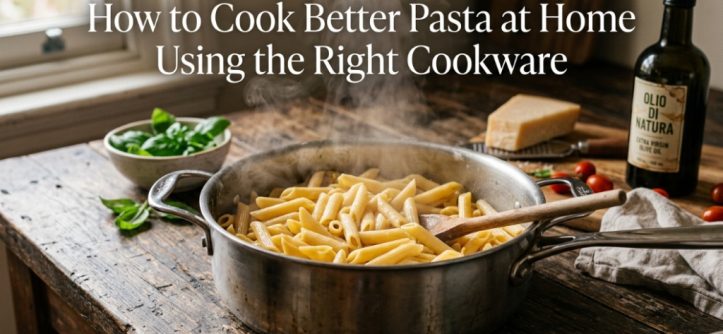
Imagine trying to paint a masterpiece with a worn-out brush. That’s exactly what happens when people focus only on pasta recipes and ignore cookware. The truth is simple: cooking pasta at home becomes dramatically easier, faster, and more consistent when you use the right pot, strainer, and cooking tools. Even premium pasta can turn sticky, uneven, or overcooked inside unsuitable cookware.
Pasta remains one of the most popular comfort foods worldwide, yet many home cooks struggle with clumping noodles, water boil-overs, and inconsistent texture. The problem often isn’t the recipe—it’s the equipment. A small pot restricts movement, poor heat distribution causes uneven cooking, and ineffective draining tools can ruin texture within seconds.
Cooking pasta at home means boiling pasta in adequately sized cookware that distributes heat evenly, allows sufficient water circulation, and supports proper draining and finishing techniques. When combined with a few practical pasta tips, the right cookware helps create restaurant-quality results in your own kitchen.
In this guide, you’ll learn exactly which cookware improves pasta quality, how different materials affect cooking performance, common mistakes to avoid, and practical techniques that transform ordinary pasta into exceptional meals.
What Cookware Is Best for Cooking Pasta at Home?
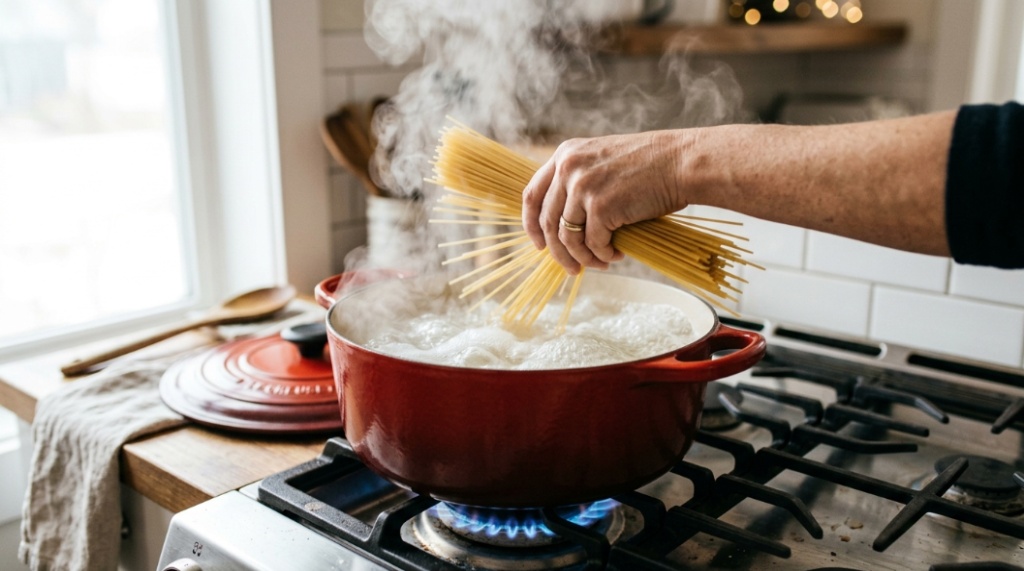
The best cookware for pasta is a large, heavy-bottomed pot made from stainless steel or multi-ply construction that allows water to circulate freely and heat evenly.
The ideal pasta pot should hold enough water to prevent noodles from sticking together. Most home cooks benefit from an 8- to 12-quart pot for family-sized meals.
Professional chefs frequently choose stainless steel because it offers durability, corrosion resistance, and excellent temperature stability. Multi-layer cookware featuring aluminum cores improves heat distribution even further.
If you’re researching equipment options, this guide covering high-quality cookware for pasta preparation provides additional insights into selecting the right cooking vessels.
Key Features to Look For
- Large capacity (8–12 quarts)
- Heavy-duty bottom construction
- Stainless steel interior
- Comfortable heat-resistant handles
- Tight-fitting lid
- Oven-safe compatibility
- Dishwasher-safe design
These features improve heat retention, cooking consistency, and overall convenience.
Why Does Pot Size Matter When Cooking Pasta?
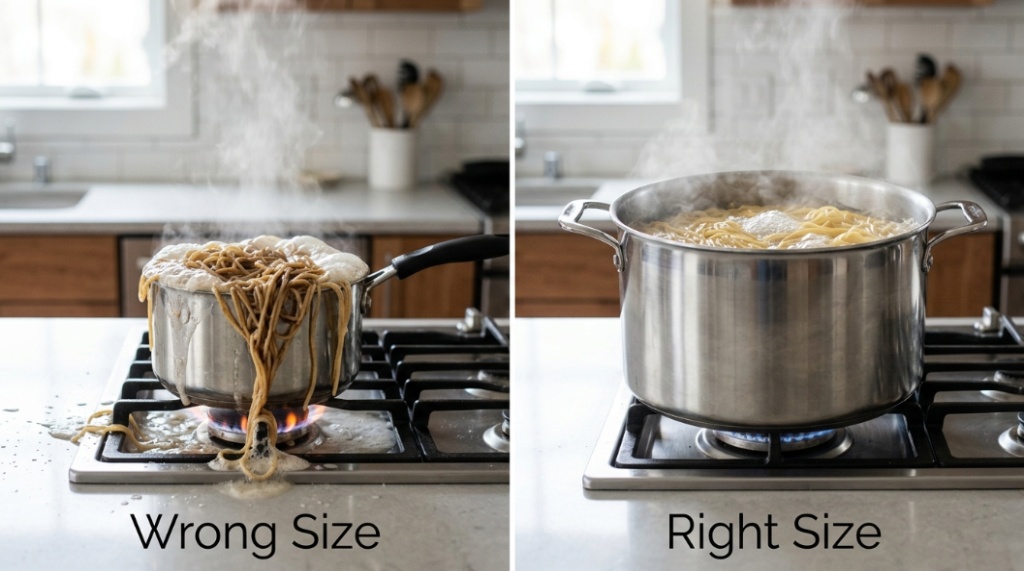
A larger pot prevents pasta from sticking together by providing enough room for noodles to move freely during cooking.
One of the most common pasta mistakes is using a pot that’s too small. Crowded pasta releases starch into concentrated water, increasing the likelihood of clumping.
Traditional Italian cooking methods typically recommend approximately 4–6 quarts of water per pound of pasta. While modern cooking can use slightly less water, adequate space remains essential.
Benefits of a larger pot include:
- More even cooking
- Reduced sticking
- Better starch distribution
- Faster recovery after adding pasta
- Improved texture consistency
Long pasta varieties such as spaghetti, linguine, and fettuccine particularly benefit from deeper cookware because they can fully submerge without breaking.
Can You Cook Pasta in a Small Pot?
Yes, but it requires frequent stirring and careful monitoring. Small pots increase the risk of uneven cooking and starch buildup, making them less ideal for optimal results.
Which Cookware Materials Produce the Best Pasta Results?
Stainless steel with an aluminum or copper core generally offers the best balance of performance, durability, and cooking consistency.
Different cookware materials affect heating speed, temperature control, and maintenance requirements.
| Material | Advantages | Disadvantages |
|---|---|---|
| Stainless Steel | Durable, non-reactive, long-lasting | Can develop hot spots if poorly constructed |
| Aluminum | Excellent heat conductivity | May react with acidic foods |
| Copper | Superior temperature control | Expensive and high maintenance |
| Nonstick | Easy cleanup | Less durable over time |
| Cast Iron | Exceptional heat retention | Heavy and slower to heat |
For most households, stainless steel remains the preferred option because it balances performance and practicality.
Home cooks interested in specialty pasta equipment may also benefit from learning how a quality pasta-making machine improves homemade noodle preparation before cooking begins.
How Much Water Should You Use When Cooking Pasta?
Use enough water to allow pasta to move freely while maintaining a vigorous boil throughout cooking.
Water volume directly influences texture and consistency. Too little water creates excess starch concentration and sticky noodles.
A practical guideline:
- 1 pound pasta = 4–6 quarts water
- 1 tablespoon salt per 4 quarts water
- Maintain a rolling boil before adding pasta
Salted water seasons pasta from the inside rather than relying entirely on sauce for flavor.
Should You Add Oil to Pasta Water?
No. Oil floats on the surface and provides minimal benefit. Instead, stir pasta during the first two minutes to prevent sticking.
What Are the Most Important Pasta Tips for Better Results?
The most effective pasta tips include using sufficient water, salting properly, stirring early, cooking al dente, and finishing pasta in the sauce.
Professional kitchens rely on simple fundamentals rather than complicated tricks.
Essential Pasta Tips
- Bring water to a full boil first
- Salt generously
- Stir immediately after adding pasta
- Taste-test before draining
- Reserve pasta water
- Finish cooking inside the sauce
- Serve immediately
Reserved pasta water contains dissolved starch that helps sauces cling to noodles while creating a silky texture.
What Does Al Dente Mean?
Al dente means “to the tooth” in Italian. Pasta remains tender but still offers slight resistance when bitten.
This texture improves flavor, mouthfeel, and sauce absorption.
How Do Pasta Strainers and Colanders Affect Results?
Good draining tools preserve texture, prevent breakage, and make pasta handling safer and more efficient.
Many cooks underestimate the importance of proper draining equipment. Cheap colanders can bend, tip, or fail to drain effectively.
Look for:
- Stainless steel construction
- Stable base design
- Comfortable handles
- Large drainage openings
- Dishwasher-safe materials
Some modern pasta pots include integrated strainers, reducing the need to transfer boiling water manually.
Is a Built-In Strainer Pot Worth It?
Yes. Integrated strainer lids simplify draining and reduce the risk of spills, particularly when cooking large batches.
Should You Make Fresh Pasta or Use Dried Pasta?
Both fresh and dried pasta have advantages, and cookware quality improves results for either option.
Fresh pasta cooks quickly and delivers a tender texture, while dried pasta provides convenience and consistency.
| Fresh Pasta | Dried Pasta |
|---|---|
| Cooks in 2–4 minutes | Cooks in 8–12 minutes |
| Softer texture | Firmer texture |
| Excellent for delicate sauces | Ideal for hearty sauces |
| Short shelf life | Long shelf life |
For homemade pasta enthusiasts, specialized equipment can streamline preparation. Many cooks compare products like the MZTOGR pasta maker machine for fresh noodle production when upgrading their kitchen setup.
How Do You Finish Pasta Like a Restaurant Chef?
Restaurant-quality pasta is finished in sauce rather than simply topped with sauce after draining.
This technique allows starch from the pasta surface to blend with fats, aromatics, and liquids, creating superior flavor integration.
Professional Finishing Process
- Cook pasta until slightly underdone
- Reserve one cup pasta water
- Transfer pasta directly into sauce
- Add small amounts of pasta water
- Toss continuously
- Serve immediately
This final step often separates average pasta dishes from exceptional ones.
What Common Pasta-Cooking Mistakes Should You Avoid?
Avoiding a handful of common mistakes instantly improves texture, flavor, and consistency.
Even experienced home cooks occasionally make errors that compromise results.
Most Common Mistakes
- Using too little water
- Skipping salt
- Adding oil to water
- Overcooking pasta
- Rinsing pasta unnecessarily
- Not reserving pasta water
- Using undersized cookware
- Leaving pasta unattended
Correcting these habits often delivers greater improvement than changing ingredients.
Does a Pasta Drying Rack Improve Homemade Pasta?
Yes. A pasta drying rack improves airflow and prevents strands from sticking before cooking.
When making fresh noodles, proper drying helps maintain shape and texture. It also reduces clumping during cooking.
Many home pasta makers use dedicated drying systems such as the KitchenDAO pasta drying rack for organizing freshly made noodles before boiling.
While optional for casual cooks, drying racks become valuable tools for frequent homemade pasta preparation.
Conclusion: How Can You Consistently Cook Better Pasta at Home?
Cooking better pasta at home starts with choosing the right cookware, using adequate water, following proper timing, and finishing pasta correctly in the sauce.
The difference between mediocre pasta and restaurant-quality pasta often comes down to equipment and technique rather than expensive ingredients. A large stainless-steel pot, proper strainer, and attention to fundamentals create immediate improvements in texture and flavor.
Whether you’re preparing dried spaghetti on a busy weeknight or experimenting with homemade noodles, investing in better tools pays off with every meal. If you’re exploring advanced homemade pasta equipment, learning about a practical pasta-drying solution for fresh noodle preparation can further elevate your results.
Apply these pasta tips consistently, and you’ll enjoy better texture, richer flavor, and more confidence every time you step into the kitchen. Start with the right cookware, practice the fundamentals, and transform ordinary pasta into a dish worth remembering.
Frequently Asked Questions
What is the best pot size for cooking pasta at home?
A pot between 8 and 12 quarts is ideal for most households. It provides enough room for pasta to move freely and cook evenly without sticking.
Why should pasta water be salted?
Salt enhances flavor from the inside out. Properly salted water seasons pasta during cooking, producing a more balanced final dish.
Is stainless steel better than nonstick for pasta cooking?
Yes. Stainless steel offers superior durability, heat distribution, and longevity, making it the preferred choice for serious pasta preparation.
Should I rinse pasta after draining?
Usually no. Rinsing removes surface starch that helps sauces adhere. Only rinse when making cold pasta salads or stopping cooking immediately.
How much water should I use per pound of pasta?
Most experts recommend approximately 4–6 quarts of water for every pound of pasta to ensure proper cooking and starch dilution.
What does al dente mean in pasta cooking?
Al dente refers to pasta that remains slightly firm when bitten. It delivers the best texture and absorbs sauce effectively.
Can homemade pasta be cooked in the same cookware as dried pasta?
Yes. Fresh pasta benefits from the same large, well-heated cookware used for dried pasta, though cooking times are significantly shorter.



Leave a Reply