
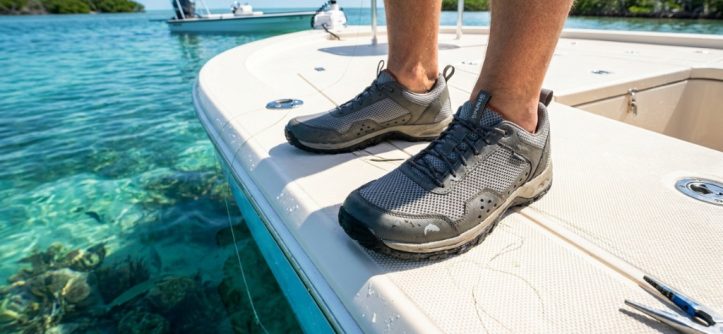
Florida’s 1,350 miles of coastline, 7,700 lakes, and year-round fishing season mean anglers here spend more hours on their feet—in harsher conditions—than fishermen in any other state. The best fishing shoes for Florida anglers must handle a unique combination of extreme heat, saltwater corrosion, razor-sharp oyster beds, and surfaces that alternate between scorching dry and treacherously wet within minutes. Florida fishing shoes are specialized footwear engineered to withstand the state’s subtropical marine environment—featuring UV-resistant materials, maximum breathability for 90°F+ temperatures, aggressive drainage for constant water exposure, and sole compounds that maintain grip even when sun-heated deck surfaces reach 140°F. The mistake most Florida anglers make? They apply general fishing shoe advice designed for cooler climates and discover that insulated waterproof boots create sauna conditions that breed blisters within two hours of Florida summer fishing. This is Florida fishing gear that requires state-specific expertise — not generic national recommendations.
Why Does Florida Demand Different Fishing Shoes Than Other States?
Florida demands different fishing shoes because no other state combines 90°F+ air temperatures, 85°F water, extreme UV exposure, aggressive saltwater, oyster-shell hazards, and year-round fishing into a single environment that destroys standard fishing footwear within weeks.
Florida-specific challenges that standard fishing shoes fail to address:
- Heat intensity: Boat decks in direct Florida sun reach 130–150°F surface temperatures. Standard rubber soles can soften excessively, and dark-colored uppers absorb heat, creating internal shoe temperatures that cause burns and blisters. Light-colored, UV-reflective materials are a necessity — not a preference.
- Salt concentration: Florida’s warm saltwater has a higher salt concentration than cooler Northern waters due to evaporation. This accelerated corrosion attacks shoe components—metal eyelets, stitching adhesives, and rubber compounds—faster than identical exposure in Maine or Washington.
- Year-round use: No off-season means no recovery period for shoes. Florida anglers need shoes that survive 12 months of continuous use, not 6 months of seasonal fishing with winter storage for material recovery.
- Oyster bars and coral: Florida’s inshore waters contain razor-sharp oyster beds that shred standard neoprene and mesh shoes. Any wading in Florida coastal waters requires puncture-resistant soles and protective uppers.
- Afternoon thunderstorms: Florida’s daily summer storms deliver sudden torrential downpours. Shoes must transition from bone-dry to fully soaked to quick-drying—repeatedly—within single trips.
What Features Make a Fishing Shoe Florida-Appropriate?
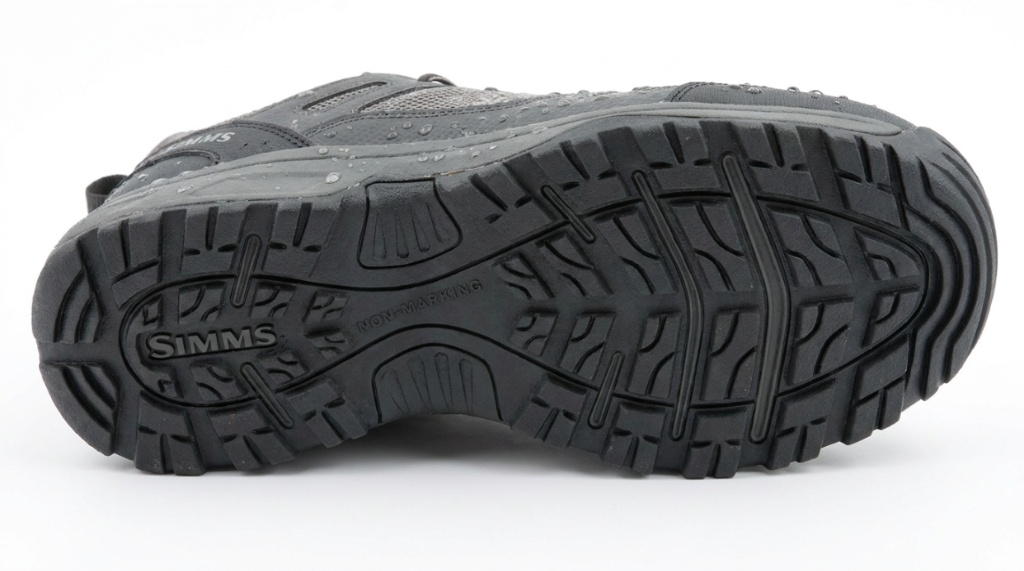
Florida-appropriate fishing shoes feature maximum breathability, light-colored construction, UV-resistant materials, aggressive drainage (6+ ports), non-marking white or light soles, and salt-corrosion-proof components with zero metal hardware.
Essential Florida fishing shoe checklist:
| Feature | Why It Matters in Florida | What to Look For |
|---|---|---|
| Breathability | Prevents heat buildup in 90°F+ conditions | Mesh panels, perforated uppers, ventilation channels |
| Light color | Reflects solar radiation, reduces internal temperature | White, light grey, tan uppers and soles |
| Rapid drainage | Constant water exposure from spray, rain, wading | 6–8 drainage ports, mesh sections that pass water through |
| Non-marking sole | Florida flats boats have light-colored decks easily marked | White or light-tan rubber specifically labeled non-marking |
| UV resistance | 12 months of intense subtropical UV exposure | UV-stabilized materials, treated fabrics that resist fading/degradation |
| Salt-proof hardware | Accelerated corrosion in warm salt environment | No metal eyelets—use fabric loops or molded attachment points |
| Quick-dry materials | Repeated wet-dry cycles multiple times per trip | Synthetic mesh, EVA foam, hydrophobic treated fabrics |
| Antimicrobial treatment | Warm moisture breeds bacteria rapidly | Treated insoles, antimicrobial lining materials |
What Are the Best Fishing Shoe Styles for Florida’s Different Fishing Types?
Florida’s diverse fishing requires style-specific footwear—lightweight deck shoes for flats and inshore, drainage sandals for surf and wade fishing, and ankle boots for offshore trips in rougher conditions.
Style recommendations by Florida fishing activity:
- Flats fishing (sight casting, poling): Ultra-light, low-profile deck shoes with maximum grip and minimal weight. You’re standing for hours on a clean polling platform—the shoe must grip perfectly without adding fatigue weight. Light colors are mandatory (dark shoes spook fish in clear shallow water). Top picks: Simms Flats Sneaker, Grundéns Sea Knit Boat Shoe (light colorway).
- Inshore bay/backwater: Standard drainage deck shoes with non-marking soles. More activity (casting, netting, releasing) means secure fit matters more. Moderate toe protection for dock pilings and oyster-adjacent areas. Top picks: Shimano Evair Marine Fishing Shoes, Huk Brewster.
- Offshore (Gulf Stream, deep drops): Ankle-height drainage boots for rougher conditions. More water on deck from waves, more equipment hazards, and greater fall consequences require enhanced protection and grip. Top picks: XTRATUF Ankle Deck Boot (white), Grundéns Deck-Boss Ankle.
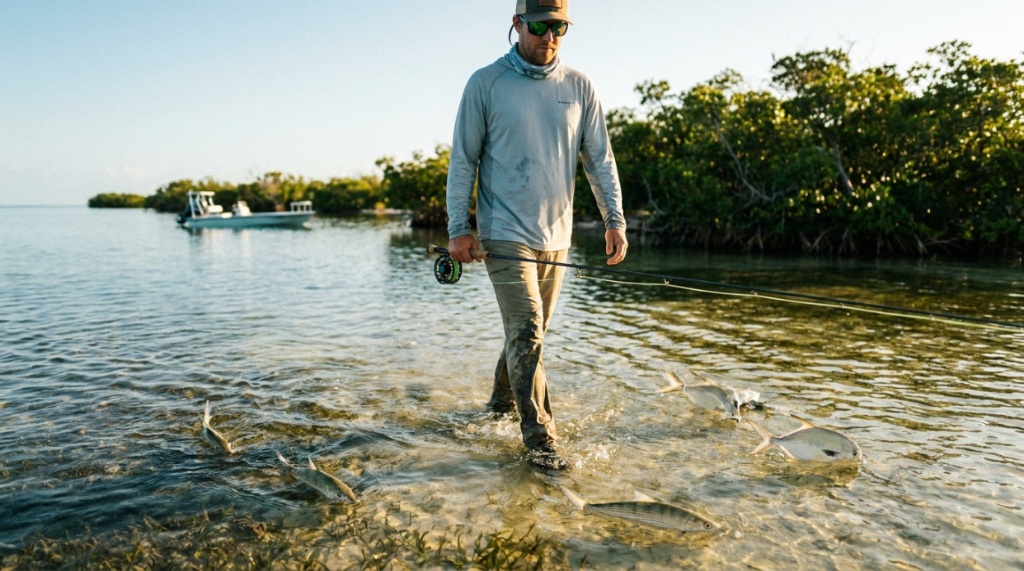
- Wade fishing (flats, grass beds): Protective booties with thick soles for oyster/coral hazard resistance. Florida wading requires sole thickness that standard water shoes lack—oyster shells penetrate thin EVA soles easily. Top picks: Simms Zipit II Bootie, NRS Paddle Wetshoe with thick sole.
- Surf fishing (beach): Minimalist drainage shoes or thick-soled sandals that shed sand. Florida sand is fine and white — it infiltrates everything. Choose shoes with minimal crevices where sand accumulates. Or fish barefoot if no shell/stingray hazards exist at your location. Top picks: Astral Loyak, XTRATUF Deck Shoe (beach fishing).
- Kayak fishing: Low-profile neoprene booties or ultra-light drainage shoes. Florida kayak anglers launch from sand/mud and sit in water-exposed cockpits for hours. Heavy shoes create discomfort during pedaling and restrict cockpit movement. Top picks: NRS Kicker Remix, Stohlquist Tideline Bootie.
How Do Florida’s Top Fishing Shoe Brands Compare?
Florida’s most trusted fishing shoe brands—XTRATUF, Grundéns, Shimano, Huk, and Simms—each excel in different aspects of the state’s demanding environment, with no single brand dominating all Florida fishing scenarios.
- XTRATUF: Alaska-born brand that’s become Florida’s offshore standard. Their white ankle boot is ubiquitous on charter boats. Best for: offshore conditions, maximum deck grip, and durability. Less ideal for: extreme heat (rubber boots trap warmth).
- Grundéns: Commercial fishing pedigree. Their lighter-weight boat shoes (Sea Knit, Deck-Boss shoe) work exceptionally well in Florida. Best for: grip technology, all-day comfort, serious anglers. Less ideal for: budget shoppers (premium pricing).
- Shimano: Japanese engineering precision applied to fishing footwear. Evairline is ultra-lightweight with excellent drainage. Best for: hot conditions, long days, weight-sensitive anglers. Less ideal for: heavy-duty offshore protection.
- Huk: Fishing apparel brand expanding into footwear. Florida-centric design philosophy — they understand the state’s specific needs. Best for: value pricing, Florida-appropriate features, younger anglers. Less ideal for: extreme durability expectations (newer brand still proving longevity).
- Simms: Premium fishing brand with specific Florida flats models. Best for: technical flats fishing, sight-casting applications, and premium build quality. Less ideal for: budget-conscious buyers (highest price tier).
How Do You Handle Florida’s Oyster Bar and Coral Hazards?
Florida’s oyster bars and coral require shoes with thick puncture-resistant soles (minimum 8 mm), closed-toe protection, and upper materials strong enough to resist shell cuts—standard mesh water shoes are dangerously inadequate for wading near these hazards.
The danger is real: oyster shells slice through thin-soled water shoes, neoprene booties, and bare feet with surgical efficiency. Florida emergency rooms treat thousands of oyster-related foot injuries annually—many requiring stitches, tetanus treatment, and antibiotics for the bacteria-rich saltwater infections that follow.
Protection requirements for oyster/coral areas:
- Sole thickness: minimum 8mm of dense material between your foot and the ground
- Sole material: hard rubber or thermoplastic — not soft EVA foam (shells penetrate EVA)
- Upper construction: closed-toe, full-coverage design without mesh panels near sole junction where shells could slice through
- Secure fit: tight enough that a foot shift can’t expose unprotected areas to shell edges
Recommended approach for Florida wading near oyster bars: dedicated thick-soled wading boots separate from your boat shoes. The same shoe rarely excels at both boat-deck grip and oyster-bed protection—the sole requirements conflict (soft/siped for grip vs. hard/thick for puncture resistance).
Staying stable on a wet deck is only half the battle when prepping for a day on the water. While upgrading your footwear keeps you safe, ensuring your gear is running smoothly prevents frustrating tangles during a big catch. Before you lace up your boots and hit the mangroves, take a few minutes to spool fishing line properly without twist so your casting remains flawless and knot-free all day.
What’s the Biggest Shoe Maintenance Mistake Florida Anglers Make?
The biggest maintenance mistake is failing to rinse shoes with fresh water after every saltwater trip—allowing salt crystals to dry in seams, siping channels, and fabric fibers where they act as abrasives that destroy shoe construction from the inside out within months.
Florida’s warm salt air accelerates this damage further than cooler climates. Complete post-trip maintenance protocol:
- Immediate rinse (within 2 hours of returning): Run fresh water through the entire shoe—inside and out. Pay special attention to outsole channels where salt and sand concentrate. Use a hose or faucet with moderate pressure.
- Remove insoles: Pull insoles out to dry separately. Trapped moisture between the insole and midsole breeds bacteria fastest—causing both odor and material degradation in Florida’s humidity.
- Air dry in shade: Never direct sunlight (UV damage) or a clothes dryer (heat warps materials). Position in a shaded, ventilated area. Florida’s humidity means drying takes longer — pointing a fan at shoes accelerates the process.
- Weekly antimicrobial treatment: Spray interior with antimicrobial solution or sprinkle baking soda for odor prevention. Florida’s heat-and-moisture combination makes bacterial growth inevitable—proactive treatment prevents rather than treats odor.
- Monthly sole inspection: Check siping depth and sole condition monthly during peak fishing season. Florida anglers who fish 3–4 times weekly may need new shoes every 8–12 months rather than the 18–24 months that moderate-frequency anglers experience.
Conclusion
Florida fishing demands footwear designed for its specific combination of extreme heat, aggressive saltwater, year-round use, and diverse environmental hazards. Generic fishing shoes designed for northern climates fail here — they overheat, corrode rapidly, and lack the drainage and breathability that Florida’s subtropical conditions require. The best fishing shoes for Florida prioritize light color, maximum breathability, aggressive drainage, non-marking soles, and salt-corrosion-proof construction.
Match your shoe to your fishing type. Lightweight deck shoes for flats and inshore fishing. Ankle boots for offshore. Thick-soled protection for wading near oyster beds. And commit to post-trip rinsing as nonnegotiable maintenance—it’s the single habit that determines whether your Florida fishing gear lasts months or years. Fish Florida’s incredible waters in shoes built for the challenge.
Frequently Asked Questions
Can I fish barefoot in Florida?
Barefoot fishing works on clean sandy beaches and well-maintained boat decks but introduces serious risks from hidden oyster shells, stingrays in shallows, dropped hooks, hot deck surfaces (130°F+ in summer), and fish spines. Most experienced Florida anglers consider barefoot fishing acceptable only on pristine sand flats with clear visibility and no shell beds. Any other environment warrants foot protection.
How hot do boat decks get in Florida summer?
Florida boat deck surfaces regularly reach 130–150°F in direct summer sun—hot enough to cause contact burns on bare skin within seconds. Light-colored decks reach lower temperatures than dark surfaces, but all decks require footwear with heat-insulating soles. Dark-colored shoe soles absorb this heat and transfer it to your feet—another reason light-colored soles are essential for Florida fishing.
Are flip-flops acceptable for Florida fishing?
Flip-flops are dangerously inadequate for active fishing. They provide zero grip on wet surfaces, zero toe protection from hooks and tackle, zero secure fit during boat movement, and zero resistance to oyster shell cuts. They’re acceptable only for walking to and from the boat on a flat dock. Once fishing begins, switch to proper closed-toe fishing shoes.
How often should Florida anglers replace fishing shoes?
Florida’s extreme conditions accelerate shoe wear. Frequent anglers (3–4 trips weekly) should expect an 8–12–month lifespan. Moderate anglers (weekly trips) get 12–18 months. Occasional anglers (2–4 times monthly) may reach 18–24 months. Replace when outsole siping wears smooth, drainage ports clog permanently, or upper materials show UV degradation (cracking, fading, or brittleness).
What fishing shoes work best for Florida mangrove fishing?
Mangrove fishing requires closed-toe shoes with quick drainage, secure fit, and moderate ankle protection. Mangrove roots are slippery, oyster-encrusted, and sharp — demanding both grip and cut resistance. Neoprene ankle booties with thick soles or low-cut fishing boots work best. Avoid mesh-heavy shoes in mangroves — small branches and root tips penetrate thin mesh panels easily.
Do white fishing shoes get dirty quickly in Florida?
White shoes show fish blood, bait residue, and marine staining immediately, but they’re easy to clean with a brush and diluted bleach solution. The heat-reflective benefit of white outweighs the cosmetic maintenance requirement for Florida anglers. Most experienced Florida fishermen accept that white shoes look worn within weeks but perform dramatically better in heat than dark alternatives. Function over aesthetics in Florida’s environment.

Leave a Reply