
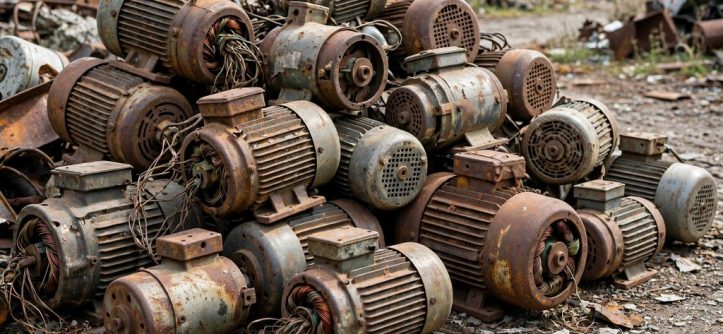
You have a garage shelf stacked with dead motors, and a vague memory that “there is copper in those.” There is. The real question is whether pulling it out is worth your Saturday.
The electric motor scrap price looks small on a yard’s board, often just cents per pound, which leaves many people wondering whether dismantling is a smart side hustle or a trap. This guide walks through what motors are made of, how yards price them, and when tearing one down actually pays.
What are scrap electric motors made of?
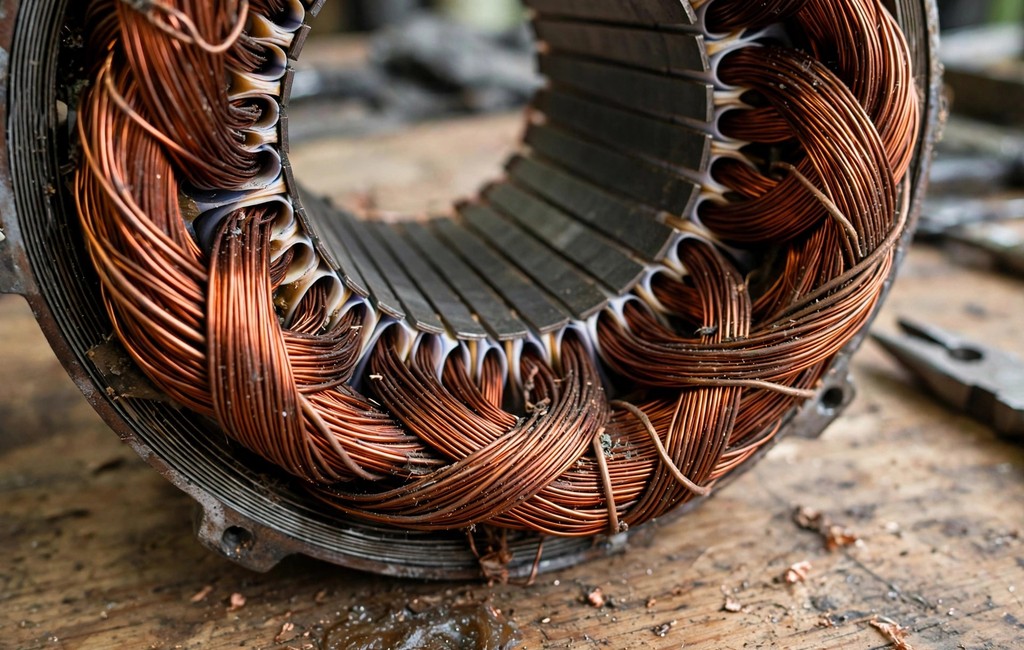
A typical motor is a heavy steel or cast-iron shell wrapped around a stator, which holds coils of insulated copper wire, and a rotor that spins inside it. Add bearings, a fan, a cord, and sometimes aluminum end caps. Most of the weight is steel and iron. The copper, which is the valuable part, is usually only a small share of the total.
This is why the electric motor scrap price per pound sits far below the price of copper. Yards estimate the average copper content across a mixed pile of motors and price the whole lot accordingly. Heavier motors with more windings earn more per pound than light, steel-heavy ones.
Electric motor scrap price: what should you expect?
Rates differ by region and by day, so check posted boards. Many yards pay on the order of tens of cents per pound for ordinary motors, and a few specialty types with more copper or magnets can earn more. Treat any single figure online as a snapshot, not a guarantee.
A quick illustration shows why volume matters. Imagine a yard paying a hypothetical $0.25 per pound. A 10-pound motor brings about $2.50, while a 60-pound industrial unit brings $15. A pickup bed of mixed motors can add up, but a handful of small ones will barely cover your fuel.
Sell whole or strip the copper?
This is the big decision, and the honest answer is that it depends on the motor and your time. Pulling copper from windings takes effort, and experienced scrappers often find that small motors produce only a little copper relative to the labor. Larger industrial motors, especially those with thick copper windings, tend to reward the work better.
- Sell whole when: The motors are small, mixed, or varied, you have limited time, or you cannot confirm the windings are copper.
- Dismantle when: The motors are large, the windings are clearly copper, and you have the tools, space, and patience to do it safely.
- Check first: Some modern motors use aluminum windings, which are worth far less. Scratch a small area of wire to see whether it shows copper’s reddish color.
How to sort motors for a better payout
Sorting costs nothing and often raises your rate. Many yards price categories such as small motors, large motors, and special types separately, so a mixed pile gets the lowest rate.
- Separate by size: Keep small appliance motors apart from heavy industrial ones.
- Pull cords and wiring: Insulated copper cords can be sold separately at a better rate than the motor.
- Identify special types: Some energy-efficient motors contain magnets and extra copper that can earn more. Ask your yard whether it prices them differently.
- Remove obvious non-metal: Plastic shrouds, rubber mounts, and other junk only add dead weight and may reduce your rate.
Safe dismantling basics
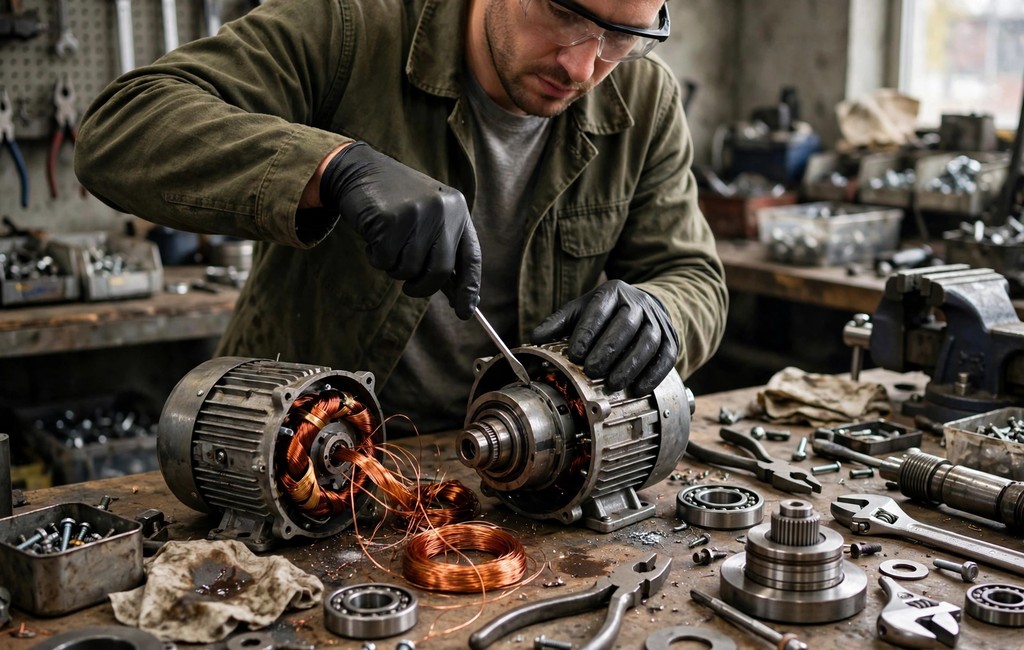
If you decide to strip a motor, treat it like any other workshop task. Unplug it and confirm it is disconnected from power. Some units hold a start or run capacitor that can store a charge, so discharge or remove it carefully. Wear gloves and eye protection, because cut copper edges and flying fragments are real hazards.
Never burn insulation off the wire. It releases toxic smoke, it may be illegal where you live, and yards often pay almost the same for insulated wire sold properly. Use cutters, a stripping tool, or a pulling method instead.
Where to sell scrap motors
General scrap yards buy motors, and most have a posted rate. Compare two or three, since motors can vary more than you would expect. Dedicated motor recyclers and industrial buyers may pay more for larger or higher-quality units, especially if you have a regular supply. Some yards also pick up larger loads, which saves you the lifting and the trip.
Could a motor be worth more working?
Before you scrap a motor, check whether it still works. A functioning single-phase or three-phase motor, especially from a recognized brand, can sell used for much more than its scrap value. Look at the nameplate for horsepower, voltage, and model number, then compare local listings.
Frequently asked questions
Why is the scrap price for motors so low?
Because most of a motor’s weight is steel and iron. Yards price the average copper content, which is usually a small fraction of the total weight.
Is it worth stripping copper from small motors?
Often not. Small motors contain little copper, and the labor can exceed the extra income. Larger motors are more likely to reward the effort.
How do I tell if windings are copper or aluminum?
Scratch the wire gently. Copper looks reddish, while aluminum looks silver. Aluminum windings are worth considerably less.
Can I sell washing machine and dryer motors?
Yes. Appliance motors are accepted by most yards, though they are usually lighter and priced like other small motors.
Do I need to remove the steel housing?
Not for whole-motor sales. If you dismantle for copper, you can sell the steel and iron separately at the lower ferrous rate.
Make your next motor run count
Start with a small test. Sort a few motors by size, call two yards for their current motor rate, and compare it with your effort. Tell us in the comments what kind of motors you are sitting on and we will help you decide whether to strip or sell them whole. Subscribe for more practical scrap price guides.




Leave a Reply