
You sit down to work, ready to tackle your to-do list, but the clutter on your desk is already screaming for attention. Sticky notes, loose pens, charging cables, and random paperwork create a visual noise that makes focusing feel impossible.
You are not alone. Studies show that a cluttered workspace can reduce productivity by nearly 30% and increase stress levels significantly. The problem isn’t your lack of discipline; it is a lack of the right systems. The solution starts with finding the perfect desk storage organizer desk decluttering ideas that actually fit your workflow. This guide walks you through practical, low-cost ways to transform your chaotic desk into a streamlined command center.
Why Does Desk Clutter Slow You Down?
Desk clutter directly impacts your brain’s ability to process information. Every physical item on your surface competes for your attention, forcing your brain to constantly filter out distractions. This cognitive load drains energy and reduces your ability to concentrate on complex tasks.
When your desk is messy, you also waste valuable time searching for things. Studies estimate the average worker loses roughly one hour per week looking for misplaced documents, pens, or sticky notes. That adds up to over fifty hours of lost productivity annually. Beyond time, clutter creates a psychological burden. It makes you feel overwhelmed before you even start working. Clutter signals that tasks are incomplete, which triggers a low-level anxiety that persists throughout the day. The fix is not about being tidy by nature; it is about designing a system that prevents clutter from forming in the first place.
The Cost of a Chaotic Desktop
- Lost time: Searching for items steals 10–15 minutes daily.
- Reduced focus: Visual noise decreases cognitive performance.
- Increased stress: Cluttered environments raise cortisol levels.
- Worse decision-making: Disorganization leads to mental fatigue faster.
What Is the Best First Step for Desk Decluttering?
The best first step is to remove everything from your desk surface. Completely empty the workspace so you can see the blank canvas. This radical move forces you to evaluate each item individually rather than shuffling piles around.
Place all items into three categories: keep, relocate, and discard. The “keep” pile should only include items you use daily or weekly. The “relocate” pile contains things that belong elsewhere, such as reference files or personal decorations that crowd your surface. The “discard” pile includes broken pens, old sticky notes, expired paperwork, and anything that no longer serves a purpose. Once you have sorted, clean the desk thoroughly. Only return items from the “keep” category to the surface, and store them purposefully. This reset provides clarity on exactly what needs organized storage moving forward.
How Do You Choose the Right Desk Organizer?
Choosing the right desk organizer depends entirely on the type of clutter you deal with most. You must match the organizer to your specific habits, not to what looks pretty in a store display.
Start by identifying your primary clutter category. If loose papers pile up, prioritize vertical file organizers. If pens and small tools vanish, choose divided trays or drawer inserts. If cables create a tangled mess, look for cord clips or under-desk cable trays. Measure your desk dimensions before purchasing anything. A large organizer that hangs off the edge wastes space and looks messy. Also, consider accessibility. Items you grab constantly, like a pen or phone charger, need open bins. Items you rarely need, like old tax forms, can go in closed drawers or a filing cabinet. For a wide selection of affordable paper management solutions, consider a dedicated filing organizer designed specifically for documents and mail.
Key Features to Look For
- Material durability: Metal or thick plastic lasts longer.
- Compartment size: Ensure it fits your largest items.
- Non-slip base: Prevents sliding when you grab things.
- Stackability: Allows future expansion without buying new gear.
Which Desk Storage Methods Work Best for Paper Clutter?
For paper clutter, vertical filing systems work far better than flat stacking. When papers stack flat, they become invisible and quickly become a pile you ignore. Vertical systems let you see labels and grab exactly what you need without disturbing other documents.
Implement the “touch it once” rule for every piece of paper that lands on your desk. Decide immediately whether to file it, act on it, or toss it. Use a tiered letter tray for incoming, pending, and completed documents. This creates a workflow through your physical space. For reference documents you need to keep but rarely access, use a desktop filing box or a small filing cabinet near your desk. Avoid keeping more than one week’s worth of active papers on your surface. Archive everything else out of sight but within arm’s reach.
Can Small Desk Organizers Really Make a Difference?
Yes, small desk organizers make a surprisingly significant difference because they create dedicated homes for tiny items that typically cause visual chaos. Pens, paperclips, sticky notes, headphones, and charging cables are the main culprits of desktop mess.
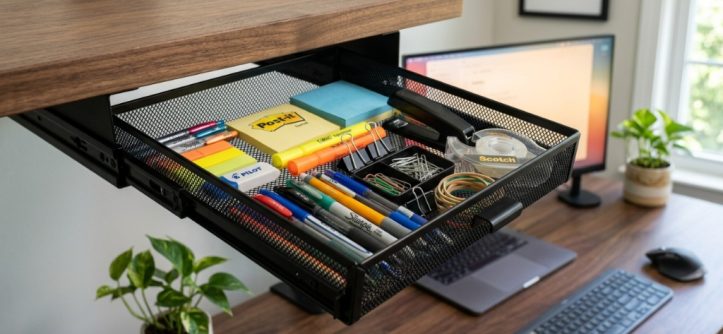
Using a multi-compartment tray or a small drawer divider reduces the time you spend hunting for these items by more than half. When every tiny object has a specific spot, you do not need to think about where it goes. You naturally return it there because the container signals its purpose. For example, a simple pen cup with dividers for pens, markers, and scissors prevents the frustrating jumble of writing tools. A small dish for paperclips and binder clips keeps them contained rather than scattered across your entire desk. These small investments pay off through daily ease of use and visible order.
How Should You Organize Desk Cables and Wires?
Organize desk cables by grouping them with adhesive clips or cable sleeves that run along the underside of your desk. This lifts wires off the surface entirely, eliminating the tangled mess that collects dust and frustrates you.
Start by unplugging everything. Label each cable with a small tag or colored sticker near the plug end so you know exactly which device it belongs to. Use a combination of cable clips, spiral wrap, and a small cable box to hide power strips. Run cables along the back edge of the desk using adhesive wire channels. For frequently disconnected cables, like a phone charger, use a short braided cable that stays neat and doesn’t create loops. The goal is to make cables invisible from your seated position while keeping them accessible for device connection.
Wire Management Tools That Work
- Adhesive cable clips: Route wires along desk edges.
- Spiral cable wrap: Bundles multiple cords into one.
- Cable sleeve: Hides wires completely.
- Cable management box: Conceals power strips and adapters.
Is a Minimalist Desk Better Than a Functional One?
A minimalist desk is not necessarily better than a functional one. The ideal desk balances minimal visual clutter with maximum utility for your specific workflow. A completely bare desk looks clean but often forces you to constantly get up for supplies.
The sweet spot is a “clean functional” approach. Keep only the items you reach for daily within arm’s reach. Everything else should have a home in a drawer, a shelf, or a storage bin under the desk. For example, if you use sticky notes constantly, a small dispenser on your desk is fine. If you use them once a week, store them in a drawer. Evaluate each object’s frequency of use. High frequency equals surface permission. Low frequency equals storage. This selective minimalism reduces visual noise without sacrificing convenience. A cluttered minimalist desk with a few perfectly chosen tools is far more effective than a bare desk with poor workflow.
When Should You Replace Old Organizers?
You should replace old organizers when they no longer fit your current workflow or when they actively contribute to clutter rather than solving it. Broken drawers, warped trays, and containers that are too small create more mess than they prevent.
Signs it is time for an upgrade include: having to cram items in, lids not closing properly, organizers sliding around, or using multiple mismatched containers where one larger unit would work. Also, if you have changed jobs or hobbies, your storage needs likely shifted. A student working from home needs different organization than a graphic designer or a financial analyst. Assess your current system every six months. If you find yourself creating piles around your organizer, it isn’t working. Invest in a properly sized, durable solution that matches your current reality.
How Do You Maintain a Decluttered Desk Long-Term?
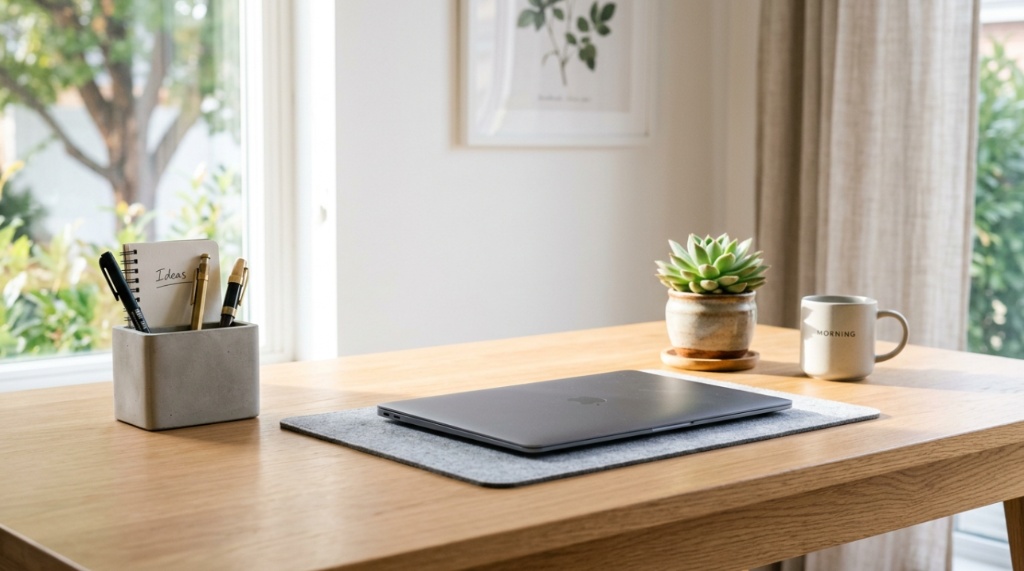
Maintain a decluttered desk by establishing a simple five-minute daily reset routine and a weekly deeper tidy. Consistency matters far more than perfection. A quick daily reset prevents clutter from accumulating again.
At the end of each workday, spend five minutes returning items to their designated homes. File away papers, put pens back in their cup, and toss any trash. This habit keeps your desk ready for the next morning. Weekly, take ten minutes to review pending items and archive or discard what you no longer need. Also, implement a “one in, one out” rule for desk accessories. If you buy a new pen holder, donate or recycle the old one. If you get a new gadget, remove one that you no longer use. This prevents storage solutions from overflowing and keeps your system sustainable.
What Affordable Desk Organizers Deliver the Most Value?
Affordable desk organizers that deliver the most value include vertical file sorters, tiered pen trays, adhesive cable clips, and small drawer dividers. These low-cost items (usually under $20 each) solve the most common clutter problems.
Vertical file sorters prevent paper piles from forming. Tiered pen trays stop the chaotic collection of loose writing tools. Adhesive cable clips eliminate tangled wires instantly. Small drawer dividers turn messy junk drawers into organized storage for office supplies. Consider a desktop filing organizer if paper management is your biggest struggle. Look for durable materials and simple designs that won’t break or look worn quickly. Avoid novelty organizers that serve one very specific purpose. Versatility and durability give the best return on your investment. Spending $30 to $50 total on a few quality pieces is enough to completely transform your workspace.
Which Organizers Should You Avoid Buying?
Avoid buying organizers that are too small, too decorative, or require complicated assembly. These often become clutter themselves rather than solving your storage problems. A pretty organizer that doesn’t fit your items is wasted money and space.
Also, avoid organizers with many tiny compartments unless you know exactly which tiny items you will store. Generic “knick-knack” trays often become dumping grounds for random items, defeating their purpose. Steer clear of mesh organizers that catch dust and are hard to clean. Solid, flat surfaces wipe clean easily. Avoid anything with moving parts that can break, such as rotating pen holders or complicated stacking systems. Simple, sturdy, and appropriately sized is the winning formula. If an organizer requires a manual to figure out how to use it, skip it.
Frequently Asked Questions
How often should I declutter my desk?
You should do a light declutter daily (5 minutes) and a deeper organization weekly (15 minutes). A full reset every three months is ideal for maintaining long-term order.
What is the most important rule for desk organization?
The most important rule is “a place for everything, and everything in its place.” Every item must have a designated home, and you must commit to returning it there after each use.
Can I organize my desk without buying anything?
Yes, you can use repurposed containers like jars, small boxes, and divided cutlery trays. Use rubber bands to bundle cables and binder clips to wrangle cord ends. Creativity can replace spending.
Should I keep photos or decorations on my desk?
Keep one or two small items that bring you joy or reduce stress. Too many decorations create visual noise that reduces focus. Choose quality over quantity for personal items.
How do I stop my desk from getting cluttered again?
Implement a daily 5-minute reset, adopt the one-in-one-out rule for accessories, and handle paper immediately using the “touch it once” method. Consistency prevents clutter from returning.
What is the best material for desk organizers?
Durable plastic or powder-coated metal is best for longevity. Wood looks nice but can be expensive and may warp over time. Choose materials that wipe clean easily and resist wear.
How do I organize a very small desk?
Use vertical space with wall-mounted shelves, under-desk trays, and monitor risers with storage. Prioritize only daily essentials on the surface and store everything else out of sight.
By sorting your loose papers into vertical trays and hiding cords, you create a workspace that boosts daily productivity. As remote and hybrid setups evolve, these trends are changing how the office will look, making personalized organization more crucial than ever
Conclusion
Decluttering your desk does not require a complete lifestyle overhaul or an expensive shopping spree. It starts with understanding your clutter habits and choosing storage solutions that match your real-world workflow. Remove everything, sort ruthlessly, and assign a specific home for each category of item. Prioritize vertical paper filing, dedicated pen storage, and hidden cable management for the biggest impact. Remember that small, daily resets are more effective than occasional deep cleans. Your desk is a tool designed to help you work, not a storage unit. When you treat it as a functional workspace supported by simple organizers, you reclaim your focus, reduce stress, and make every task easier. Start with the one organizer that solves your biggest clutter problem today, and build from there.




Leave a Reply