
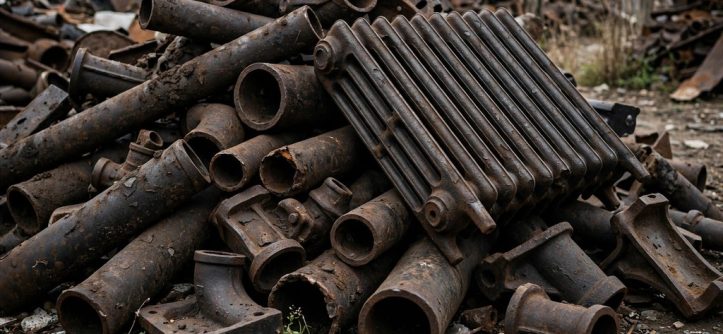
A cast iron bathtub weighs more than most adults. It also may be worth about as much as a nice dinner, if you are lucky. Before you wrestle one onto a truck, it helps to know what the metal really pays.
The cast iron scrap price confuses people because search results blend two very different things: what yards pay for old iron, and what manufacturers charge for new castings. This guide separates them, gives realistic expectations, and helps you decide whether a haul is worth the gas and the sore back.
What is cast iron scrap?
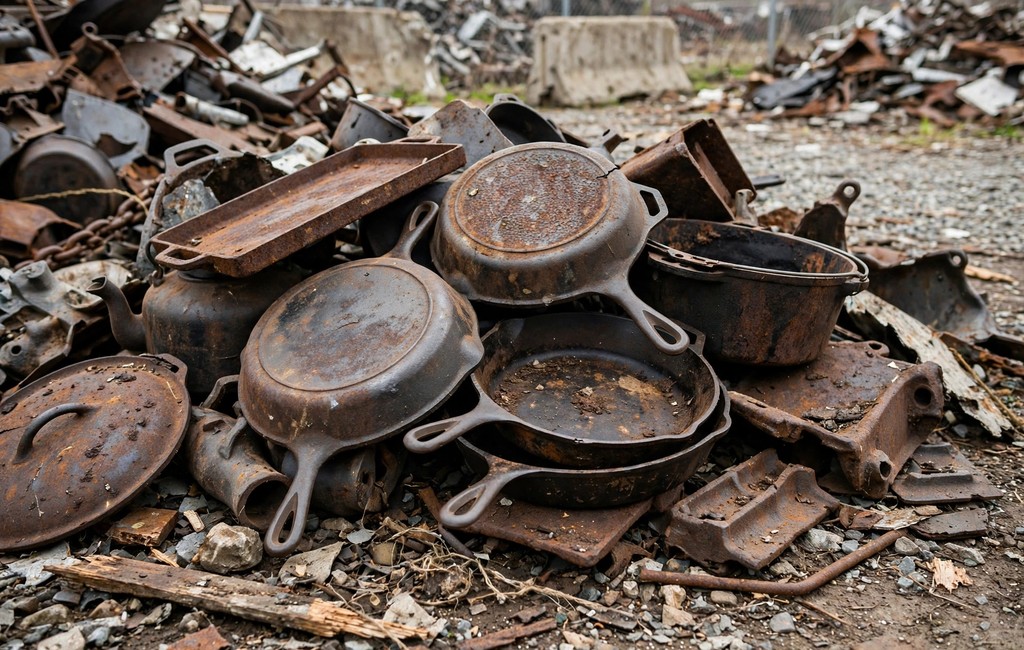
Cast iron is an iron-carbon alloy poured into molds. It is heavy, hard, and brittle. If you hit it with a hammer, it tends to crack or chip instead of bending, which is a quick giveaway. It is magnetic, usually dull gray, and often rusty on the surface.
In the scrap trade it falls into the ferrous category, meaning it contains iron and sticks to a magnet. Ferrous metals are worth far less per pound than non-ferrous metals such as copper, brass, or aluminum, but they are plentiful, and weight adds up fast.
Cast iron scrap price: what do yards pay?
Expect modest numbers. Ordinary scrap iron is often quoted in pennies to low tens of cents per pound, and many yards quote by the ton instead. A ton is 2,000 pounds, so a price of, say, $150 per ton works out to about 7.5 cents a pound. Rates move with steel demand and regional markets, so what applies in one city may not apply in another.
Some yards separate cast iron into categories such as auto cast, machinery cast, and plain cast, with clean, heavy pieces earning the better rate. Dirty or mixed material, and pieces with steel or other metals attached, usually get the lowest price.
Why do online price quotes conflict?
Because many pages answer a different question. A foundry or supplier price for new cast iron, which can run to several dollars per pound, has nothing to do with what a yard will pay for a worn-out radiator. Other pages quote prices per ton without saying so, which makes the number look enormous. When you compare figures, always check the unit, the date, and whether the price is for buying or selling.
Quick math: is it worth the haul?
Run a simple calculation before you load up. Suppose your yard pays a hypothetical $0.06 per pound. A 100-pound item brings $6, and a 300-pound bathtub brings $18. Now subtract fuel, time, and the cost of borrowing a truck or hiring help. A single piece rarely pays for a long trip, but a full load of 1,000 pounds brings about $60, which starts to make sense.
The lesson is to combine cast iron with other scrap. Bring it along with copper, brass, aluminum, or appliances, so the iron is a bonus instead of the reason for the trip.
What cast iron items are common?
- Household: Radiators, bathtubs, sinks, old stoves, and cookware.
- Automotive: Engine blocks, brake rotors, drums, and cylinder heads.
- Plumbing: Old drain pipe and fittings, often called soil pipe.
- Outdoor and municipal: Manhole covers, grates, fence posts, and garden ornaments.
- Industrial: Machine bases, pump housings, and counterweights.
How to tell cast iron from steel
- Hammer test: Cast iron cracks and chips, while steel dents and bends.
- Surface: Cast iron often shows a rough, sandy texture where it left the mold.
- Weight: It is very heavy and compact for its size.
- Rust: It rusts easily, producing a brown, flaky coating.
- Marks: Look for foundry stamps or mold seams.
Tips for a better cast iron payout
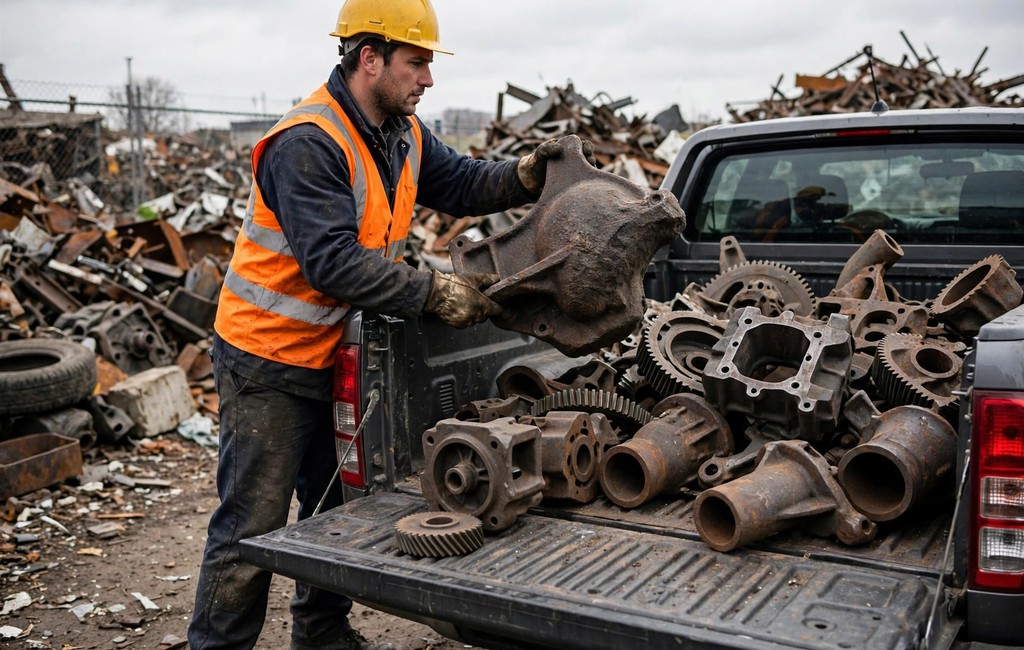
Keep it clean and separate. Remove steel bolts, brass fittings, wood, rubber, and plastic, because attached junk can push the load into a lower category. Break large pieces down only if you can do so safely, since many yards have size limits and some will not accept very large items. Wear steel-toe boots, gloves, and eye protection, and use proper lifting methods. A cast iron tub can seriously injure you if it slips.
Before scrapping, consider reuse. Vintage cast iron skillets, ornate radiators, and antique tubs sometimes sell for much more intact than as metal. A quick check of local listings costs nothing.
Frequently asked questions
Is cast iron worth anything as scrap?
Yes, but not much per pound. The value comes from weight, so heavy items and full loads add up, while single small pieces rarely do.
Is cast iron scrap sold by the pound or by the ton?
Both are used. Many yards post a per-pound rate for walk-in sellers and a per-ton rate for larger industrial loads.
Does a cast iron bathtub have scrap value?
Yes. Its weight gives it modest value, usually in the range of tens of dollars, depending on the yard and the tub’s size. Some yards ask that the porcelain be removed or may price it lower.
How do I tell cast iron from aluminum or stainless?
Use a magnet and weight. Cast iron is magnetic and very heavy, aluminum is light and non-magnetic, and most common stainless is only weakly magnetic or not at all.
Should I break up cast iron before selling?
Only if you can do it safely and the yard wants smaller pieces. Cast iron fragments can fly, so use eye protection and consider asking the yard first.
Time to decide
Weigh your pile, look up your local yard’s posted iron rate, and do the quick math from this guide. If the haul makes sense, bundle it with your other scrap and go. Tell us in the comments what you are hauling and we will help you estimate it. Subscribe for more honest scrap price breakdowns.



Leave a Reply