
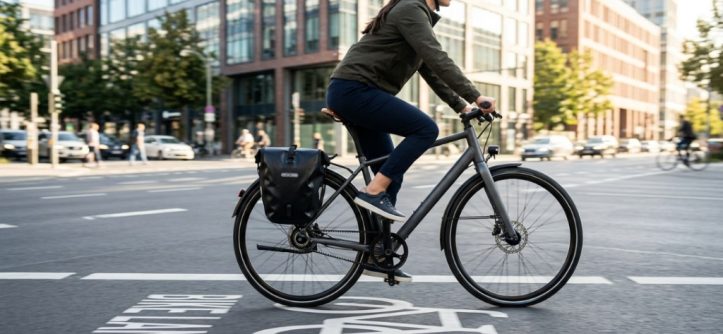
For two years I commuted 8 miles on my mountain bike because I could not justify owning two bikes — and every morning those knobby tires buzzed on pavement while I watched hybrid riders cruise past with half my effort. Then on weekends, those same hybrid riders watched me disappear onto trails they could not follow. The mountain bike review versus commuter question is not about which is better — it is about whether your riding life is 80% pavement or 80% trail, and whether one bike can honestly serve both roles without making you miserable at either. A commuter and trail bike compromise exists, but understanding when to compromise versus when to specialize saves both money and daily frustration.
What Is the Fundamental Difference Between Mountain Bikes and Commuter Bikes?
Mountain bikes prioritize off-road capability (suspension, knobby tires, durable frames) at the cost of pavement efficiency, while commuter bikes prioritize on-road efficiency (smooth tires, rigid frames, upright position) at the cost of off-road capability — each optimizes for its primary terrain while compromising on the other.
| Feature | Mountain Bike | Commuter/Hybrid Bike |
|---|---|---|
| Tires | Wide (2.0–2.5″), knobby tread | Narrow (1.5–2.0″), smooth or semi-slick |
| Suspension | Front (100–150mm) or full | None or minimal (50–75mm) |
| Frame geometry | Slack, aggressive, trail-focused | Upright, comfortable, road-focused |
| Gearing | Wide range for steep climbs | Moderate range for flat/rolling terrain |
| Weight | 28–35 lbs | 22–30 lbs |
| Accessories | Minimal (no racks/fenders) | Racks, fenders, lights, kickstand |
| Pavement efficiency | 60–70% of commuter | 100% (optimized) |
| Trail capability | 100% (optimized) | 10–30% (gravel paths only) |
When Should You Choose a Mountain Bike Over a Commuter?
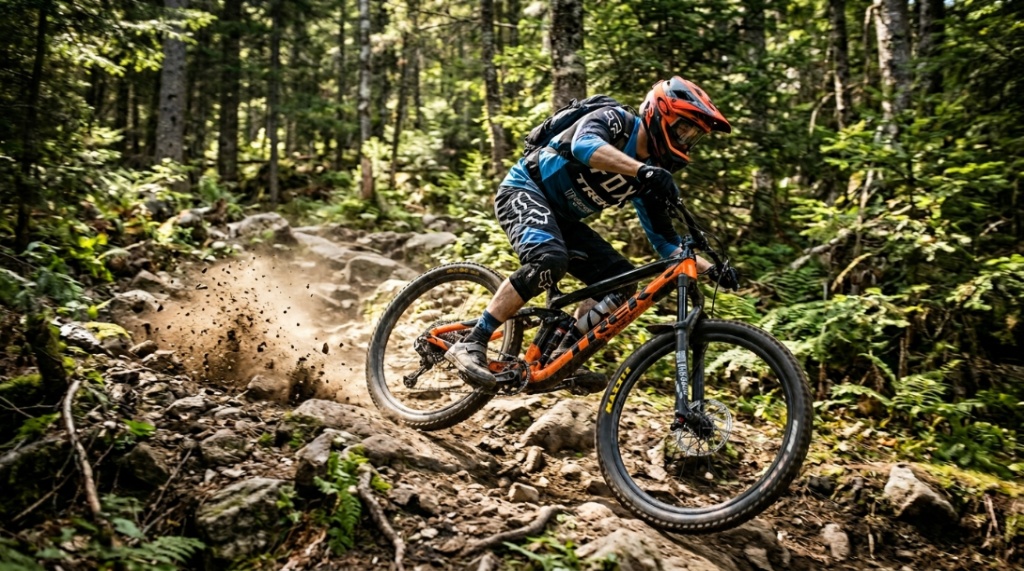
Choose a mountain bike when: trail riding is your primary motivation (more than 50% of riding), your commute includes unpaved sections or rough roads, you want one bike that can handle occasional trails even if commuting is less efficient, or you live in an area where road conditions are poor enough that suspension provides genuine comfort benefit.
- Trail riding is the goal: If you are buying a bike primarily for trail fun and commuting is secondary, a mountain bike handles both (one poorly, one well) while a commuter handles only one (pavement).
- Mixed-surface commute: Routes with gravel, broken pavement, unpaved shortcuts, or rough road conditions benefit from mountain bike tires and suspension that commuter bikes lack.
- One-bike household: If budget or space allows only one bike, a mountain bike provides broader capability range (trails through pavement) versus a commuter (pavement only).
- Weekend warrior lifestyle: Commute during the week, hit trails on weekends — one mountain bike with semi-slick tires serves both purposes acceptably.
When Should You Choose a Commuter Bike Over a Mountain Bike?
Choose a commuter when: 80%+ of your riding is paved roads and bike paths, your commute distance is over 5 miles one-way (efficiency matters significantly), you need practical accessories (racks, fenders, lights), or you have no interest in off-road riding and want maximum pavement comfort.
- Pavement-dominant riding: Knobby mountain bike tires on pavement waste 20–30% of your pedaling energy through rolling resistance. Over a 10-mile commute, that means arriving significantly more tired or slower than necessary.
- Distance commuting: Beyond 5 miles one-way, the efficiency difference between mountain and commuter bikes becomes significant — 5–10 minutes per trip, compounding into hours per month of wasted time and energy.
- Practical needs: Racks for panniers (groceries, work clothes), fenders for rain protection, integrated lights for safety — commuter bikes accommodate these essentials that mountain bikes resist.
- No trail interest: If trails genuinely do not interest you and your riding is transportation and fitness on pavement, a commuter bike does this job better in every measurable way.
Can a Mountain Bike Work as a Commuter?
Yes — with two modifications: semi-slick or slick tires ($40–$60 per pair) eliminate 80% of the rolling resistance penalty, and fork lockout engagement eliminates suspension bob. These changes make a mountain bike 85–90% as efficient as a commuter on pavement while retaining full trail capability for weekend rides.
Making a mountain bike commuter-friendly:
- Tire swap ($40–$60): Replace knobby trail tires with semi-slick (smooth center, knobby edges) or full slick tires. Reduces rolling resistance by 25–35% on pavement. Keep trail tires for weekends — swap takes 10 minutes.
- Lock out suspension: Most quality forks have lockout switches that eliminate energy-wasting bob during pedaling on smooth surfaces. Engage for commuting, release for trails.
- Add fenders ($20–$30): Clip-on fenders protect clothes from road spray without permanent modification. Remove for trail days.
- Add rack if frame allows ($30–$50): Some mountain bike frames have rack mount points. Seatpost-mounted racks work on frames without dedicated mounts. Enables panniers for carrying work gear.
- Lights ($20–$40): USB-rechargeable front and rear lights for commute safety. Quick-release mounts allow removal for trail rides.
The BrightPeak 26-inch mountain bike exemplifies the dual-use category — affordable enough that tire swaps for commuting do not feel wasteful, while trail-capable enough for genuine weekend singletrack enjoyment.
What About Hybrid Bikes as a Compromise?
Hybrid bikes split the difference: moderate tires (1.5–2.0″), minimal or no suspension, upright geometry, and accessory mounts. They handle pavement at 90% commuter efficiency and light gravel at 30–40% mountain bike capability — the true middle ground for riders whose off-road ambitions do not extend beyond gravel paths and smooth fire roads.
- Hybrid strengths: Comfortable upright position, efficient on pavement, handles gravel paths, accommodates racks and fenders, lighter than mountain bikes.
- Hybrid limitations: Cannot handle real singletrack (rocks, roots, drops). Tires too narrow for mud or sand. No suspension for rough terrain. If your “off-road” is manicured gravel, hybrids excel. If your off-road includes actual trails, they fail.
- Best for: Riders whose off-road never exceeds gravel bike paths and whose primary use is efficient pavement transportation with comfort priority.
How Do You Make the Final Decision?
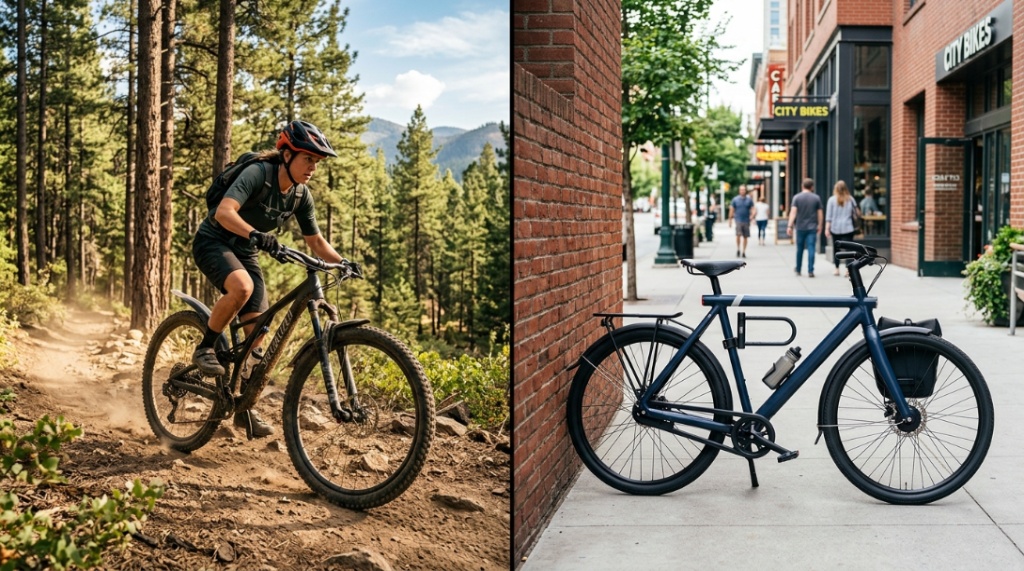
Honestly assess your last 20 rides: if 15+ were pavement, buy a commuter or hybrid. If 10+ included real trails (dirt, rocks, roots), buy a mountain bike. If truly split 50/50 with genuine trail riding, buy a mountain bike with a second set of commuter tires — one bike handles both with a 10-minute tire swap.
Decision framework:
- 80%+ pavement → Commuter bike. Do not compromise daily efficiency for hypothetical trail rides.
- 80%+ trails → Mountain bike. Do not compromise trail capability for occasional pavement.
- 60/40 either direction → Mountain bike with tire swap option. A mountain bike can become a reasonable commuter. A commuter cannot become a trail bike.
- 50/50 with serious both → Two bikes. A $500 commuter plus a $500 mountain bike outperforms any single $1,000 compromise at both jobs.
If your daily route involves pothole-covered roads or gravel paths, you might wonder if a rugged build is actually better for the pavement. Are Mountain Bikes Good for Everyday Use, or will the heavy frames and wide, knobby tires just slow you down on your morning commute? While they offer incredible durability and shock absorption, understanding how they stack up against dedicated city rides will help you avoid wasting energy on your daily trips.
Conclusion
The mountain bike versus commuter decision depends entirely on where you actually ride — not where you imagine riding. Mountain bikes sacrifice 20–30% pavement efficiency for 100% trail capability. Commuters sacrifice all trail capability for optimized pavement performance. If trails matter to your riding life, a mountain bike with semi-slick tires provides acceptable daily commuting while preserving weekend trail access. If trails never enter your real (not imagined) riding routine, a commuter delivers better daily experience without capabilities you would never use.
Be honest about your riding reality. The best bike is the one optimized for what you actually do most — not what you wish you did or plan to do someday. Buy for today’s riding life, and add a second specialized bike later if your usage genuinely splits between terrain types.
Do you use one bike for everything or own separate bikes for different purposes? Share what works for your riding mix below.
Frequently Asked Questions
Is commuting on a mountain bike bad for the bike?
No — pavement riding is easier on mountain bikes than trail riding. The only wear concern: knobby tires wear faster on pavement than on dirt (the hard surface abrades rubber compound). Suspension components last longer because pavement provides less stress than trails. Commuting on a mountain bike is mechanically gentle compared to its designed purpose.
How much slower is a mountain bike on pavement?
With stock knobby tires: approximately 15–20% slower than an equivalent commuter at the same effort. With semi-slick tires: approximately 5–10% slower. The difference on a 5-mile commute: 1–3 minutes with semi-slicks, 3–5 minutes with knobby tires. Perceptible but manageable for most commute distances.
Can I take a commuter bike on light trails?
Gravel paths, smooth fire roads, and packed dirt — yes. Rocky singletrack, root-covered trails, or anything requiring suspension — no. Commuter tires lack grip on loose surfaces, rigid frames transmit every bump directly to your body, and the upright geometry becomes unstable on steep descents. Know the boundary and stay within it.
Should I buy a gravel bike instead of either?
Gravel bikes excel if your “off-road” is gravel roads and smooth dirt rather than technical singletrack. They provide road-bike efficiency on pavement with adequate capability on non-technical unpaved surfaces. They cannot handle what mountain bikes handle (rocks, roots, drops, steep technical terrain). For riders whose off-road is exclusively gravel, they represent the best compromise.
Is a hardtail mountain bike good enough for commuting?
Yes — hardtails are better commuters than full-suspension mountain bikes because they have less suspension energy loss during pedaling on smooth surfaces. Lock out the fork on pavement, add semi-slick tires, and a hardtail mountain bike becomes an acceptable commuter that transforms into a capable trail bike on weekends with a tire swap.
How much does it cost to make a mountain bike commuter-friendly?
$60–$150 covers the essentials: semi-slick tires ($40–$60), fenders ($20–$30), lights ($20–$40), and a rack or bag ($30–$50). These accessories are removable for trail days. The investment pays back in transportation savings within 1–2 months if replacing car trips.




Leave a Reply