
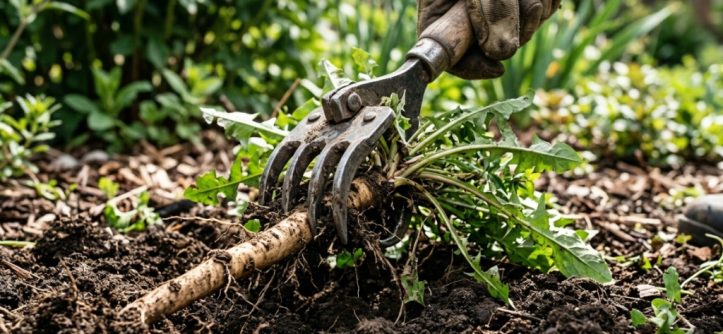
If you maintain a lawn in Ohio, you already know the frustration: dandelions, broadleaf plantains, and thistles seem to thrive in our heavy clay soil and unpredictable weather. Bending over for hours to dig out taproots is exhausting, and most common weed killers come with a list of environmental concerns. A stand-up weed puller is the practical middle ground—but not all tools handle Ohio’s soil conditions equally. This guide breaks down exactly what to look for, which features matter most for our state’s unique lawn challenges, and how to avoid wasting money on a tool that will bend, rust, or snap under pressure.
Key Takeaways
- Ohio’s heavy clay soil demands a weed puller with a solid steel shaft and a foot pedal that won’t flex under pressure—avoid aluminum shafts if you have compacted ground.
- A four-claw or five-claw head with a 10-inch depth reach is the sweet spot for removing long taproots like dandelions without leaving root fragments behind.
- Weed pullers with a 36-inch or longer handle reduce back strain for the average adult height range, but you must match handle length to your own height for proper leverage.
- Stand-up pullers work best in moist soil—attempting to use one on hard, dry Ohio clay in July will damage the tool and produce disappointing results.
- Ratchet-style mechanisms and self-ejecting heads save real time on large lawns, but they add moving parts that can fail in sandy or gritty soil conditions common near Ohio river valleys.
Why Ohio Soil Makes the Stand-Up Weed Puller a Smart Investment
Ohio sits within the glaciated Central Lowland region, which means most of the state’s lawns sit on top of dense glacial till and heavy clay. This soil type behaves differently than the sandy loam found in coastal states or the volcanic soils of the Pacific Northwest. Clay particles pack tightly together, which means weed roots grip the soil with remarkable tenacity. When you yank a weed out of clay soil, the root often breaks off several inches below the surface, leaving behind the fragment that will regenerate a new plant within weeks.
A stand-up weed puller addresses this problem by using a twisting motion and a deep insertion depth to loosen the soil around the root before extraction. Unlike hand trowels or simple claw tools, a quality puller lets you push the claws into the ground using your body weight, then pivot the handle to loosen the soil before lifting the weed free. This mechanical advantage matters even more when you consider the average dandelion taproot extends 6 to 14 inches deep in undisturbed clay soil.
When you’re comparing options, keep in mind that the best stand up weed puller for Ohio lawns is going to prioritize corrosion resistance, shaft strength, and jaw geometry that penetrates dense ground without excessive effort.
Key Features That Determine Performance in Ohio Lawns
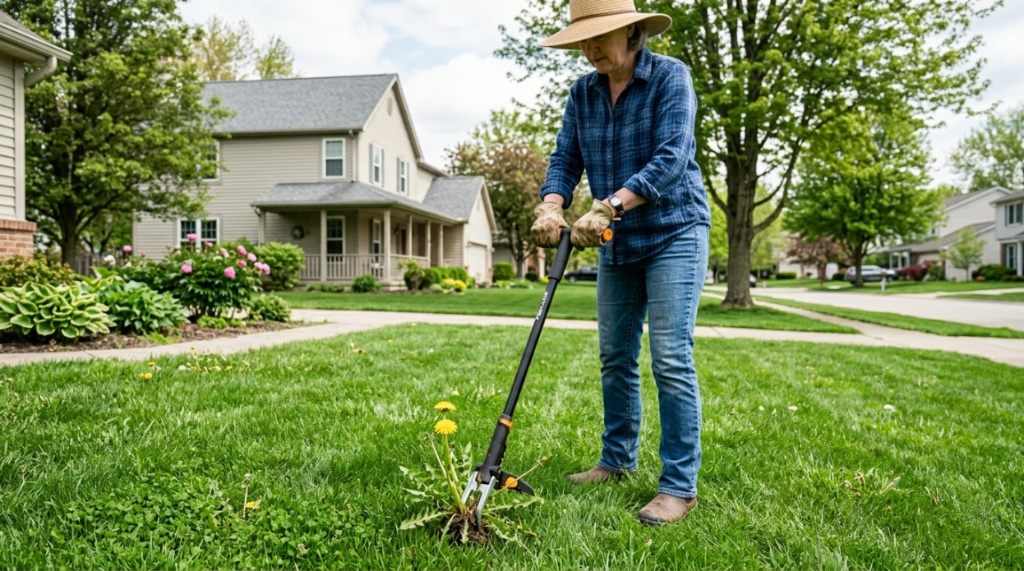
Before you compare brands or prices, you need to understand the specific mechanical features that separate a useful tool from a frustrating one. Ohio’s freeze-thaw cycles also mean your tool will be stored in a garage or shed where temperature swings create condensation, so rust resistance is non-negotiable.
Handle Length and Material
Stand-up weed pullers come with handles ranging from 30 to 48 inches. The right length depends on your height, not your lawn size. A handle that forces you to hunch forward negates the entire purpose of the tool. To check fit, stand upright with the puller head resting on flat ground. The handle top should reach somewhere between your waist and mid-chest. If it only reaches hip height, you’ll bend slightly with each use, leading to lower back fatigue.
Material matters more than most people realize. Powder-coated steel is the standard for durability, but some budget models use aluminum to save on shipping weight. Aluminum flexes significantly when you push down on compacted clay, which means you lose leverage and energy goes into bending the shaft rather than driving the claws into the ground. Fiberglass handles absorb shock well but can crack in freezing temperatures. Solid steel with a rubberized grip remains the most reliable choice for Ohio’s conditions.
To prepare your yard for other outdoor seasonal hobbies, check out our guide on how to choose the best fishing bobbers in Georgia before your next trip.
Jaw Design and Claw Count
The number of claws affects both extraction power and soil disturbance. Three-claw designs are lighter and easier to press into firm soil, but they grip smaller soil volumes, which means you often need multiple attempts on large weeds. Four-claw and five-claw designs extract a wider plug of soil, capturing more lateral roots that branch off from the main taproot. The trade-off is increased insertion resistance, especially in dry clay.
The jaw shape matters just as much as the count. Look for claws that taper to sharp points rather than rounded tips. Sharp points penetrate dense soil more effectively and reduce the amount of downward force required. Some premium models include serrated inner edges that grip the root while the surrounding soil plug remains intact, which prevents the root from sliding out of the claw grip during extraction.
Depth Stop and Root Removal Mechanism
Most quality pullers include a depth stop—a horizontal bar that prevents the claws from burying too deep and making extraction unnecessarily difficult. For Ohio lawns, a maximum depth of 9 to 10 inches is ideal. Anything deeper than that pulls up excessive soil, creating visible divots that disturb your lawn’s appearance.
Ejection mechanisms range from none (you tap the head on the ground to release the soil) to integrated foot-operated ejector plates that push the soil plug out without requiring you to bend. The foot-operated ejector is worth the extra cost if you have a large lawn or experience back pain, as it eliminates the repetitive bending motion that causes fatigue.
| Feature | What to Look For | Why It Matters for Ohio |
|---|---|---|
| Handle length | 36–42 inches | Accommodates the average adult height range while maintaining upright posture |
| Shaft material | Solid steel, powder-coated | Survives freeze-thaw cycles and resists bending in dense clay |
| Claw count | 4 claws | Balance between soil penetration and complete root capture |
| Foot pedal style | Wide, non-slip tread | Provides stable downward force even in wet morning grass |
| Ejector | Foot-operated steel plate | Eliminates bending during repetitive removal tasks |
| Weight | 3.5–5 pounds | Heavy enough for leverage but light enough for extended use |
How to Use Your Stand-Up Weed Puller Correctly
Even the best tool performs poorly with improper technique. Learning two specific methods will improve your extraction rate from about 60 percent on the first attempt to over 90 percent, which means fewer repeated pulls and less soil disturbance.
The Two-Step Twist Method
The most common beginner mistake is attempting to pry the weed out using the handle as a lever immediately after pressing the claws into the ground. This approach pops the claws out of the soil sideways and leaves the root intact. Instead, use the two-step twist method:
- Position the jaws directly over the weed center, press the foot pedal firmly until the depth stop touches the soil surface.
- Rotate the handle 60 to 90 degrees clockwise, then 60 to 90 degrees counterclockwise, to loosen the soil around the root structure.
- Lift straight up with steady vertical force rather than leaning back on the handle.
The twisting motion is what separates a successful extraction from a torn root. Loose, undisturbed soil allows the claws to undercut the taproot’s lateral branches, improving your chances of pulling the entire plant in one piece.
Timing Your Weeding Sessions for Maximum Success
Weed extraction works best when soil moisture is moderate—damp enough that the soil compresses rather than crumbles, but not so wet that the claws become suction-cupped in mud. In Ohio, this usually means weeding 24 to 48 hours after a light rain or the morning after a heavy overnight rain. Spring and early fall are the most productive periods because the soil retains more moisture after the summer heat has passed.
Weeding during a drought will result in broken roots and frustrated effort. If you must weed during dry conditions, water the targeted area deeply the evening before weeding. This softens the soil profile to at least 6 inches deep and dramatically improves root extraction success.
Common Mistakes That Ruin Weed Pullers Prematurely
Storage and maintenance habits do more to extend a weed puller’s lifespan than the initial purchase price. Ohio’s freeze-thaw cycles are particularly brutal on tools that are left outside or stored in unheated, damp sheds.
Neglecting Rust Prevention
Clay soil retains moisture and often contains variable pH levels that accelerate corrosion. After each use, rinse the claw head with clean water to remove acidic soil residue, then dry it completely before storage. A light spray of silicone-based lubricant on the claws and ejector mechanism prevents rust and ensures smooth operation. This routine takes about two minutes but will extend your tool’s usable life by several years.
Using the Tool in Frozen or Rock-Heavy Ground
Attempting to force the claws into frozen November ground or soil filled with construction debris will bend the claws or snap the shaft. If you encounter a sharp resistance point, stop pressing and test a different location a few inches away. Ohio’s urban lawns frequently contain buried construction gravel or old demolition debris that can permanently damage thin claw tips.
How to Match the Tool to Your Lawn Size and Weed Pressure
Not every lawn needs the same type of puller. Consider your specific situation before spending money, because a tool suited for a small suburban lot will feel inadequate on a sprawling rural yard, and vice versa.
Small Lawns (Under 5,000 Square Feet)
For small lawns with moderate weed pressure, a standard four-claw puller with a wooden or steel handle will suffice. You’re extracting perhaps a dozen weeds per session, so manual ejection by tapping the head is acceptable. Prioritize handle comfort and weight over ejection convenience.
Large Lawns (Over 10,000 Square Feet)
If you’re clearing dozens of weeds in a single session, the foot-operated ejector becomes essential. It reduces the repetitive bending motion that turns a 30-minute weeding task into a back-straining chore. Look for models with a wide foot pedal that accommodates different shoe sizes and provides a non-slip surface for wet morning conditions.
Maintenance That Keeps Your Tool Working for Years
Apart from rust prevention, your puller requires periodic tightening of bolts and screws that loosen from repetitive twisting pressure. Check the joint where the shaft connects to the claw head—this is the most common failure point on budget models. Apply thread-locking compound to these bolts to prevent gradual loosening during use.
Sharpen the claw tips annually using a metal file. Dull tips substantially increase the force required to penetrate the soil, which cascades into poorer extraction results and earlier fatigued wrists and shoulders. A sharp claw tip makes the tool noticeably easier to use, especially in Ohio’s compacted clay.
Frequently Asked Questions
Are stand-up weed pullers effective on all weed types in Ohio?
They are highly effective on taproot weeds like dandelions, plantains, and thistles. They are less effective on creeping weeds like ground ivy or clover that spread through surface runners rather than deep taproots. For those weeds, a different approach like targeted scraping or systemic treatment is more effective.
Will a stand-up weed puller damage my lawn?
Every extraction removes a small plug of soil and turf, typically 1.5 to 2.5 inches in diameter. These holes usually fill in naturally within one to two weeks during active growing seasons. To speed recovery, lightly fill each hole with a topsoil-sand mix and keep the area watered.
How many weeds can I expect to pull in one hour?
An average user with a quality puller extracts 40 to 60 weeds per hour in moist soil conditions. In dry, compacted soil, that number drops to 15 to 25 per hour. The efficiency gain comes from soil moisture, not just tool quality.
Can I leave my weed puller outside in Ohio’s weather?
No. Ohio’s freeze-thaw cycles create condensation that promotes rust even on powder-coated surfaces. Always store your puller in a dry, sheltered location. If you only have outdoor storage space, cover the tool or lean it under an eave where it stays dry.
What is the difference between a weed puller and a weed wrench?
A weed puller uses a vertical pressing motion and claw grip to extract weeds from the top down. A weed wrench uses a lever and gripping mechanism to pry out larger woody weeds or saplings by rotating the entire plant out of the ground. For typical Ohio lawn weeds, a stand-up puller is the more appropriate and versatile tool.
Conclusion
Buying the best stand-up weed puller for Ohio lawns comes down to matching the tool’s mechanical features to our state’s dense clay soil and your specific physical needs. Prioritize a solid steel shaft, four-claw head, foot-operated ejector, and a handle length that keeps you standing upright. Pair that purchase with proper technique—especially the twist method and timing your weeding sessions around soil moisture—and you’ll dramatically reduce your weed population without chemicals or back-breaking labor. Maintain your tool with basic rust prevention and annual sharpening, and it will serve you through many Ohio gardening seasons to come.



Leave a Reply