

Imagine stepping into your kitchen after cooking a big meal. The air feels heavy with smoke and odors. This common scene highlights a bigger issue. Poor air quality in kitchens affects health every day. Many people overlook this problem. Yet, simple solutions exist. An island range hood captures pollutants right at the source. It keeps your space fresh. According to a study by Lawrence Berkeley National Laboratory, about 60 percent of California homes that cook at least once a week with gas stoves reach pollutant levels that would violate outdoor air standards without proper ventilation. The U.S. Environmental Protection Agency notes that using range hoods reduces fine particulate matter from cooking by pulling it outdoors. This article explores how these hoods work. You will learn practical ways to boost your kitchen’s air.
Understanding Kitchen Air Pollution
Kitchens produce various pollutants during daily activities. Cooking releases smoke, steam, and grease into the air. These elements build up quickly. Over time, they harm indoor environments. Health experts warn about long term effects. Respiratory issues arise from constant exposure. Children and elderly face higher risks. Research shows cooking without ventilation increases nitrogen dioxide levels. This gas irritates lungs. Fine particles enter bloodstreams too. They cause inflammation. Governments track these concerns. The EPA emphasizes controlling sources. Proper airflow prevents buildup. Awareness grows among homeowners. They seek better options. Transitioning to effective systems makes sense. You protect family health this way.
Moreover, everyday habits contribute to the problem. Frying food generates more particles than boiling. Gas stoves add combustion byproducts. Electric ones create heat related emissions. Even microwaves release vapors sometimes. Indoor spaces trap these contaminants. Without escape, concentrations rise. Studies link this to asthma flares. Headaches occur frequently too. Fatigue sets in after meals. Recognizing patterns helps. You notice smells lingering longer. Surfaces get greasy fast. These signs point to poor quality. Addressing them early avoids bigger troubles. Experts recommend monitoring levels. Simple devices measure particles now. They provide real data. Armed with knowledge, you act wisely.
Furthermore, outdoor factors influence indoor air. Pollen sneaks in through windows. Dust from vents adds layers. Yet, cooking remains the main culprit. A report from the National Center for Healthy Housing states mechanical ventilation cuts particulate matter by 20 percent. This reduction prevents thousands of health issues yearly. In multifamily homes, benefits multiply. Shared walls spread pollutants. Individual control matters most. Homeowners install targeted solutions. They focus on high activity areas. Kitchens top the list. Understanding sources empowers change. You identify risks clearly. Then, solutions become obvious.
Sources of Kitchen Pollutants
Several elements create kitchen air issues. First, cooking methods play a role. High heat techniques like stir frying produce smoke. Oils break down into particles. These float around easily. Next, appliances contribute significantly. Gas burners release carbon monoxide. Ovens emit formaldehyde sometimes. Even toasters add crumbs that burn. Additionally, cleaning products release vapors. Sprays contain volatile compounds. They mix with cooking fumes. Food itself generates odors. Spices and meats create strong scents. These linger without removal. Finally, humidity builds up. Steam from boiling pots condenses. It promotes mold growth. All these combine into a complex mix. Recognizing each helps in mitigation. You target specific problems effectively.
In addition, human activities amplify pollutants. People move around during meals. They stir pots and open cabinets. This disturbs settled particles. Pets add dander too. Children play nearby sometimes. Their presence increases exposure. Ventilation habits vary widely. Some forget to turn on fans. Others lack proper equipment. Studies show only 10 percent use hoods consistently. This low rate worsens conditions. Changing behaviors takes effort. Education drives improvement. Families learn together. They adopt new routines. Over time, air clears up. Health benefits follow suit.
What Is an Island Range Hood?
This device hangs above cooking islands. It pulls air upward efficiently. Designers favor it for open layouts. The hood features a fan system. Filters catch grease particles. Lights illuminate the workspace below. Materials include stainless steel often. Glass adds modern touches sometimes. Sizes vary by kitchen needs. Larger ones cover bigger stoves. Installation requires ceiling support. Professionals handle wiring safely. Once set, it operates quietly. Controls allow speed adjustments. You select based on cooking intensity. Maintenance involves cleaning filters. Regular care extends life. Overall, it blends function with style. Kitchens look better while performing well.
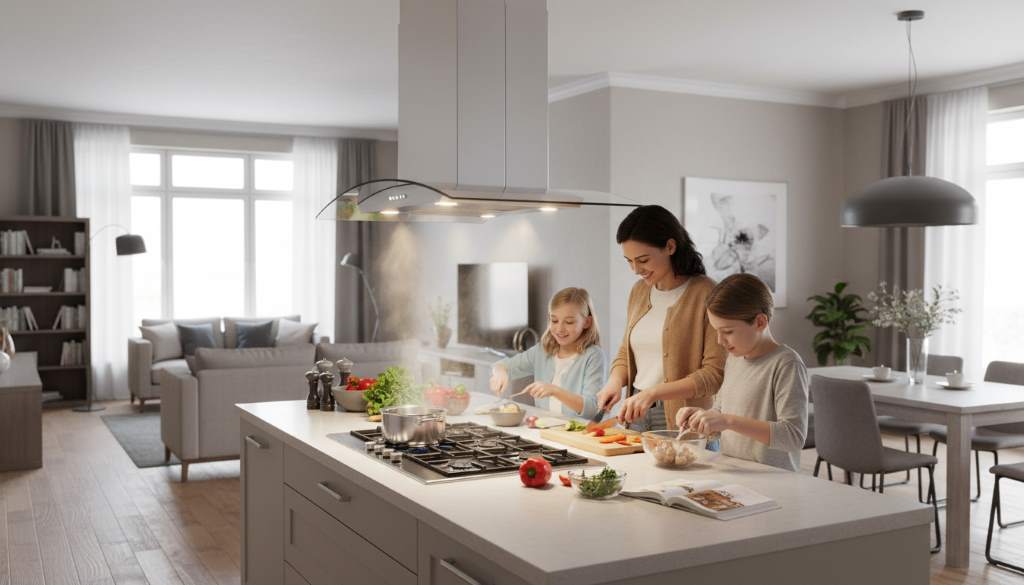
Besides, variations exist in models. Some duct air outside. Others recirculate after filtering. Ducted types remove pollutants completely. Recirculating ones suit apartments without vents. Both improve conditions notably. Features like auto sensors detect smoke. They activate automatically. Timers shut off after use. These add convenience. Shoppers consider CFM ratings. Higher numbers mean stronger pull. Noise levels matter too. Quiet operation enhances experience. Brands offer diverse options. You find fits for any budget. Research guides smart choices. Satisfaction comes from informed decisions.
How Island Range Hoods Work to Improve Air Quality
These hoods capture contaminants at the source. Fans draw air upward swiftly. Pollutants rise with heat naturally. The system accelerates this process. Grease traps collect oils first. Then, filters remove particles. Clean air exits or recirculates. This cycle refreshes the space. Cooking smells vanish quickly. Smoke clears in minutes. Health improves as a result. Families breathe easier. Transition words connect actions smoothly. You cook without worry. The hood handles the rest.
Additionally, airflow dynamics play key roles. Updraft designs pull vertically. They match heat rise patterns. Coverage extends over islands fully. No escaping fumes occur. Engineers optimize shapes for efficiency. Curved edges guide air better. Variable speeds adapt to needs. Low for simmering tasks. High for frying sessions. Sensors monitor quality sometimes. They adjust automatically. This smart tech saves energy. Users appreciate ease. Installation positions matter too. Proper height ensures capture. Too high lets particles drift. Experts recommend 24 to 30 inches above stoves. Following guidelines maximizes benefits.
Moreover, integration with home systems enhances effects. Some connect to HVAC units. They boost overall circulation. Fresh air enters as polluted leaves. Balance maintains comfort. Energy efficiency rises too. Modern models use LED lights. They consume less power. Quiet motors reduce noise pollution. Families enjoy peaceful meals. Long term, savings add up. Health costs drop significantly. Prevention beats treatment always. Investing now pays off later.
Ventilation Mechanisms in Island Range Hoods
Fans create negative pressure zones. This pulls air inward effectively. Blades spin at varying speeds. Higher RPMs handle heavy loads. Ducts channel flow outside. They prevent reentry of pollutants. Dampers block backdrafts too. Fresh outdoor air replaces exhausted. This exchange keeps levels low. Recirculating models use charcoal filters. They absorb odors chemically. Multiple layers trap different particles. Replacement schedules vary by use. Heavy cooks change often. Light users extend intervals. Both types reduce exposure. You choose based on setup.
In addition, makeup air systems complement hoods. They introduce fresh supplies. This prevents vacuum effects. Doors stay easy to open. Comfort remains steady. Codes require them sometimes. Large hoods need balance. Installers check requirements. Safety comes first always. Proper setup avoids issues. Users report better experiences. Air feels crisp daily.
Filtration Systems Explained
Grease filters catch oily residues. Metal meshes wash easily. They reuse indefinitely. Carbon layers handle gases next. They neutralize smells effectively. HEPA options trap fine particles. These suit allergy sufferers. Combinations offer full protection. Layers work together seamlessly. Clean air returns purified. Maintenance keeps efficiency high. Dirty filters block flow. Regular checks prevent drops. Simple routines suffice. You wipe surfaces weekly. Deep cleans monthly work well. Longevity depends on care. Quality materials last longer. Investments reward with performance.
Furthermore, advancements improve filters. Antimicrobial coatings fight bacteria. They reduce mold risks. Washable designs save money. Eco friendly options use recyclable parts. Sustainability appeals to many. Choices align with values. Performance stays top notch.
Benefits of Installing an Island Range Hood
Homeowners gain multiple advantages. First, health improves dramatically. Reduced pollutants lower asthma risks. Allergies ease up too. Second, odors disappear fast. Guests notice fresh scents. Third, surfaces stay cleaner. Grease buildup decreases. Cleaning takes less time. Fourth, cooking becomes enjoyable. Clear air boosts moods. Fifth, property values rise. Modern features attract buyers.
- Captures up to 80 percent of cooking fumes, per studies.
- Reduces nitrogen dioxide by significant margins.
- Prevents moisture related mold issues.
- Enhances overall home ventilation.
- Adds aesthetic appeal to open kitchens.
These perks accumulate over time. Families feel the difference daily. Transitioning brings immediate relief.
Moreover, energy aspects shine through. Efficient models use little power. They run only when needed. Savings appear on bills. Environment benefits too. Less indoor pollution means healthier ecosystems. Communities thrive together.
Choosing the Right Island Range Hood for Your Kitchen
Assess your space first. Measure island dimensions accurately. Consider stove type next. Gas needs stronger pull. Electric suits moderate flows. Look at CFM ratings carefully. Aim for 100 per linear foot. Noise levels influence comfort. Select under 60 decibels. Features add value. Auto off timers save energy. Remote controls offer convenience. Styles match decor. Sleek designs fit modern homes. Traditional ones suit classics. Brands vary in quality. Read reviews thoroughly. Warranties protect investments. Though, focus on reliability. Professional advice helps. Installers suggest fits. You decide confidently.
Additionally, budget guides selections. Entry levels provide basics. Mid range adds features. Premium offers top tech. Balance needs with costs. Long term use justifies spends. Satisfaction follows smart picks.
Installation Tips for Optimal Performance
Prepare the site properly. Secure ceiling joists firmly. Wiring meets codes always. Duct paths run straight. Bends reduce efficiency. Height adjustments matter most. Position for best capture. Test runs confirm operations. Adjust speeds as needed. Seal connections tightly. Leaks waste efforts. Professionals ensure safety. DIY suits simple setups. Tools include levels and drills. Instructions guide steps. Post install, check airflow. Paper tests show pull. Adjustments fine tune. Enjoy results immediately.
In addition, common mistakes avoid troubles. Skipping seals causes drafts. Wrong heights miss fumes. Overlooking makeup air creates imbalances. Learning prevents errors. Success comes easily.
Maintenance Practices to Keep Air Quality High
Clean filters regularly. Soap and water suffice for metal. Replace charcoal every six months. Wipe exteriors weekly. Dust accumulates fast. Inspect ducts yearly. Blockages hinder flow. Run tests monthly. Listen for unusual noises. Address issues promptly. Parts wear over time. Replacements restore function. Schedules depend on usage. Heavy kitchens need more care. Light ones extend periods. Habits form easily. Families share tasks. Consistency pays off. Air stays pure always.
Furthermore, seasonal checks enhance longevity. Winter use increases. Summer brings humidity. Adapt routines accordingly. Professional services help sometimes. They spot hidden problems.
Comparing Island Range Hoods to Other Ventilation Options
Wall mounted hoods suit perimeter stoves. They pull sideways effectively. Under cabinet types fit snugly. Space savers work well. Downdraft systems rise from counters. They hide when unused. Each has pros. Islands need overhead pull. Coverage differs by design. Wall ones lack centrality. Under cabinets restrict heights. Downdrafts struggle with heat. Hoods excel in open areas. They handle volumes better. Choices depend on layouts. Assess needs first. Experts compare options. You select wisely.
Moreover, hybrid systems combine features. They offer flexibility. Costs vary accordingly. Performance metrics guide. Capture rates tell stories. Higher means better removal.
Related:
KitchenDAO Pasta Drying Rack Review
Sustainable Cabinets and Eco-friendly Countertops
Real-Life Examples and Case Studies
One family in California installed a hood. Their asthma symptoms dropped. Air tests showed 50 percent less particles. They cooked more freely. Another in New York renovated. Odors vanished post install. Guests complimented the space. A study in China highlighted ventilation. Rural homes saw 67,400 fewer premature deaths yearly. Benefits scaled globally. Urban apartments benefit too. Shared buildings reduce spread. Individual units control exposure. Stories inspire action. You see possibilities clearly.
In addition, office kitchens use hoods. Workers report better focus. Pollutants distract minds. Clear air boosts productivity. Case studies prove points. Data supports claims.
Furthermore, research from Stanford backs usage. Pollutants cause respiratory issues. Hoods address them directly. Real world applications confirm theories. Transitions happen smoothly.
Conclusion
Island range hoods transform kitchen air. They capture pollutants efficiently. Health improves with reduced exposure. Odors and grease vanish quickly. Installation brings style and function. Maintenance keeps benefits ongoing. Comparisons show their strengths. Examples illustrate real impacts. Now, take the next step. Assess your kitchen today. Install a hood for fresher air tomorrow.
FAQs
What pollutants does an island range hood remove?
It targets smoke, grease, and odors primarily. Fans pull them upward. Filters trap particles. Clean air results. Health risks drop accordingly.
How often should I clean my island range hood?
Clean filters monthly for best results. Wipe surfaces weekly. Heavy use requires more frequency. Simple routines maintain efficiency.
Can an island range hood work without ducts?
Yes, recirculating models filter air internally. They suit ventless spaces. Performance remains strong. Odors reduce notably.
Does an island range hood help with allergies?
Absolutely, by removing particles. Allergens decrease in air. Breathing eases up. Families notice differences quickly.
Is professional installation necessary for an island range hood?
Often, yes for safety. Wiring and support need expertise. DIY works for simples. Pros ensure optimal setup.
References




Leave a Reply