

Finding the right toy for your dog isn’t just about grabbing the brightest object off the shelf. A Chihuahua and a German Shepherd may both love to chew, but their jaws, size, and play styles require completely different solutions. The wrong toy can lead to boredom, destructive behavior, or even a choking hazard. Choosing the best dog toys for every breed means matching the toy’s physical properties to your dog’s anatomy, energy level, and instincts. This guide breaks down exactly how to evaluate your dog’s needs, what materials to look for, and which categories of toys work best for specific breeds.
Key Takeaways
- Match toy size and durability to your dog’s jaw strength and weight, not just their age.
- Working breeds and high-energy dogs need toys that engage their minds, not just their mouths.
- Rubber and nylon are safest for aggressive chewers, while plush toys should be reserved for gentle, supervised play.
- Rotating a small selection of toys every few days maintains novelty and prevents boredom without cluttering your home.
Why Breed Matters More Than Size Alone
Many owners assume that a “large” toy is automatically safe for a large dog. That assumption overlooks the critical differences in bite force, jaw shape, and instinctual drives. For example, a Labrador Retriever has a soft mouth designed to carry game without damaging it, while a Pit Bull or Rottweiler has a bite force capable of cracking dense bones. Giving a ten-pound toy to a ten-pound dog might seem proportional, but a Jack Russell Terrier can puncture a standard tennis ball within minutes because of their relentless prey drive.
Breed-specific instincts also dictate how a dog plays. Herding breeds like Border Collies naturally chase and nip at moving objects. Terriers were bred to shake and kill vermin, meaning they need toys that withstand violent shaking. Sighthounds like Greyhounds prefer chasing fast-moving prey over chewing. When you understand what your dog was originally bred to do, you can select toys that satisfy those core urges safely.
How to Match Toy Type to Your Dog’s Play Style
Before purchasing anything, watch how your dog interacts with common household items. Do they tear the stuffing out of pillows? Do they chase a ball until exhaustion but ignore it once it stops moving? Do they gnaw on furniture legs for hours at a time? These behaviors reveal one of four primary play styles: chewer, chaser, tugger, or problem-solver. Most dogs display a combination, but one style usually dominates.
For the best results, choose toys that align with that dominant style. A dedicated chewer needs durable rubber or dense nylon. A chaser needs fetch toys that roll unpredictably or fly through the air. A tugger needs rope or rubber toys that offer a comfortable grip for both human and dog. A problem-solver thrives on puzzle toys and treat-dispensing games that require mental effort to unlock a reward.
Choosing the Right Material for Safety and Longevity
Material choice is the single most important factor in preventing injury and unnecessary replacement costs. There are three primary categories of dog toy materials: soft (plush, fleece, rope), firm (rubber, nylon, thermoplastic), and brittle (hard plastic, rawhide, antlers). Soft toys are comforting and interactive but are not designed for aggressive chewers. Firm rubber toys like those made from natural or synthetic rubber are resilient and often bouncy, making them ideal for both chewing and fetching.
Brittle materials pose the greatest risk. Hard plastics can splinter into sharp shards, and antlers or bones can crack teeth, leading to painful fractures and expensive veterinary bills. A good rule of thumb is the “thumbnail test.” If you can press your thumbnail into the material and leave a slight indentation, it is likely safe for chewing. If the surface is completely rigid and unyielding, it is too hard for your dog’s teeth.
Best Dog Toys for Small Breeds and Toy Breeds
Small breeds like Chihuahuas, Pomeranians, and Maltese have delicate jaws and small throats. Their toys must not only be smaller but also proportionally softer. A toy meant for a medium dog, even if it is small, might be too rigid for a toy breed’s bite. Look for mini-sized rubber balls, soft plush toys without small plastic parts, and lightweight ropes.
One overlooked consideration for toy breeds is the risk of ingestion. Because their mouths are so small, they can easily swallow squeakers or eyes from plush toys. Always supervise play and choose toys with embroidered details instead of glued-on plastic eyes or noses. For puppies of toy breeds, start with soft, flexible rubber teething toys that are gentle on emerging adult teeth.
Why Terriers Need a Different Approach
Terriers, whether large like the Airedale or small like the West Highland White, share a common trait: an intense prey drive and a tenacious grip. They were bred to chase rodents into the ground and shake them to death. This means they are notoriously hard on toys. The average plush toy will last minutes, not days, in the hands of a determined terrier.
For terriers, prioritize toys that withstand shaking and tugging. Heavy-duty canvas or ballistic nylon toys with reinforced stitching are good options. Rubber toys with irregular shapes, such as those designed to bounce erratically, also satisfy their chase-and-pounce instincts. Avoid toys with fluff or stuffing, as terriers will work relentlessly to tear them open and scatter the contents across your floor.
Best Dog Toys for Large and Giant Breeds
Power chewers like Labradors, German Shepherds, Great Danes, and Mastiffs possess immense jaw strength and require oversized, ultra-durable toys engineered specifically to prevent accidental swallowing and choking hazards. To safely satisfy their intense gnawing instincts and high energy, opt for heavy-duty, non-splintering nylon bones alongside extra-large, puncture-resistant rubber balls that sit safely beyond the back of the throat during fetch. Premium reinforced tug ropes also provide an engaging bonding outlet, provided their fibers resist fraying to prevent intestinal blockages. Furthermore, protecting your dog’s well-being extends beyond playtime; while traveling to the park to test out new gear, ensure your pet remains fully secured on the road by learning choose the best dog seat belt for safe car travel.
The Fetch and Retrieval Instinct
Retrievers and sporting breeds have a natural inclination to fetch and return. However, they also tend to have “soft mouths” compared to other dogs of similar size. This means they are less likely to destroy a toy but more likely to carry it around gently. For these breeds, variety is more important than extreme durability. They appreciate a mix of floating toys for water play, flying discs for open-field fetch, and soft fabric rings for indoor play.
One common mistake is using a standard tennis ball for all fetch games. Tennis balls are covered in an abrasive felt that can wear down a dog’s enamel over time. They are also not designed to be chewed. A purpose-built rubber ball designed for dogs is a safer and longer-lasting alternative. For water retrievers, choose toys that float high in the water and are easy for the dog to spot against a dark lake bed.
Interactive and Puzzle Toys for Working and Herding Breeds
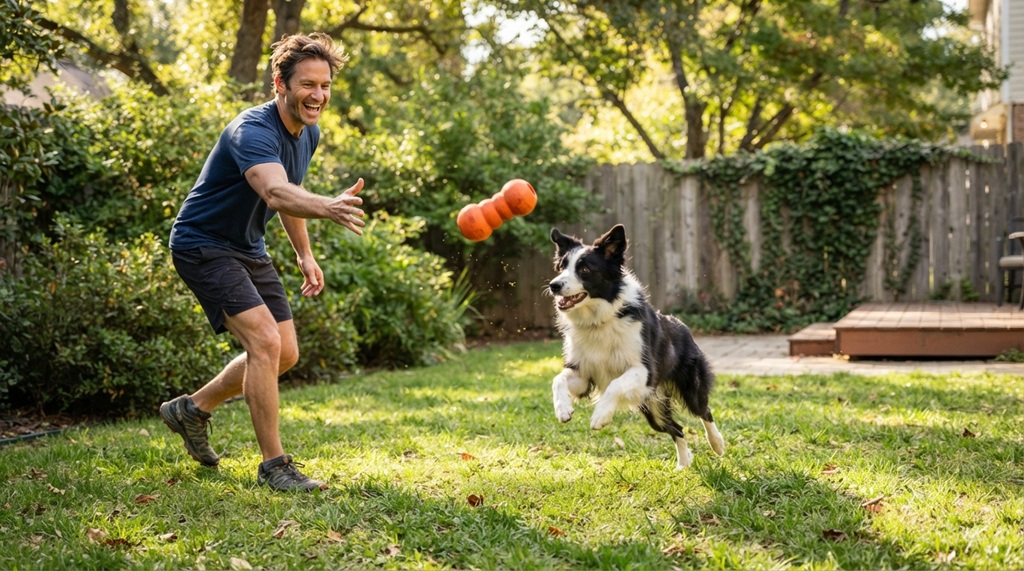
Working breeds, herding breeds, and high-intelligence breeds like Poodles, Collies, and Belgian Malinois need more than physical exercise. They need mental stimulation, or they will become restless, anxious, and destructive. A tired dog is a happy dog, but a mentally exhausted dog is the happiest of all. Puzzle toys that require the dog to slide panels, lift lids, or roll objects to release treats are essential for these breeds.
When introducing a puzzle toy, start with an easy setting and gradually increase the difficulty. If the toy is too challenging at first, your dog may become frustrated and lose interest. Always use high-value treats like small pieces of cheese or freeze-dried liver to reinforce the reward of solving the puzzle. Rotate the puzzles you offer, just as you rotate physical toys, to keep the challenge fresh.
Why Squeaky Toys Are Not All the Same
While many dogs love squeaky toys, the sound serves different purposes for different breeds. For hounds, the squeak mimics the sound of prey, which triggers their hunting instincts. For herding breeds, the squeak can be overstimulating and actually increase anxiety. For dogs with a high prey drive, such as terriers, the goal of squeaking is to find and destroy the source of the noise.
If your dog is obsessed with “killing” the squeaker, this satisfies a natural instinct, but it also means the toy has a very short lifespan. Reinforced squeakers embedded deep within dense rubber toys are a safer alternative. These toys are designed to withstand bite pressure and have the squeaker safely encased so it cannot be easily extracted and swallowed. If you are looking for a comprehensive guide to shopping in your area, check out this resource on best dog toys for every breed to find local retailers that stock breed-specific toys.
The Risks of Certain Toy Types
Not every popular toy is safe, and it is crucial to understand the trade-offs. Rope toys are excellent for playing tug-of-war and cleaning teeth, but they are also a leading cause of intestinal blockage when dogs ingest the fibers. Always inspect rope toys for fraying and discard them immediately if strings begin to come loose. Rawhide bones, while popular, are highly digestible only in small quantities; large chunks can cause severe gastrointestinal issues.
Tennis balls, as previously mentioned, are abrasive. Sticks and pinecones from your backyard can splinter and cause injury to the mouth or throat. Even “indestructible” toys are not truly indestructible; they are simply more resistant to wear. No toy is safe for unsupervised chewing, especially if your dog is a determined power chewer.
How to Rotate and Maintain a Toy Collection
You do not need an overflowing toy box to keep your dog happy. In fact, an overwhelming number of toys can actually be confusing and cause your dog to lose interest. A curated collection of five to eight toys, rotated regularly, is far more effective. This strategy, known as toy rotation, preserves novelty. When a toy is reintroduced after a few days away, it feels new and exciting to the dog.
Wash fabric toys and ropes weekly, or more often if they become dirty. Rubber toys can be cleaned with warm, soapy water and dried thoroughly. Discard any toy that is broken or has sharp edges. A toy that has lost its squeaker has changed shape and may become a choking hazard. Regular inspection is the best way to prevent an emergency visit to the veterinarian.
Frequently Asked Questions
How many toys should a dog have?
Most dogs do best with five to eight toys available at any given time. This provides enough variety to prevent boredom without overwhelming the dog. Rotating these toys weekly keeps them feeling new and interesting.
Are hard plastic toys safe for aggressive chewers?
Hard plastic toys are generally not safe for aggressive chewers. They can splinter into sharp shards that cause cuts or internal damage. Softer rubber or dense nylon toys are better options because they are designed to flex under pressure without breaking.
What is the best material for a dog that destroys everything?
Natural rubber or dense thermoplastic nylon are the best materials for power chewers. Look for toys specifically marketed as “extreme” or “power chewer” rated. These are typically thicker and constructed without hollow spots that could be punctured easily.
Can I give my dog a squeaky toy if they destroy it?
If your dog tends to immediately try to dig out the squeaker, it is not safe to leave them unsupervised with that toy. The squeaker is a choking hazard once removed. Instead, choose toys with the squeaker encased in a thick rubber housing that is difficult to puncture.
Are antlers or bones safe for my dog’s teeth?
Antlers and hard bones are risky because they are harder than your dog’s teeth. Chewing on them can cause fractured teeth, which are painful and expensive to treat. The safest policy is to use toys that yield slightly under pressure.
Conclusion
Selecting the best dog toys for every breed comes down to observation and understanding your dog’s unique needs. Consider their jaw strength, size, prey drive, and preferred play style instead of assuming a one-size-fits-all solution exists. Prioritize safety by avoiding brittle materials and supervising play with new toys until you are confident they are durable enough. Rotate a small collection to maintain your dog’s interest, and replace worn toys before they become hazards. By investing a little time in the selection process, you can save money, prevent vet visits, and provide your dog with a happier, more fulfilling play experience.


Leave a Reply