

Driving to the beach in California should be about the waves, not worrying whether your board will survive the trip. But with freeway speeds, winding coastal highways, and unpredictable weather, choosing the right carrier is more critical than many surfers realize. A board that isn’t properly secured isn’t just an inconvenience—it’s a hazard to you and every other driver on the road. The challenge is that the market is flooded with options, and what works for a local in Santa Cruz might be a terrible fit for someone commuting through LA traffic. This guide breaks down exactly what you need to consider when selecting a surfboard rack for California roads, from security and aerodynamics to compatibility with your specific vehicle.
Why a Standard Rack Isn’t Enough for California
California presents unique challenges that other states simply don’t have. The combination of dense urban traffic, high-speed freeways, and extreme temperature variations means your rack needs to perform under constant stress. A cheap foam block setup might work for a slow drive to a local break, but it becomes a liability when you’re cruising at 75 mph on the I-5 or navigating the gusty sections of Highway 1.
The primary issue is vibration and wind resistance. At high speeds, boards act like wings, catching air and putting tremendous strain on the mounting points. Over time, this loosens straps, wears down padding, and can even damage the board’s rails. Additionally, California’s sun is relentless. UV rays degrade cheap plastic and nylon straps quickly, leading to premature failure. You need materials that are UV-stabilized and hardware that is corrosion-resistant, especially if you’re near the coast where salt air accelerates wear.
Understanding the Different Mounting Styles
Before looking at specific brands, you need to understand the three main categories of racks. Each has distinct trade-offs in terms of security, ease of use, and vehicle compatibility.
- Soft Racks (Foam and Straps): These are the most affordable and portable. They attach directly to your car’s roof using straps that loop through the doors. They require no permanent installation and can be removed in minutes. However, they offer the least security. They are prone to shifting if not installed perfectly, and they can scratch your car’s paint if dirt gets trapped between the foam and the roof.
- Permanent Roof Racks (Crossbars): These are the industry standard. They consist of crossbars mounted to your vehicle’s factory roof rails or fixed points. They provide a stable, secure base for cradles, pads, or J-hooks. They are more expensive and require some installation, but they offer the highest level of safety and convenience for regular surfers.
- Tailgate Pads (For Trucks): If you drive a pickup, this is often the most practical solution. A pad covers the tailgate, and boards slide into the bed with their noses resting on the pad. This keeps boards low, reduces wind drag, and makes loading and unloading effortless. The downside is that boards are exposed to road debris and weather, and they take up bed space.
Key Features to Look for in a Surfboard Rack
Once you’ve decided on the mounting style, the next step is evaluating the specific components. Not all racks are created equal, and the details matter significantly when you’re dealing with expensive surfboards.
Locking Mechanisms
In California, board theft is a real concern, especially in popular beach parking lots. A rack that uses simple buckles is easy for a thief to defeat in seconds. Look for racks that include locking cables or locks integrated into the cradle. These won’t stop a determined thief with power tools, but they will deter opportunistic criminals. Remember that locking the rack to the car is different from locking the board to the rack. You want both.
Padding and Board Protection
The padding should be dense and thick enough to absorb vibration without transferring it to the board. Soft, squishy foam feels nice but compresses too much, allowing the board to move. Closed-cell EVA foam is the gold standard because it repels water, doesn’t absorb sand, and holds its shape over time. Also, check the straps. They should be wide (at least 1 inch) to distribute pressure and have cam buckles that don’t slip. Avoid racks with thin, ratchet-style straps that can overtighten and crack the fiberglass,
Complete your sustainable setup by exploring top eco-friendly gear, such as Green Surfboard Fin Brands That Support Ocean Conservation.
Weight Capacity and Board Count
Check the manufacturer’s weight rating. A single longboard can weigh 20-30 pounds, and a quiver of three boards can easily exceed 60 pounds. Your rack needs to handle not just the weight but the aerodynamic load. Also, consider how the rack holds multiple boards. Some cradles stack boards on top of each other, which is fine for short trips but can cause pressure dents on longer journeys. J-hooks and vertical racks hold boards on their edges, which is better for the board’s structure but requires more careful loading.
Comparing Soft Racks vs. Permanent Racks
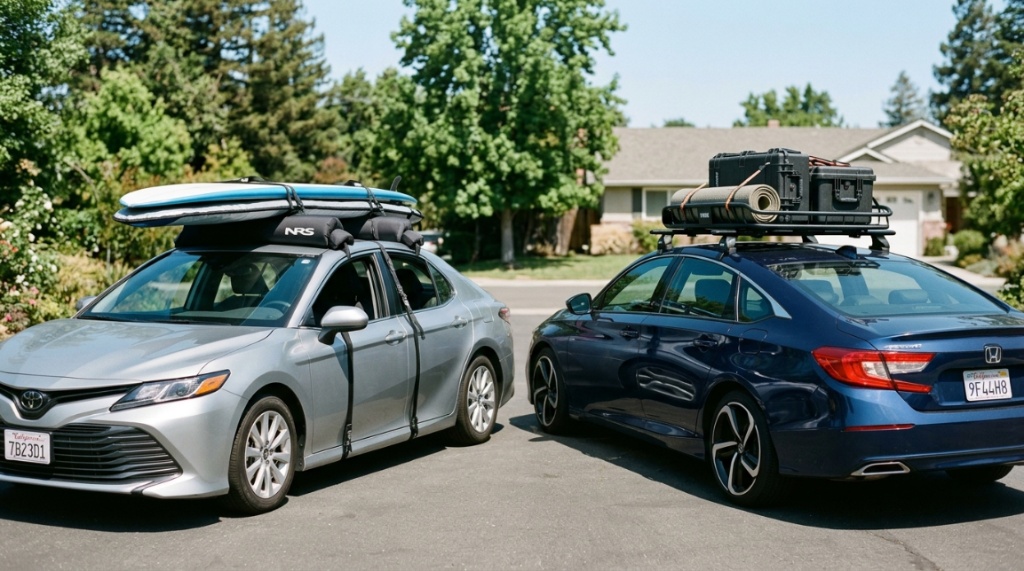
This is the most common decision point for surfers. Both options work, but they serve different lifestyles. To help clarify, here is a direct comparison based on factors that matter most on California roads.
| Feature | Soft Racks | Permanent Roof Racks |
|---|---|---|
| Security | Low to Medium. Straps can be cut; boards are easy to grab. | High. Locking cores and integrated locks are standard. |
| Speed Stability | Moderate. Can shift at high speeds if not perfectly tight. | Excellent. Rigid mounting eliminates wobble. |
| Installation Time | 5 minutes. No tools required. | 30-60 minutes. Requires basic tools and alignment. |
| Vehicle Fit | Universal. Fits almost any car with doors. | Specific. Must match your vehicle’s roof rail system. |
| Cost | $50 – $150 | $200 – $600+ |
| Best For | Rentals, occasional use, multiple vehicles. | Daily surfers, highway commuters, expensive boards. |
If you surf more than once a week or regularly drive on freeways, the investment in a permanent rack is justified. The peace of mind that comes from knowing your board is bolted to the car is worth the extra cost. Soft racks are great for travel or if you have a car with no roof rails, but they require constant checking and re-tightening.
How to Match a Rack to Your Vehicle Type
The best rack for a sedan is different from the best rack for an SUV or a van. Your vehicle’s roof design dictates what is physically possible and what is safe.
Sedans and Hatchbacks
Most sedans do not come with factory roof rails. You will need a clip-on system that attaches to the door frames or the rain gutters (if your car has them). These systems are vehicle-specific, so you must use a fit guide. Once the crossbars are on, you can attach cradles or J-hooks. For sedans, J-hooks are often preferred because they allow you to load boards from the side, which is easier than trying to lift a board high over the roof.
SUVs and Crossovers
These vehicles typically have factory side rails. You can buy crossbars that lock into these rails, providing a very stable base. Because SUVs are taller, loading boards onto the roof is more physically demanding. Consider a rack with a lower profile or one that uses a “loader” assist feature if you have a heavy longboard. Also, be mindful of your vehicle’s total height. A roof rack on an SUV can easily exceed 7 feet, which may not fit in some parking garages.
Trucks
As mentioned, tailgate pads are the most popular choice for trucks. They are simple, effective, and keep the boards within reach. However, if you need to carry boards in the bed with other gear, a bed rack (a crossbar system that sits above the bed) is a better option. Bed racks allow you to mount J-hooks or cradles, keeping the bed free for camping gear or luggage, Complete your sustainable setup by exploring top eco-friendly gear, such as Green Surfboard Fin Brands That Support Ocean Conservation.
Installation Mistakes That Lead to Damage
Even the best rack will fail if it’s installed incorrectly. There are a few common errors that I see repeatedly, and they all lead to the same result: a damaged board or a dangerous situation on the road.
The most frequent mistake is not tightening the straps enough. A loose strap allows the board to slide forward or backward, which changes the aerodynamics and can cause the rack to detach. Conversely, overtightening is just as bad. Crank down too hard on a cam strap, and you can crush the foam core of a modern epoxy board. The goal is to make the board snug but not compressed. You should be able to push on the board and feel it resist, but you shouldn’t see the foam visibly deform.
Another critical error is placing the rack too far forward or backward on the roof. The rack should be centered over the vehicle’s structural pillars, not in the middle of the roof panel where the sheet metal is weakest. Check your vehicle’s manual for the recommended mounting points. Finally, always route the straps so they don’t rub against the car’s paint. Use the protective sleeves that come with the rack, or add a small piece of painter’s tape under the straps where they touch the roof.
Maintaining Your Rack for Longevity
Salt, sand, and sun are the enemies of any rack. To make your investment last, you need to perform basic maintenance. Rinse the rack with fresh water after every trip to the beach. Salt crystals are abrasive and will wear down the anodized coating on aluminum parts, leading to corrosion. Dry the straps thoroughly before storing them to prevent mildew and rot.
Periodically check all bolts and screws for tightness. The constant vibration of driving can loosen hardware over time. Apply a small amount of silicone lubricant to the locking mechanisms to keep them from seizing up. If you use a soft rack, inspect the foam for cracks or tears. Once the foam is compromised, it will absorb water and lose its protective properties.
Frequently Asked Questions
Can I use a surfboard rack on a convertible?
Yes, but you need a specific system. Convertibles lack the roof structure for standard racks. You will need a rack that mounts to the windshield frame or the trunk lid. These are less stable than roof racks and have lower weight limits, so they are only suitable for lighter shortboards.
Is it safe to leave surfboards on the rack overnight?
It is not recommended. Even with locks, boards are vulnerable to theft and vandalism. Additionally, the overnight temperature drop can cause condensation, and the morning dew can seep into the board’s fin boxes. Always bring your boards inside when possible.
How many boards can I safely carry on a roof rack?
Most quality cradles can hold up to 4 boards, but this depends on the board’s thickness. Stacking more than 3 boards increases the risk of pressure dents and makes the load top-heavy, which affects your vehicle’s handling. For larger quivers, consider a trailer or a truck bed.
Do I need a special rack for a foam surfboard?
Yes. Soft-top boards are more fragile than fiberglass boards. You should use a rack with extra-wide straps and thick padding to avoid denting the soft foam. Avoid ratchet straps entirely, as they can easily crush a foam board.
Conclusion
Choosing the right surfboard rack for California roads comes down to understanding your driving habits, your vehicle, and the level of security you need. Soft racks offer convenience for the occasional surfer, while permanent roof racks provide the stability and peace of mind required for daily freeway commutes. Prioritize locking mechanisms, high-density padding, and a mounting system that is compatible with your car’s roof. Take the time to install it correctly and maintain it regularly. A well-chosen rack will protect your boards, your car, and everyone on the road, allowing you to focus on what really matters—getting in the water.




Leave a Reply