
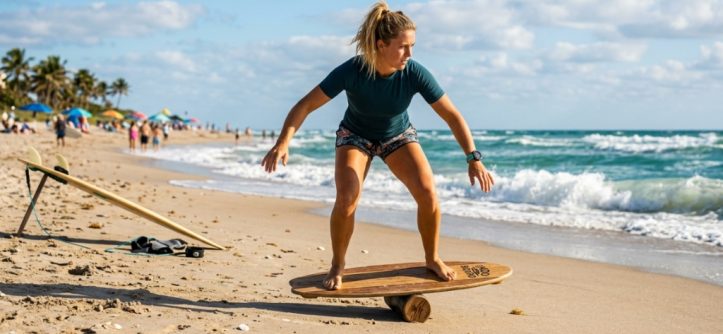
Living in Florida means you’re never far from a decent wave, but the ocean doesn’t always cooperate with your schedule. Flat days, afternoon thunderstorms, and busy work weeks can keep you out of the water more than you’d like. That’s where a balance board comes in. It’s the closest thing to surfing on land, and it can genuinely improve your time in the water. But with so many options on the market, picking the right one can feel overwhelming. This guide breaks down exactly what to look for when choosing the best surf balance board in florida, so you can train effectively and avoid wasting money on a board that doesn’t fit your needs.
Why Surfers in Florida Actually Need a Balance Board
Florida waves are often fast, soft, and crumbly compared to the powerful reef breaks of Hawaii or Indonesia. That means your balance and agility need to be sharp to generate speed and make the most of weaker sections. A balance board trains the stabilizer muscles in your ankles, knees, and core that you simply cannot target with weightlifting or running.
Beyond muscle conditioning, balance boards improve proprioception—your body’s ability to sense its position in space. This translates directly to better foot placement, quicker weight shifts, and a more responsive stance when you’re paddling into a wave. For surfers who only get a few sessions per week, a balance board is the most efficient way to keep your surf-specific fitness sharp between sessions.
What a Balance Board Does That Other Training Doesn’t
Standard gym workouts build strength in a linear plane. Surfing requires balance in multiple directions while your board is constantly moving underneath you. Balance boards replicate that unstable surface, forcing your body to make micro-adjustments continuously. Over time, these adjustments become automatic, which means you’ll spend less time thinking about staying upright and more time focusing on your turns and wave selection.
Additionally, balance board training helps prevent injuries. The ankles and knees are the most vulnerable joints for surfers, especially when bailing in shallow water. Strengthening the stabilizer muscles around these joints builds resilience, which is crucial for surfers who push their limits in Florida’s often-shallow sandbars.
Key Factors to Consider Before Buying
Not all balance boards are created equal. The right choice depends on your skill level, your training goals, and the space where you plan to use it. Here are the most important factors to evaluate before making a purchase.
Your Skill Level and Experience
If you’re new to balance training, a board with a wider deck and a lower rocker profile will feel more stable and forgiving. Beginners should look for boards that limit the range of motion so you can build confidence without constantly falling off. Advanced surfers, on the other hand, often prefer boards with a higher degree of tilt and a narrower deck to simulate the feel of a performance shortboard.
Consider how much time you’re willing to spend learning. A challenging board might seem like a good idea, but if you can’t stay on it for more than a few seconds, you won’t get a productive workout. Start with something manageable and progress as your balance improves.
Board Width and Deck Design
The width of the deck affects how much room you have to move your feet. A wider deck is more forgiving and easier to use for beginners. It also gives you more surface area to practice different foot positions, which is useful for cross-training. Narrower decks force more precise foot placement, which can be beneficial for advanced surfers who want to refine their stance.
Deck material matters too. Wood decks offer a classic feel with a bit of flex, while bamboo decks are lighter and more responsive. Some boards come with a traction pad or grip tape, which helps keep your feet in place during intense sessions. If you plan to use the board barefoot, make sure the surface isn’t too abrasive, Before heading out to practice your stability on the water, make sure you Pack Sun Protection Gear for a Surf Trip to stay safe under the bright sun.
Rocker Profile and Stability
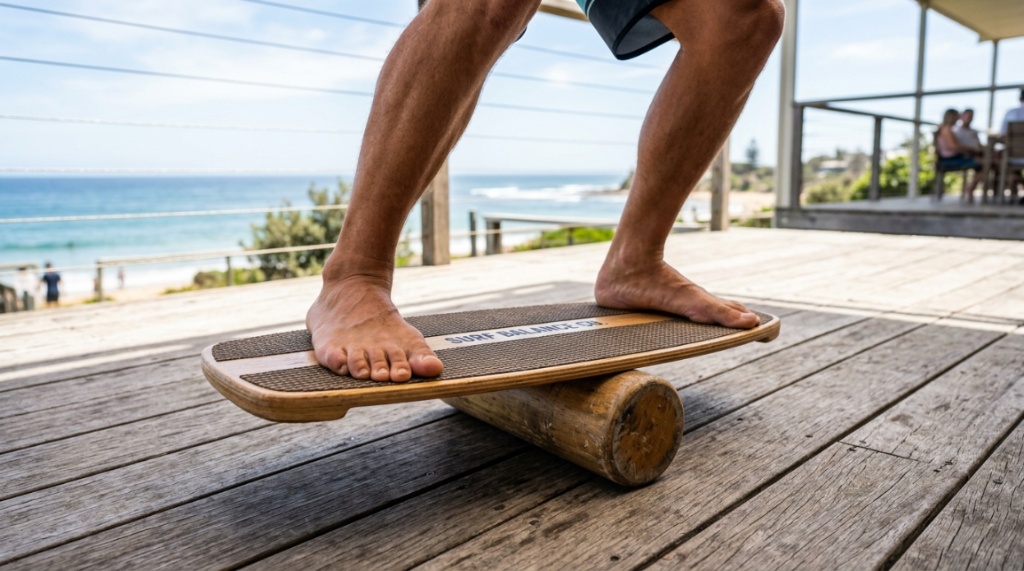
The rocker is the curve of the board’s bottom. A low rocker means the board sits closer to the ground and has a smaller range of motion. This is ideal for beginners and for anyone doing strength-focused exercises like squats or push-ups on the board. A high rocker allows for deeper tilts and more dynamic movements, which is better for simulating the feel of carving on a wave.
Your choice should match your training goals. If you want to work on slow, controlled balance, a low rocker is sufficient. If you want to practice aggressive weight shifts and rail-to-rail transitions, a higher rocker will give you more feedback and challenge.
Comparing Different Types of Balance Boards
There are several styles of balance boards, and each one offers a different training stimulus. Understanding the differences will help you choose the right tool for your specific needs.
| Board Type | Best For | Difficulty Level | Key Advantage |
|---|---|---|---|
| Rocker Board | Beginners, general balance training | Low to Medium | Stable, predictable motion, good for strength exercises |
| Wobble Board | Ankle strengthening, rehabilitation | Low | 360-degree movement, compact and easy to store |
| Roller Board | Advanced surfers, dynamic balance | High | Simulates real surf rail-to-rail transitions |
| Indo Board Style | Surf-specific training, carving practice | Medium to High | Mimics the feel of trimming and turning on a wave |
Rocker Boards: The All-Rounder
Rocker boards are the most common type and are excellent for surfers of all levels. They consist of a deck that rocks back and forth over a curved base. The motion is predictable, which makes them great for building foundational balance and performing exercises like squats, lunges, and push-ups. They’re also the safest option if you’re training indoors with limited space.
Roller Boards: For Advanced Surfers
Roller boards use a cylindrical roller underneath the deck, allowing for movement in multiple directions. This type of board is much more challenging because it requires constant adjustments to keep the roller from sliding out from under you. Advanced surfers often prefer roller boards because they closely mimic the feeling of shifting weight from your toes to your heels while riding a wave. However, they have a steeper learning curve and require more space to use safely.
Practical Tips for Training Effectively in Florida’s Climate
Florida’s heat and humidity can affect your training environment. If you’re using your balance board in a garage or outdoor patio, be mindful of the heat. Sweaty feet can make the board slippery, so consider using a board with a good traction pad or wear surf booties if needed. Also, avoid leaving your board in direct sunlight for extended periods, as heat can warp wooden decks over time.
Indoor training is often more comfortable during the summer months. Place your board on a non-slip mat to protect your floors and prevent the board from sliding. A carpeted area can also work, but a firm, flat surface is better for maintaining proper balance technique.
How Often Should You Train?
Consistency matters more than intensity. Aim for 10 to 15 minutes of balance board work, three to four times per week. This is enough time to build muscle memory without causing fatigue that could compromise your form. You can incorporate the board into your warm-up routine before a surf session or use it as a standalone workout on rest days.
As you progress, challenge yourself by closing your eyes for short intervals, standing on one leg, or performing upper-body exercises while balancing. These variations keep the training fresh and continue to challenge your stabilizer muscles in new ways.
Common Mistakes to Avoid
Many surfers make avoidable mistakes when they first start using a balance board. Being aware of these pitfalls will help you get better results and reduce your risk of injury.
- Looking down at your feet: Keep your head up and your eyes focused on a fixed point in the distance. Looking down throws off your alignment and makes balancing harder.
- Holding your breath: It’s natural to tense up when you’re trying to balance, but holding your breath increases tension and reduces your ability to make subtle adjustments. Breathe steadily and stay relaxed.
- Using only your ankles: Balance comes from your entire body. Engage your core, keep your knees slightly bent, and use your arms for counterbalance.
- Training on an unstable surface: Always place your board on a flat, stable floor. Using it on grass or sand makes it unnecessarily difficult and increases the risk of rolling an ankle.
- Ignoring pain: If you feel sharp pain in your knees or ankles, stop immediately. Soreness is normal, but sharp pain is a sign that something is wrong.
Making the Right Choice for Your Surf Progression
Choosing the right balance board ultimately comes down to your current ability and what you want to improve. If you’re just starting out or you want a versatile tool for overall fitness, a rocker board with a moderate width is a safe and effective choice. If you’re an experienced surfer looking to refine your rail work and dynamic balance, a roller board will offer the challenge you need.
Think about your long-term goals as well. A board that you can grow into will save you money in the long run. Many surfers start with a stable rocker board and later add a roller board to their setup once their foundational balance improves. This progression allows you to continuously challenge yourself without plateauing.
Also consider the build quality. A well-constructed board with a solid warranty will last for years, even with frequent use. Cheaper boards may save you money upfront, but they often lack the durability and performance needed for serious training,
Before heading out to practice your stability on the water, make sure you Pack Sun Protection Gear for a Surf Trip to stay safe under the bright sun.
Frequently Asked Questions
Can a balance board really improve my surfing?
Yes, but with realistic expectations. A balance board improves your balance, core strength, and ankle stability, which are all essential for surfing. It won’t teach you how to read waves or improve your paddling technique, but it will make you more stable and responsive once you’re on a wave.
How long does it take to see results from balance board training?
Most surfers notice improvements in their balance within two to four weeks of consistent training. However, translating those gains to actual surfing takes time because the ocean adds unpredictable variables like moving water and changing wave faces.
Is a balance board safe for beginners?
Yes, especially if you choose a board with a low rocker and a wider deck. Start by holding onto a wall or a sturdy object until you feel comfortable. Always use the board on a flat, stable surface and avoid training when you’re fatigued.
Can I use a balance board if I have knee or ankle problems?
It depends on the severity of your condition. Balance boards can actually strengthen the stabilizer muscles around your joints, which may help prevent future injuries. However, if you have an acute injury or chronic pain, consult a physical therapist or doctor before starting balance training.
Before heading out to practice your stability on the water, make sure you Pack Sun Protection Gear for a Surf Trip to stay safe under the bright sun.
How much space do I need to use a balance board?
For a rocker board, you need roughly a 4-foot by 4-foot area. Roller boards require more space because the board can slide in multiple directions. Make sure you have enough clearance to step off safely in any direction.
Conclusion
Finding the right balance board is about matching the tool to your skill level and your specific surfing goals. Florida surfers face unique conditions that demand agility, quick reactions, and strong core stability. A quality balance board delivers all of that in a compact, convenient package you can use at home. Start with a board that challenges you without overwhelming you, train consistently, and pay attention to your form. With regular practice, you’ll notice a real difference in your stability and confidence when you paddle out. Choose wisely, train smart, and let your land-based practice translate into better waves.



Leave a Reply