
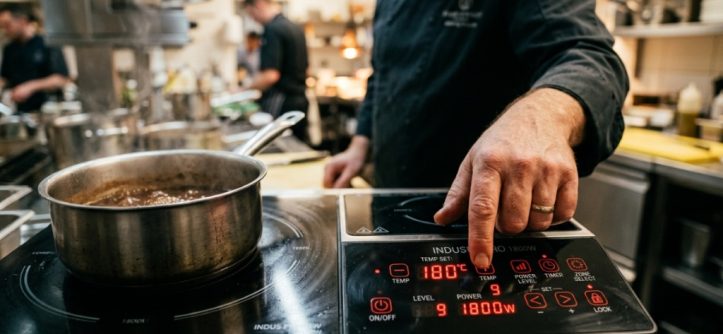
You glide your hand across the smooth ceramic surface, tap a few digital buttons, and within seconds, your pot of water is churning with a furious boil. It feels like magic, but it’s actually the refined science of magnetic induction. You chose a 1800W induction cooktop because you wanted speed and precision. But now, a quiet question nags at you: “Is all that power making my electric meter spin out of control?” You are not alone. Many home chefs worry that high wattage equals high bills. The truth is, an 1800W induction cooktop energy savings are real, but only if you know how to use it correctly. This guide will show you exactly how to maximize efficiency, cut waste, and keep your cooking costs low without sacrificing performance.
What Makes an 1800W Induction Cooktop More Energy Efficient Than Gas or Electric?
The Science of Direct Heat Transfer
Unlike gas stoves that blast heat into the air or traditional electric coils that heat up the burner first, induction uses an electromagnetic field to heat the pan itself. With a 1800W induction cooktop, nearly 85 to 90 percent of the energy consumed goes directly into your food. Gas struggles to reach 40 percent efficiency. That means for every dollar you spend on electricity for induction, you get more usable heat than with any conventional method.
Faster Cooking Times Reduce Total Energy Use
Because heat is generated directly in the pan, a 1800W induction cooktop brings water to a boil in roughly half the time of gas or standard electric. Less time cooking means less time drawing power. Even though the wattage is high, the duty cycle is short. Over a week of cooking, you actually draw fewer kilowatt-hours compared to a lower-wattage gas burner running twice as long.
Wasted Heat vs. Targeted Heat
Walk into any kitchen with a gas stove running, and you feel the heat radiating from the burner. That is wasted energy. Induction cooktops leave the surrounding air cool. Your kitchen stays comfortable, your air conditioner works less in summer, and you don’t lose energy to the environment. Every watt goes where it belongs: into your saucepan.
How Can You Maximize 1800W Induction Cooktop Energy Savings in Daily Use?
Choose the Right Cookware Diameter
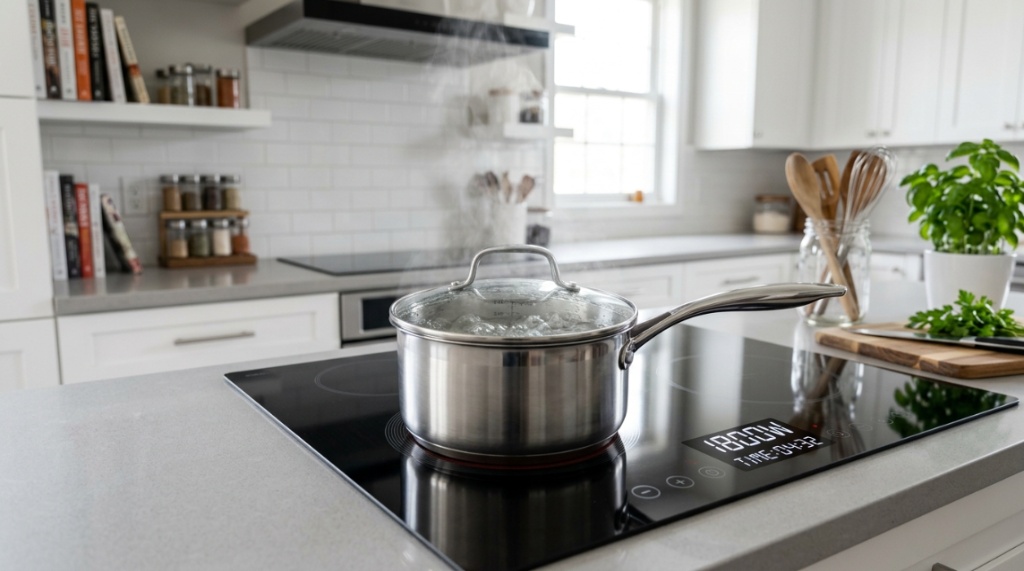
An 1800W induction cooktop has a specific induction coil size, usually around six to seven inches. If your pan is too small, the magnetic field cannot couple properly, and efficiency drops. If your pan is too large, the heat spreads unevenly. Match your pan diameter to the cooking zone marker for optimal energy transfer. A flat, thick, ferromagnetic base is non-negotiable.
Use the Power Boost Function Sparingly
Most 1800W units include a Power Boost mode that delivers maximum wattage for rapid heating. This is excellent for searing or boiling, but it draws full power. Use boost only for the first minute or two to get the process started, then dial back to a medium or low setting. Sustained boost mode wastes energy and can stress the cooktop’s electronics over time.
Keep the Pan Centered and Covered
Never let the pan drift off the marked zone. Even a slight misalignment reduces coupling efficiency by 10 to 15 percent. Additionally, always use a lid. A covered pot reaches temperature faster and maintains it with less energy. With an 1800W induction cooktop, covering your pot can cut cooking time by nearly 30 percent, directly translating to lower electricity consumption.
Why Does Pan Material Matter for Efficiency?
Ferromagnetic Metals Only
Induction works exclusively with magnetic materials: cast iron, enameled steel, and certain stainless steel grades. Aluminum, copper, glass, and ceramic are invisible to the magnetic field. Using a non-compatible pan means the cooktop turns on, detects no pan, and shuts off. Not only does that waste zero energy, but it also means you need the right equipment to benefit from 1800W induction cooktop energy savings.
Flat Bottom vs. Warped Pans
A warped pan creates an air gap between the cooktop surface and the pan bottom. This air gap acts as an insulator, reducing heat transfer efficiency. The cooktop has to work harder and longer to reach the same temperature. Always test pans for flatness before use. A simple straightedge across the base will reveal any gaps. Investing in quality cookware pays back in energy savings.
Thicker Bases Retain Heat Better
Pans with a thick, multilayer base absorb heat quickly and retain it even after the cooktop cycles off. This allows you to turn off the burner a minute or two before the food is done. The residual heat finishes the cooking. This technique, called “carryover cooking,” works exceptionally well with induction and can save a measurable amount of energy over months of use.
Which Cooking Settings Drain the Least Power on an 1800W Cooktop?
Low and Simmer Modes Use Minimal Wattage
Most 1800W induction cooktops offer low-power settings ranging from 100 to 400 watts. These settings are perfect for melting butter, simmering sauces, or keeping food warm. At these levels, the cooktop pulses the magnetic field on and off to maintain low heat. The wattage draw is negligible, and because induction is so responsive, you do not need to overshoot the temperature.
Medium Settings Offer the Best Efficiency-to-Output Ratio
For everyday tasks like sautéing vegetables or cooking rice, a medium setting around 800 to 1000 watts provides excellent heat without the energy spike of full power. At this level, the cooktop maintains a steady temperature without cycling on and off aggressively. This reduces overall power consumption compared to running at full blast and then turning off repeatedly.
High Heat Is Only for Short Bursts
Using 1800 watts continuously is rarely necessary. Boiling water, searing steak, or stir-frying require high heat, but only for minutes. Time yourself. Once the water boils, reduce to a simmer. Once the steak sears, drop to medium. Practicing this habit reduces your average wattage draw throughout the meal and keeps your energy bill in check.
How Does Preheating Affect Energy Consumption?
Induction Requires Almost No Preheating
Unlike an oven or a traditional electric coil, an 1800W induction cooktop reaches cooking temperature in seconds. There is no need to “warm up” the burner for five minutes. If you are used to gas or electric habits, break them. Place the pan on the cooktop, set your desired power level, and begin cooking immediately. Every second of unnecessary preheating is wasted energy.
Preheating the Pan vs. Preheating the Cooktop
The pan itself does benefit from a brief preheat before adding oil or food, but this takes only 20 to 40 seconds on high. Do not walk away. Monitor the pan. Once you feel the heat rising from the base, add your ingredients. Prolonged preheating with an empty pan wastes electricity and can damage non-stick coatings.
Can You Use an 1800W Induction Cooktop with Solar Panels or a Battery System?
Power Draw Considerations
An 1800W induction cooktop draws roughly 15 amps on a standard 120-volt circuit. If you have a solar setup with an inverter, ensure the inverter can handle the surge. Many portable induction cooktops have a peak draw higher than 1800 watts during boost mode. Check your inverter’s continuous and surge ratings. A 2000-watt inverter is usually the minimum safe size.
Energy Budgeting for Off-Grid Cooking
If you rely on batteries, cooking with induction requires conscious energy budgeting. One hour of cooking at 1800 watts uses 1.8 kilowatt-hours. Compare that to your battery capacity. Using lower power settings or cooking in batches can stretch your stored energy. Induction’s efficiency becomes even more critical off-grid, where every watt counts, Pairing your routine with a energy-efficient slow cooker for easy weekly meal prep and planning can further cut down your household electricity usage.
Benefits of Induction for Off-Grid Living
Despite the power draw, induction is still the most efficient electric cooking method available. No combustion, no ventilation loss, and no wasted heat. For off-grid homes, the 1800W induction cooktop energy savings over a propane stove can be substantial, especially when paired with a high-capacity battery bank and generous solar array.
How Does Cleaning Affect Long-Term Efficiency?
Residue and Burn Marks Impede Heat Transfer
A dirty cooktop surface reduces the efficiency of the glass-ceramic interface. Food spills or hard water stains create a thermal barrier. While induction is less affected than radiant cooktops because the heat is generated in the pan, a clean surface ensures the glass stays cool and that any detected heat flows correctly. Wipe your cooktop after every use.
Scratches Do Not Impact Performance Significantly
Minor surface scratches on the glass-ceramic top are cosmetic. They do not affect the magnetic field or heat transfer. However, deep chips can create weak points that may crack under thermal stress. Use non-abrasive cleaners and avoid sliding pans to keep your cooktop in optimal condition for years of efficient service.
When Does an 1800W Cooktop Use More Energy Than Necessary?
Overfilling the Pan
Boiling a large pot of water for a single cup of pasta is inefficient. The 1800W cooktop will heat the entire mass of water regardless of how much you actually need. Use a kettle for small amounts of boiling water, then transfer to the pan. Alternatively, use the smallest pot that comfortably holds your ingredients. Less water mass means faster heating and lower energy use.
Cooking with a Dirty Induction Coil Vent
Portable induction cooktops have ventilation grilles to cool internal electronics. If these vents are blocked by clutter or dust, the internal components overheat. The cooktop may throttle its power output to protect itself, leading to longer cooking times and higher total energy consumption. Keep the vents clean and clear on all sides.
Is It Cheaper to Run an 1800W Induction Cooktop Than a Gas Stove?
Comparing Energy Costs per Meal
The cost comparison depends on your local electricity and gas rates. In many regions, electricity is more expensive per BTU than natural gas. However, because induction is nearly three times more efficient, the total cost per meal can be similar or even lower. For example, if gas costs are rising in your area, induction quickly becomes the more economical choice.
Hidden Costs of Gas: Ventilation and Maintenance
Gas stoves require powerful range hoods to remove combustion byproducts, which use electricity and need frequent filter changes. Gas lines and burners require professional maintenance. Induction has none of these costs. When you factor in the long-term operational expenses, the 1800W induction cooktop often wins the economic argument.
Environmental Cost Considerations
Induction cooktops produce zero combustion emissions in your home. Gas stoves release nitrogen dioxide, carbon monoxide, and methane. If you power your induction cooktop with renewable energy, your cooking becomes carbon-neutral. For environmentally conscious cooks, induction is the clear winner in both efficiency and sustainability.
Which Features on an 1800W Induction Cooktop Contribute to Energy Savings?
Auto Shut-Off and Timer Functions
Many 1800W induction cooktops include programmable timers that automatically shut off the burner. This prevents accidentally boiling a pot dry or leaving food cooking longer than needed. Using the timer ensures you never waste electricity on overcooked or burnt meals. Set it and let the cooktop manage the energy.
Pan Detection Sensors
Induction cooktops automatically stop emitting the magnetic field when the pan is removed. This instantaneous shut-off eliminates the energy waste of “forgetting to turn off the burner.” It also enhances safety. The pan detection feature alone can save significant energy over time, especially in busy kitchens where multitasking is common.
Child Lock and Eco Modes
Some models include an Eco mode that limits power draw to a slightly lower maximum wattage, such as 1600 watts, while optimizing the heating curve for efficiency. While you lose a bit of raw speed, the energy savings per meal can add up. The child lock also prevents accidental activation, which could otherwise run the cooktop unattended.
Frequently Asked Questions
Does a 1800W induction cooktop use more electricity than a 1500W model?
Not necessarily. A 1800W cooktop can cook food faster, so it may run for a shorter duration. The total energy consumed (wattage multiplied by time) can be equal to or even less than a lower-wattage model that runs longer. Efficiency depends more on your cooking habits than on the maximum wattage rating.
Can I use a 1800W induction cooktop in an RV or camper van?
Yes, but only if your electrical system can handle the load. You need at least a 15-amp circuit, a pure sine wave inverter, and adequate battery capacity. Many RV owners successfully use 1800W induction cooktops with proper energy budgeting and solar charging.
Why does my induction cooktop make a buzzing sound?
A low humming or buzzing sound is normal. It comes from the high-frequency magnetic field vibrating the pan base. Softer or thinner pans tend to buzz louder. High-quality, thick-bottomed cookware reduces noise. The sound does not indicate a problem or affect energy consumption.
Is induction cooking safe for people with pacemakers?
Modern pacemakers are generally shielded against electromagnetic interference, but caution is advised. The magnetic field from an induction cooktop can potentially affect older devices. Anyone with a pacemaker should maintain at least 12 inches of distance from the cooktop while it is operating and consult their cardiologist.
How long does an 1800W induction cooktop last?
With proper care, a quality 1800W induction cooktop can last 10 to 15 years or more. The glass-ceramic surface is durable, and the internal electronics are robust. Regular cleaning, avoiding impact damage, and keeping vents clear are the best ways to maximize lifespan.
Do I need special pots for the 1800W induction cooktop to save energy?
Yes. Only ferromagnetic pans work with induction. To maximize energy savings, use pans that are flat, thick-bottomed, and match the size of the cooking zone. Testing with a magnet is the simplest way to confirm compatibility. Energy efficiency improves dramatically with the right cookware.
Can I leave an 1800W induction cooktop plugged in when not in use?
Yes, it is safe to leave it plugged in. However, unplugging it eliminates any tiny standby power draw, which is minimal but still present. If you are focused on maximum energy savings, unplug the unit when not in use for extended periods.




Leave a Reply