
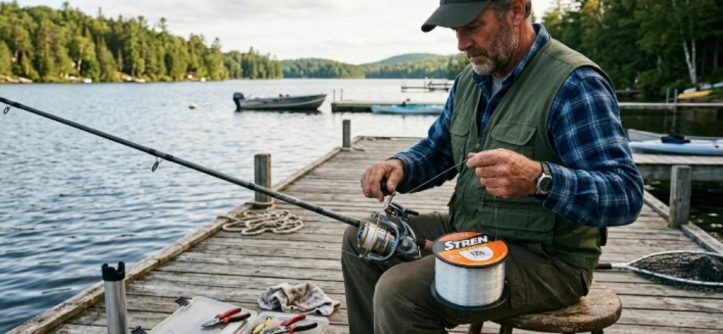
There is nothing more annoying than casting your line and watching it coil up in the air like a tangled mess. Line twist is one of the most common problems anglers face, and it ruins a perfectly good fishing session. The good news is that it is entirely preventable. If you learn how to spool fishing reel properly from the start, you will spend less time untangling and more time catching fish. This guide gives you everything you need to do it right.
Why Line Twist Happens in the First Place
Understanding the problem is the first step toward fixing it. Line twist happens when the line rotates as it winds onto the spool. This is especially common with monofilament and fluorocarbon lines because they carry memory — meaning they hold the shape they were stored in.
The most common cause is loading the line in the wrong direction. The line coming off your supply spool must rotate in the same direction as the line going onto your reel. When these two directions do not match, the line fights itself every single time it winds on. Additionally, using a spinning reel incorrectly or reeling in slack line after a cast can make things significantly worse over time.
Choosing the Right Line for Your Reel
Before you start spooling, pick the right line. Not all lines behave the same way, and some are more prone to twisting than others.
Monofilament is affordable and easy to work with, but it has strong memory. It tends to coil after sitting on the spool for a long time. Fluorocarbon is denser and sinks faster, which makes it great for certain fishing styles, but it also has memory issues. Braided line, on the other hand, has almost no memory. It lies flat on the spool and resists twist very well. However, it does require a backing layer on most spinning reels to prevent slipping.
Match the line weight to your reel’s recommended capacity, which is usually printed on the spool itself. Using a line that is too heavy or too light causes uneven winding and increases the chance of problems later.
What You Will Need
Gather these items before you begin:
- Your fishing reel (spinning or baitcasting)
- A fresh spool of fishing line
- A pencil or dowel rod
- Scissors or line cutters
- A damp cloth or piece of foam
- A friend (optional but helpful)
Having everything ready saves time and keeps the process smooth from start to finish.
Step-by-Step Guide to Spooling Without Twist
Follow these steps carefully and you will load your reel cleanly every time.
Step 1 — Check the Reel’s Line Direction
Open the bail on your spinning reel. Pull the line from your new supply spool and watch how it uncoils. Hold the supply spool flat, parallel to the ground, and let a few feet of line fall freely. Notice which direction the line naturally spirals — either clockwise or counterclockwise.
Now look at your reel. When you turn the handle, the bail rotates in one direction. The line coming off your supply spool must rotate in that same direction. This single step prevents the majority of line twist problems before they start.
Step 2 — Attach the Line to the Reel Spool
Thread your line through the rod guides, starting from the tip and working down toward the reel. Attach the line to the reel spool using an arbor knot. This is a simple, secure knot that holds the line firmly to the spool center.
To tie an arbor knot, wrap the line around the spool arbor, tie an overhand knot around the main line, and then tie a second overhand knot at the tag end. Pull tight and trim the excess. The line should grip the spool without slipping.
Step 3 — Position the Supply Spool Correctly
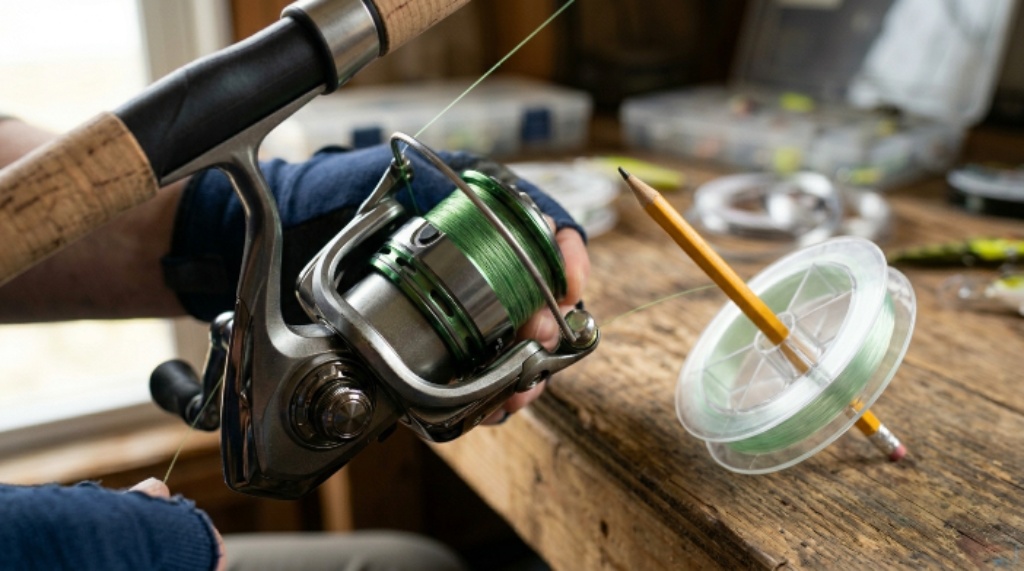
This is the most important step to spool fishing reel properly. Lay the supply spool flat on the floor or have a friend hold it on a pencil. The label side should face up. As your reel winds the line on, the supply spool should feed line off in the same rotational direction as your reel winds it on.
If you hold the supply spool vertically (like a wheel), the line will twist with every rotation. Therefore, always keep it flat and parallel to the ground.
Step 4 — Apply Light Tension While Spooling
Close the bail and begin reeling slowly. Use a damp cloth or a folded piece of foam to apply light, even pressure to the line as it feeds through. Pinch the line gently between your fingers about a foot above the reel. This tension keeps the line from laying loosely on the spool and prevents air gaps that lead to tangles.
Reel in about 15 to 20 turns, then let the line go slack on the floor. If it coils and twists, flip the supply spool over. That simple adjustment usually resolves the directional mismatch immediately.
Step 5 — Fill the Spool to the Right Level
Do not overfill or underfill your spool. Overfilling causes the line to spill off the edges during a cast, which leads to tangles and wind knots. Underfilling reduces your casting distance because friction increases as the line contacts the spool edge.
For most spinning reels, fill the spool to within one eighth of an inch from the lip. For baitcasting reels, fill until the line is level with the spool’s outer edges. Check your reel’s manual if you are unsure of the recommended fill level.
Step 6 — Trim and Tie Your Terminal Tackle
Once the spool is filled, cut the line and attach your swivel, lure, or hook. Run the line through all the rod guides before tying your final knot. Many anglers forget this step and have to cut their knot and start over.
Use a strong, reliable terminal knot such as the improved clinch knot or the Palomar knot. Both hold well under pressure and are easy to tie in the field.
How to Fix Line Twist If It Already Exists
Sometimes you are dealing with a reel that was spooled incorrectly in the past. A line twist fix does not always require you to respool completely. There is a simple method that often works in the field.
Remove all your terminal tackle. Let the twisted line trail behind a moving boat or drag it downstream in a current for a few minutes. The water pressure straightens the line naturally as it flows past. Once you reel it back in with light tension, much of the twist will be gone.
Additionally, you can unspool the line entirely onto a flat surface, let it relax in the sun for 15 to 20 minutes, and then respool it with correct tension. This works especially well for monofilament and fluorocarbon lines that carry strong memory.
Common Mistakes to Avoid
Even experienced anglers make these errors. Knowing them in advance helps you stay one step ahead.
- Holding the supply spool vertically instead of flat
- Reeling in slack line after a cast without taking up the bow first
- Overfilling the spool past the recommended line capacity
- Using old, brittle line that has lost its strength and flexibility
- Skipping the tension step during spooling
Each of these mistakes compounds over time. Therefore, build good habits from your very first spool-up.
Maintaining Your Line Between Fishing Trips
Good line management extends the life of your line and keeps your reel performing at its best. After each trip, rinse your reel and line with fresh water if you fish in saltwater or brackish environments. Salt crystals and grit accelerate wear and cause the line to become stiff and brittle.
Every few months, inspect the first 20 feet of line closest to your terminal tackle. This section takes the most abuse from casting, fish runs, and contact with rocks or structure. If it feels rough or looks frayed, cut it off and re-tie. You will rarely need to replace the entire spool.
Conclusion
Spooling a reel without twist is a skill every angler should master. It starts with understanding line direction, using the right technique, and applying steady tension throughout the process. When you spool fishing reel properly, you eliminate one of the most frustrating problems in fishing before it even starts. And if twist does occur, a simple line twist fix can often restore your setup without a complete respool. Take your time, follow the steps in this guide, and you will always have a clean, tangle-free line ready to cast.
Frequently Asked Questions
How do I know if my fishing line is twisted?
Hold your rod tip low and let a few feet of slack line hang freely. If the line forms coils or spirals instead of hanging straight, it is twisted. You may also notice wind knots appearing near the guides during casting.
Does braided line twist as easily as monofilament?
No. Braided line has almost no memory, so it resists twisting much better than monofilament or fluorocarbon. However, it can still develop slight twist if spooled incorrectly, so proper technique still matters.
How often should I replace my fishing line?
For recreational anglers, replacing line once a season is a good rule. If you fish frequently or in harsh conditions, inspect and replace it more often. Old, degraded line breaks more easily and twists more frequently.
Can I use a line spooling station instead of the pencil method?
Yes. A line spooling station holds the supply spool at the correct angle and applies consistent tension automatically. It is a worthwhile investment if you spool multiple reels regularly. However, the pencil method works just as well for most anglers.
Why does my line keep coming off the spool in loops during a cast?
This usually means the spool is overfilled or the line was wound on too loosely without enough tension. It can also happen if the line was twisted during spooling. Reduce the fill level slightly and respool with firm, even tension to resolve the issue.
Related Topics:
How to Pack Sun Protection Gear for a Surf Trip
How Telescopic Fishing Rod Combos Make Travel Fishing Easier




Leave a Reply