

Fresh juice tastes amazing. It energizes you quickly. However, the juicer you choose affects how many nutrients end up in your glass.
Regular juicers spin at high speeds. This action creates heat and adds air. Heat and air can damage delicate vitamins and enzymes.
Slow juicers work differently. They crush and press produce gently at low speeds. This process keeps heat low and limits oxidation.
Studies support this difference. One research paper found low-speed masticating juicers produce juice with higher overall nutritional quality. Another test showed cold-pressed juice retains about 15% more nutrients at the start and loses them slower over time.
Many people look for reliable options to get these benefits. Check out masticating juicer models like the Tuumiist Cold Press Juicer.
You deserve juice packed with goodness. Let’s explore why slow juicers stand out.
Understanding the Main Types of Juicers
Juicers fall into two big categories. Each type handles fruits and vegetables in its own way.
First, regular juicers are centrifugal models. They use sharp blades that spin very fast. This speed shreds produce quickly.
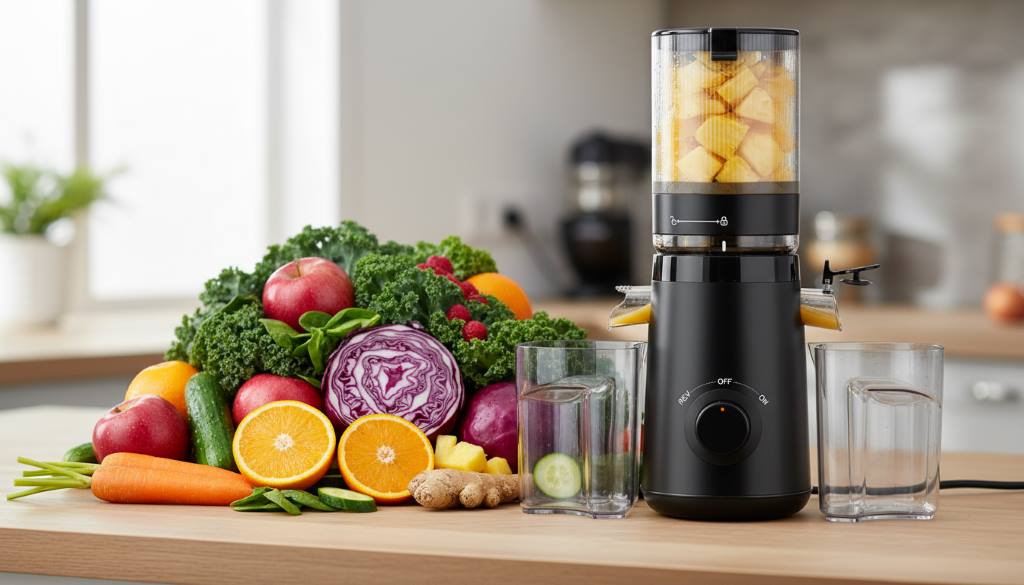
Next, slow juicers go by names like masticating or cold press. They use a strong auger that turns slowly. The auger crushes and squeezes the ingredients.
Both types make juice. However, the method changes everything about nutrient retention.
How Centrifugal Juicers Work
Centrifugal juicers act fast. You feed produce into a chute. Blades spin at thousands of RPMs.
The spinning throws pieces against a mesh screen. Juice flies out from force. Pulp stays behind.
This speed helps you juice quickly. However, it generates heat from friction. It also whips in lots of air.
Heat breaks down sensitive parts like vitamin C and enzymes. Air starts oxidation right away. Oxidation turns nutrients less effective.
As a result, the juice tastes fresh at first. Yet nutrients start fading faster.
How Masticating Juicers Operate
Masticating juicers take a gentler path. The auger turns at 40 to 100 RPMs. It crushes produce against a screen slowly.
This crushing mimics chewing. It breaks cell walls fully without much heat.
Less heat means vitamins stay intact. Limited air keeps oxidation low.
Moreover, the slow squeeze gets more juice out. Higher yield often means more nutrients per serving.
For example, leafy greens like kale work great in slow juicers. Centrifugal models leave lots of goodness in the pulp.
The Role of Heat in Nutrient Loss
Heat acts as a big enemy to nutrients. Even small rises affect delicate compounds.
Vitamin C breaks down above 140 degrees Fahrenheit. Enzymes stop working at similar temperatures.
Centrifugal juicers create some warmth from speed. Tests show this reduces heat-sensitive nutrients.
Slow juicers stay cool. They rarely go above room temperature. Therefore, they protect those fragile elements better.
Additionally, cooler processing keeps the juice vibrant longer. Colors and flavors hold up well.
Oxidation and Its Effects
Oxidation happens when air hits juice. It turns apples brown quickly as an example.
In juicing, more air means faster oxidation. Centrifugal models add foam and bubbles.
Foam shows extra oxygen. Oxygen reacts with nutrients and lowers their power.
Slow juicers produce little foam. Juice stays smooth and dense.
Consequently, antioxidants like polyphenols last longer. You get more health support from each sip.
What Science Says About Nutrient Differences
Researchers study juicing methods often. Results show clear patterns.
One study tested fruits like pineapple and carrots. Low-speed extraction kept more bioactive compounds stable.
Another comparison found cold-pressed juice degrades slower. Vitamins held steady longer in storage.
Additionally, higher juice yield from slow models adds value. More volume from the same produce means extra minerals and vitamins overall.
However, differences vary by fruit. Leafy greens and soft items show the biggest gains in masticating juicers.
Overall, evidence points to better retention in slow processes. Gentle handling makes the real difference.
Vitamins Better Preserved in Slow Juicers
Vitamins lead the nutrient list in juice. Slow juicers shine here.
Vitamin C stays higher because of low heat. Tests show noticeable edges in cold-pressed samples.
Vitamin A from carrots keeps more color and strength. Beta-carotene resists breakdown better.
B vitamins also benefit. They handle oxidation poorly in fast methods.
Therefore, daily slow-juiced drinks support immunity and energy more effectively.
Related:
How an Island Range Hood Improves Kitchen Air Quality
KitchenDAO Pasta Drying Rack Review: Is It Worth the Hype?
Enzymes and Their Importance
Enzymes help digestion naturally. Raw produce contains them alive.
Heat denatures enzymes quickly. Centrifugal spinning can reduce their activity.
Slow juicers preserve live enzymes. Many people feel better digestion from this.
For instance, bromelain from pineapple stays active. It aids protein breakdown.
Moreover, live enzymes may boost nutrient absorption. Your body uses the juice more fully.
Antioxidants and Phytochemicals
Antioxidants fight daily stress in the body. Fruits and veggies pack them.
Polyphenols and flavonoids suffer from oxidation. Slow juicing limits exposure.
Studies measure higher levels in masticating output for some produce. The gentle press releases them without damage.
Carotenoids also hold up well. They support eye and skin health.
As a result, slow juice offers stronger daily protection.
Higher Juice Yield Means More Nutrients
Yield matters a lot. Slow juicers often extract 20 to 50% more juice.
More juice from the same apple means extra nutrients in your glass. You waste less goodness in pulp.
This efficiency helps with costly produce. You get better value and health returns.
Additionally, dry pulp shows thorough extraction. Wet pulp from centrifugal models leaves nutrients behind.
Better Taste and Texture
Nutrients tie to enjoyment. Slow juice tastes richer and smoother.
Less foam means cleaner sips. Colors stay bright longer.
Flavors develop fully without bitter notes from heat. Many switch and never go back.
For example, carrot juice turns sweeter and earthier. Green blends taste fresh, not grassy.
Versatility of Slow Juicers
Slow models handle more ingredients. They juice nuts for milk easily.
Leafy greens yield well. Wheatgrass works without struggle.
You can make sorbets or baby food too. One machine covers many needs.
This range encourages varied produce. Variety brings broader nutrients.
Tips to Get the Most Nutrients at Home
Start with fresh, organic produce when possible. Quality in equals quality out.
Chop items small for easy feeding. Alternate soft and hard pieces.
Drink juice soon after making. Even slow juice loses some over days.
Store in airtight glass if needed. Fill to the top to cut air.
Mix greens with fruits for balance. Add lemon to slow oxidation.
Finally, clean your juicer right away. It stays ready for daily use.
Conclusion
Slow juicers change the juicing game. They crush gently to keep heat and air low.
This care retains more vitamins, enzymes, and antioxidants. Higher yields add even more value.
Science and daily experience back these gains. You feel the difference in energy and taste.
Ready to boost your health? Pick a quality slow juicer today. Start enjoying nutrient-rich juice every morning.
Your body will thank you.
FAQs
Do slow juicers really keep more nutrients than regular ones?
Yes, they do. Low heat and less oxidation preserve vitamins and enzymes better. Studies show higher retention and slower nutrient loss over time.
How does a masticating juicer differ from a centrifugal one?
Masticating juicers crush slowly with an auger. Centrifugal ones shred fast with blades. The slow method protects delicate nutrients.
Is cold press juicing worth the extra time?
Absolutely. You gain richer taste, more juice, and better nutrition. The few extra minutes pay off in health benefits.
Can slow juicers handle leafy greens well?
They excel at it. The crushing action extracts juice efficiently from kale, spinach, and herbs. Centrifugal models often leave wet pulp.
Does slow juicing help with nutrient absorption?
It can. Live enzymes and less degradation may improve how your body uses the nutrients. Many report better digestion.
References
- Effect of cold-pressed and normal centrifugal juicing on quality attributes: https://pmc.ncbi.nlm.nih.gov/articles/PMC6587058/
- Cold-Pressed vs Centrifugal Juice Nutrient Shelf Life: https://www.goodnature.com/blog/cold-pressed-vs-centrifugal-juice-part-2-nutrient-shelf-life
- Cold Pressed vs. Centrifugal Juice Comparison (2024 study): https://www.researchgate.net/publication/379239448_Cold_Pressed_vs_Centrifugal_Juice_Comparison_in_Terms_of_the_Juice_Yield_Physicochemical_and_Phytochemical_Properties
- Additional insights on juicing methods and nutrient retention: https://pubmed.ncbi.nlm.nih.gov/31286079/




Leave a Reply