
A Weekend of Running in the Capital
The TCS London Marathon 2027 will take over the city on the weekend of April 24 and 25, 2027. The main race runs on Sunday, April 25. Runners will cover 26.2 miles from south-east London to The Mall. Meanwhile, the weekend also brings family events, an expo, and a lively festival feel across the capital.
This guide covers everything you need to plan your own marathon story. First, you will see the route. Next, you will learn how to get a place. After that, you will find a training plan, charity tips, and race-day highlights. Whether you run, volunteer, or cheer, the details below will help you prepare.
Key Facts at a Glance
| Detail | Information |
| Event weekend | April 24 and 25, 2027 |
| Main race day | Sunday, April 25, 2027 |
| Distance | 26.2 miles (42.2 km) |
| Start area | Greenwich Park and Blackheath |
| Finish line | The Mall, near Buckingham Palace |
| Public ballot for 2027 | Closed |
Please note that organisers can change timings and event details. Therefore, always check the official race website before you travel.
The Route: From Greenwich to The Mall
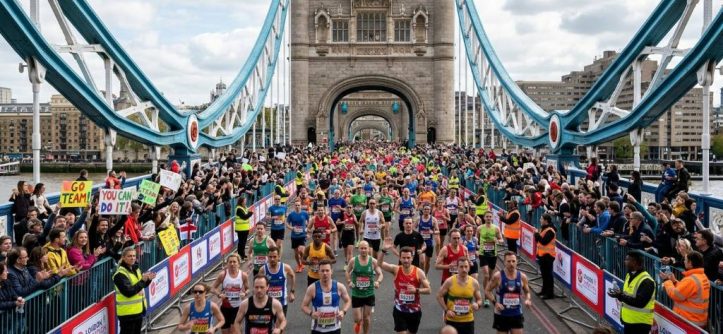
The course is flat, fast, and full of famous sights. It starts in the south-east, loops through Greenwich, and crosses the River Thames at Tower Bridge. Then it heads east to Canary Wharf before turning back west along the Embankment. Finally, it passes Big Ben and finishes in front of Buckingham Palace.
Main Landmarks by Mile
| Approx. mile | Landmark | What to expect |
| 0 | Greenwich Park and Blackheath | Three start areas merge into one course |
| 6 | Cutty Sark | Huge crowds and loud support |
| 12 | Tower Bridge | Roaring noise and a mid-race lift |
| 13.1 | Halfway point | Check your pace on the bridge approach |
| 15 to 20 | Isle of Dogs and Canary Wharf | Tall towers and tight turns |
| 22 | Tower of London area | Tired legs, so keep your form |
| 24 | Embankment | Long, straight road beside the river |
| 26 | Big Ben and Westminster | The final push begins |
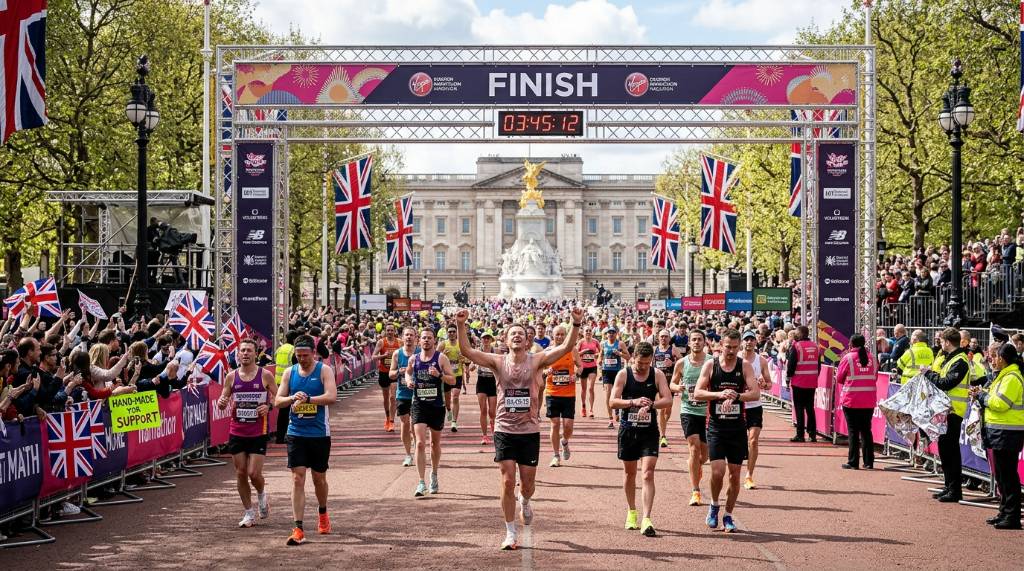
| 26.2 | The Mall | Finish line and your medal |
Three Start Zones
The race uses separate start areas, which are colour-coded. Each runner gets a start zone based on their expected time. Therefore, you will not need to dodge slower runners in the first mile. The three routes join after a few miles, and the course then runs as one.
Tips for Each Section
- Miles 1 to 6: Start easy. Adrenaline will tempt you to run too fast.
- Miles 7 to 12: Settle into a steady rhythm and take on fluids.
- Miles 13 to 20: Stay calm in Canary Wharf, where crowd noise drops and the turns come quickly.
- Miles 21 to 26: Focus on short targets, such as the next lamppost or the next water station.
However, the course is not entirely flat. A few gentle rises and many turns can slow you down. For that reason, train on mixed surfaces and practise running around bends.
Getting Around on Race Weekend
Roads close early, and spectators need a plan. Additionally, trains and the Tube run busy services. Spectators should pick two or three cheer points and check which stations stay open. The Cutty Sark, Tower Bridge, and Embankment areas draw the biggest crowds, so arrive early for a good spot.
How to Register for a Place
Demand for this race far exceeds supply. Every year, hundreds of thousands of people apply for a place. Because of that, you should know every entry route before you decide.
Main Entry Routes
| Entry route | Who it suits | Key point |
| Public ballot | Anyone aged 18 or over on race day | Free to enter, but luck decides |
| Charity place | Runners who can raise funds | Each charity sets its own target |
| Good for age | Fast, proven runners | You need a qualifying time from a certified race |
| Championship place | Elite and top club athletes | Strict standards apply |
| Running club place | Members of clubs that receive places | Clubs choose how to share them |
| Tour operator or travel package | International runners | Includes travel and a race place |
The Public Ballot
The public ballot for the 2027 race is now closed. Therefore, you cannot enter it any more. The next ballot usually opens soon after the race each year, so the 2028 ballot should open in late April 2027. Sign up for the official newsletter to hear the moment it opens.
Good for Age Entry
Good for age places reward speed. You need to run a qualifying time at a certified marathon within the set window. Times vary by age group and gender. Additionally, you must check the exact standards and dates on the official site, because they change from year to year.
Club and Travel Routes
Some running clubs receive a small number of places. Ask your club secretary early, since members often vote or draw for them. Meanwhile, runners abroad can use official tour operators. These packages cost more, but they cover hotels and often guarantee a place.
Entry Checklist
- Check your age. You must be at least 18 on race day.
- Keep your best marathon or half marathon time on file.
- Set aside the entry fee or fundraising target.
- Add a reminder for each opening date.
- Read the official terms before you pay.
Finally, avoid unofficial resale sites. Places are not transferable, and organisers will turn away anyone who runs under another name.
Training Plan for Race Day
A good plan builds fitness slowly and keeps you healthy. Most first-time runners need about 16 to 20 weeks. If you hold a place for April 2027, therefore, your build-up should start in December or earlier. Begin with a base of regular easy running before you follow any strict schedule.
Weekly Training Structure
Most plans use four or five runs a week. Each run has a clear job.
| Day | Session | Purpose |
| Monday | Rest or gentle stretching | Recovery |
| Tuesday | Easy run, 30 to 45 minutes | Aerobic base |
| Wednesday | Intervals or hill repeats | Speed and strength |
| Thursday | Rest or cross-training | Recovery |
| Friday | Short easy run | Keep legs loose |
| Saturday | Rest or parkrun | Social and light effort |
| Sunday | Long run | Endurance |
Build-Up by Phase
| Phase | Weeks | Long run distance | Focus |
| Base | 1 to 6 | 6 to 10 miles | Build routine and comfort |
| Build | 7 to 12 | 10 to 15 miles | Add pace work |
| Peak | 13 to 17 | 16 to 20 miles | Practise race pace and fuelling |
| Taper | 18 to 20 | Drops each week | Rest and sharpen |
Long Runs and Fuelling
The long run is the heart of your plan. It teaches your body to burn fuel well and your mind to stay patient. Additionally, use these runs to test your race-day kit. Try the gels, drinks, shoes, and clothes you plan to wear. Never try anything new on race morning.
Drink small amounts often, rather than large amounts at once. Eat carbohydrates in the days before the race. However, avoid heavy or unfamiliar meals the night before.
Strength, Rest, and Injury Prevention
- Do two short strength sessions each week. Focus on glutes, calves, and core.
- Sleep seven to nine hours each night.
- Increase weekly mileage by no more than about 10 percent.
- Take an easy week every third or fourth week.
- See a physio early if pain lasts more than a few days.
The Taper
The last three weeks matter just as much as the hard weeks. Cut your mileage but keep a few short, quicker efforts. As a result, your legs will feel fresh on race morning. Many runners feel restless during the taper. That feeling is normal, so trust the plan.
Please speak with a doctor before you start marathon training, especially if you have health concerns.
Running for Charity
Charity runners make up a large share of the field. Together, they raise tens of millions of pounds every year. Many charities also offer training tips, cheer zones, and a supportive team on race day.
How Charity Places Work
Most charities ask you to complete an application. Some also charge a small registration fee. In return, you commit to a fundraising target. For example, one charity listing for 2027 sets a registration fee of 100 pounds and a minimum target of 2,500 pounds. Targets differ by charity, so compare several before you choose.
Spaces go quickly. Therefore, apply early and show your motivation clearly. Charities love a personal story and a realistic fundraising plan.
Choosing the Right Charity
- Pick a cause that matters to you. Passion keeps you going on long days.
- Compare fundraising targets and registration fees.
- Ask what support the charity gives, such as a running vest, coaching, and a cheer point.
- Check how the charity spends donations.
Fundraising Ideas That Work
| Idea | Why it works |
| Online page with your story | Friends see your goal and donate easily |
| Bake sale or quiz night | Fun events bring people together |
| Workplace match funding | Many employers double your total |
| Weekly mileage updates | Regular posts keep supporters engaged |
| Sponsored challenge | Extra effort attracts bigger gifts |
Additionally, thank every donor quickly. A short message after each gift builds loyalty. Start fundraising at once, rather than waiting until the final weeks. Finally, ask about gift aid, because it adds 25 percent to eligible UK donations at no cost to the donor.
Race Highlights and Race Day Tips
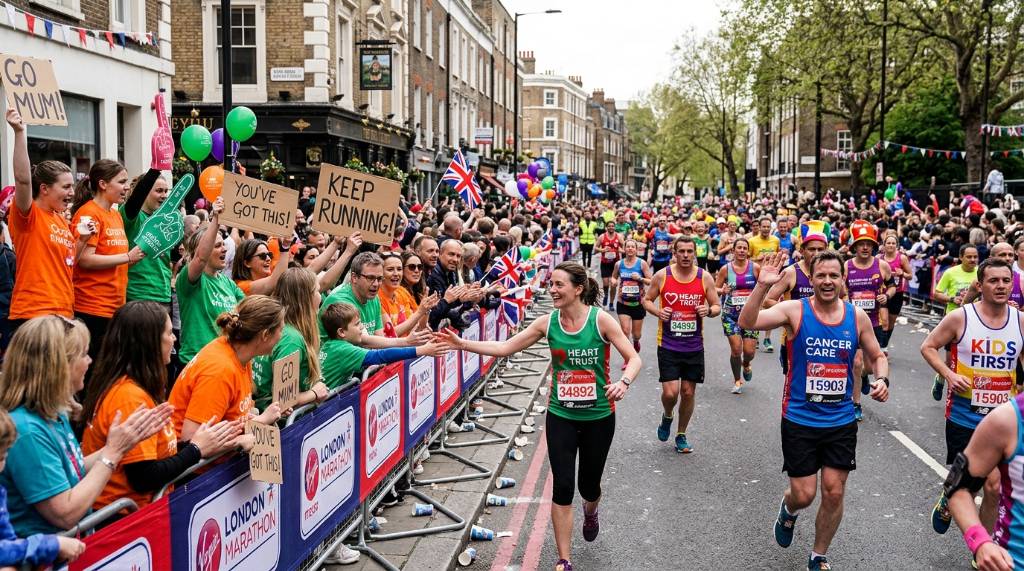
Race day has a rhythm of its own. The atmosphere starts early, builds through the morning, and peaks along the final stretch. Millions of people line the streets, and the sound carries for miles.
What Makes the Day Special
- Elite races: World-class men and women, plus wheelchair athletes, start before the mass field. Their battles often produce fast times and record chases.
- Mass participation: Tens of thousands of everyday runners share the same road as the stars.
- Fancy dress: Runners chase world records in costumes, and the crowd loves it.
- Cheer zones: Charities and local groups set up music and banners at key points.
- The finish: Running down The Mall past Buckingham Palace gives most runners goosebumps.
The Weekend Around the Race
The fun does not wait for Sunday. Runners collect their numbers at the expo, where they also browse kit stalls and talks. Additionally, younger athletes often take part in mini and junior events earlier in the weekend. Therefore, bring family and friends along, since there is plenty to see.
Race Morning Checklist
| Item | Reason |
| Race number and timing chip | You cannot start without them |
| Tested shoes and socks | Avoid blisters |
| Old jumper or throwaway layer | Keep warm at the start, then discard it |
| Gels, snacks, and a small bottle | Fuel you already trust |
| Sun cream and cap or hat | April weather can swing from cold to sunny |
| Transport card and some cash | Easy travel home |
Smart Pacing and Mindset
Start slower than your goal pace. Then pick up speed after halfway if you feel strong. Many runners hit a tough patch around mile 20. However, a plan helps you push through. Break the remaining miles into small chunks, smile at the crowd, and read the signs. Finally, high-five a few children. It lifts your mood and gives your legs a boost.
After You Finish
Walk slowly, drink water, and eat within an hour. Collect your medal and bag, then meet your friends at the family area. Soak in the moment, and share your story. Rest for several days before you run again.
Conclusion
The race weekend on April 24 and 25, 2027, offers a unique mix of sport, charity, and city spirit. The main event takes place on Sunday, April 25, over a flat, scenic route from Greenwich to The Mall. The public ballot for 2027 has closed. However, charity, club, good for age, and travel routes may still offer a way in, so act quickly.
Train for 16 to 20 weeks, build your long runs slowly, and taper well. Additionally, choose a charity you love and start fundraising early. On race day, pace yourself, enjoy the crowds, and finish with a smile. Above all, check official sources for the latest dates and rules, and then lace up your shoes.
Frequently Asked Questions
When is the race in 2027?
The main race runs on Sunday, April 25, 2027. The wider event weekend covers April 24 and 25.
How far is the race?
The distance is 26.2 miles, or 42.2 kilometres.
Where do runners start and finish?
Runners start in Greenwich Park and Blackheath. They finish on The Mall, near Buckingham Palace.
Is the public ballot still open?
No. The public ballot for 2027 has closed. The next ballot usually opens soon after the race.
What other ways can I get a place?
You can try a charity place, a good for age time, a running club place, or a travel package.
How much do I need to raise for charity?
It depends on the charity. One listing for 2027 asks for 2,500 pounds, so compare several options.
How old must I be to run?
You must be at least 18 on race day.
How long should I train?
Most runners need 16 to 20 weeks. Beginners may want longer.
Is the course flat?
It is mostly flat and fast, but it has some gentle rises and many turns.
Can friends and family watch?
Yes. Crowds line most of the route. Pick two or three cheer points and plan your travel early.




Leave a Reply