
Your kitchen cabinets bear the brunt of daily life—steam from boiling pasta, splatters from sizzling olive oil, and the inevitable fingerprints of little (and not-so-little) hands. When it comes time to clean, you might find yourself standing in the aisle, staring at a wall of sprays and wipes, wondering which ones are actually safe for your wood finishes. The problem is compounded in California, where environmental regulations and health-conscious standards make the choice even more nuanced. The goal isn’t just a shiny surface; it’s a clean cabinet that isn’t stripped of its protective finish or coated in harsh residue. This guide will walk you through exactly how to evaluate, select, and use a safe wood cleaner for california kitchens, ensuring your cabinetry stays beautiful and protected for years.
Key Takeaways
- Understanding your cabinet’s topcoat—whether polyurethane, varnish, or oil—is more critical than the brand of cleaner you choose.
- California’s environmental standards (like VOC limits) mean you should look for water-based, plant-derived, or solvent-free formulas that are both effective and compliant.
- Always test any new product in an inconspicuous area first, even if it is labeled “safe,” to prevent damage to your specific finish.
- A simple solution of mild dish soap and warm water often suffices for daily cleaning; save specialized polishes for periodic maintenance.
- Avoid products containing bleach, ammonia (often found in glass cleaners), or citrus oils, as these can degrade common kitchen sealants over time.
Understanding Your Finish: The First Step to Safety
Before you even look at a bottle, you must know what you are cleaning. The “safest” cleaner for one surface can be a disaster for another. Your kitchen cabinets generally have one of three main finish types: polyurethane or varnish (a hard, plastic-like coating), lacquer (a thinner, high-gloss coating), or an oil finish (like tung or linseed oil that penetrates the wood).
Water is the primary solvent in most safe cleaners, but water is pernicious to wood that isn’t properly sealed. If your cabinets have an oil finish or a compromised lacquer topcoat, a watery cleaner can seep past the surface, causing the wood to swell, warp, or develop white spots. In California kitchens where humidity levels can fluctuate, condensation on cabinet doors is common. Therefore, selecting a cleaner that is compatible with your specific finish is the primary safety criterion. If you are unsure, check the manufacturer’s documentation or test a discreet area with a drop of water—if it beads up, the finish is likely sound; if it soaks in, you need a cleaner specifically designed for unsealed or oiled wood.
Decoding “Safe”: What Does It Mean for Wood?

The term “safe” is heavily marketed but poorly defined. In the context of wood cleaners, safety involves three distinct factors: safety for the wood finish (protection), safety for your family (low toxicity), and safety for the environment (regulatory compliance). A popular green-brand cleaner might be low in volatile organic compounds (VOCs), making it safe for your respiratory health, but if it contains acidic ingredients like citric acid to cut grease, it can etch the topcoat over time.
In California, the California Air Resources Board (CARB) strictly regulates VOC content in consumer products. This means many national brands reformulate their products for the California market to be compliant. Consequently, choosing a product legally sold in California ensures it meets some of the toughest air-quality standards in the country. However, compliance with VOC rules does not guarantee it is safe for your wood—it only guarantees low solvent emissions. Your criteria should therefore include checking for the absence of harsh chemicals (like ammonia and bleach) and the presence of gentle solvents like propylene glycol (a food-safe humectant) or natural soap (like Murphy’s Oil Soap, when diluted properly), To keep your newly restored kitchen looking spotless between deep cleans, check out this guide on the Top Rated Affordable Robot Vacuum Mop for effortless daily floor care.
VOCs vs. Acids: The Hidden Difference
Many homeowners mistakenly equate “low odor” with “safe for finish.” A lot of low-VOC cleaners use high alkaline levels to clean without solvents, but this alkalinity can strip wax and dull the finish. Conversely, a high-solvent cleaner might be incredibly effective at dissolving grease without harming the polyurethane, but it will off-gas heavily. Look for a balance: a cleaner with a neutral pH (around 7) is generally considered the safest for polyurethane and varnish finishes. Avoid anything with a pH below 5 or above 10, as these will likely cause bloom (whiteness) or cloudiness on the wood over time.
Key Ingredients to Avoid Specific to Kitchen Environments
Kitchens present unique grime—cooking oils, food acids, and heat. While it is tempting to reach for a degreaser that promises heavy-duty results, these often damage your cabinetry in the long run. Here is a list of ingredients that are particularly problematic for kitchen wood surfaces, even if they are effective at cleaning.
- Ammonia (and Ammonia-D): Found in many glass and multi-surface cleaners, ammonia can break down shellac and some varnishes, leaving a sticky residue that attracts even more dirt.
- Bleach (Sodium Hypochlorite): While great for disinfecting, bleach can lift the pigment from stained wood and corrode the metal hinges and hardware adjacent to the cleaned area.
- High Concentrations of d-Limonene (Citrus Oil): While natural and pleasant-smelling, citrus oil is a strong solvent. Heavy use can soften latex-based acrylic topcoats, leaving the wood vulnerable to scratches.
- Silicones: Often added for shine, silicones build up a film that is nearly impossible to remove later. This can interfere with future refinishing or patching.
Instead, look for “saponifying” agents. These are soaps that work by encapsulating grease particles, allowing them to be wiped away without aggressive solvents. This mechanism is safe for the finish and effective on cooked-on food grime, requiring only a gentle wipe.
Practical Selection Guide: Matching Product to Problem
Different messes require different tools. You do not need a “heavy-duty” cleaner for daily maintenance. In fact, using a strong product too often is a primary cause of premature finish wear. Here is a practical guide to selecting the right type of product based on your immediate need.
| Cleaning Scenario | Recommended Product Type | Why It Works | Application Tip |
|---|---|---|---|
| Daily Wipe-Down (Fingerprints, Dust) | Diluted castile soap or mild dish soap (a drop in a quart of water) | Gentle pH and low residue; removes light oils without stripping wax. | Use a microfiber cloth that is damp, not soaking wet. Wipe dry immediately. |
| Grease and Cooking Splatters | Water-based cleaner with glycol ethers or “degreaser” specific for cabinets | Glycol ethers dissolve oil bonds without being as volatile as petroleum solvents. | Spray on the cloth, not the cabinet, to prevent moisture seeping into seams. |
| Stubborn Stains or Stickiness | Baking soda paste (baking soda + water) | Mild abrasive; physically lifts the grime without chemical breakdown of the finish. | Rub gently in a circular motion. Rinse with a damp cloth and dry. |
| Restoring Shine | Furniture polish with Carnauba wax (no silicone) | Adds a protective layer that repels water and fingerprints. | Apply sparingly and buff to a dry sheen to avoid oily buildup. |
| Hard Water Stains | Equal parts water and distilled white vinegar (only on sealed wood) | Acidic nature dissolves mineral deposits. | Use sparingly; vinegar can eat into the finish if left wet. Wipe immediately. |
The Microfiber Cloth: Your Best Safety Tool
The physical action of cleaning often causes more damage than the chemical solution. A safe wood cleaner for california kitchens is only as safe as the cloth it is applied with. Avoid abrasive scrubbers or old t-shirts that might be gritty. Use a high-quality microfiber cloth. The micro-fibers are incredibly fine and can get into the wood grain to pull out dirt without scratching the topcoat. Ensure the cloth is free of any debris before you start. If you are cleaning a particularly greasy area, you may need two cloths—one to apply the cleaner (the “wet” one) and one to buff the surface to a dry finish (the “dry” one) to prevent watermarks.
Applying the Cleaner: Technique Matters More Than the Bottle
How you apply the product often determines whether it is safe. There is a golden rule in cabinet care: never spray directly onto the wood. Spraying onto the door creates run-off, which will inevitably seep under the edge of the stiles and into the seams. Over time, this trapped moisture causes the wood glue to fail, leading to swollen panels and peeling veneers. Instead, spray the cleaner onto your microfiber cloth until it is just damp, then wipe the cabinet. This controls moisture levels exactly.
Always wipe in the direction of the wood grain. This prevents micro-scratches that can appear over time when you wipe against the grain. When you are finished, immediately follow up with a dry cloth to remove any residual moisture. Never let a cleaner air-dry on the wood surface, as this leaves a film that will attract airborne dust, making your kitchen look dirtier faster.
Climate Considerations for California Homes
California’s climate is diverse, ranging from the coast—where salt air and humidity are factors—to the dry inland valleys where air conditioning runs constantly. Wooder cabinets in coastal areas may attracted moisture and salt, which can be corrosive. In this environment, you might prioritize a cleaner with anti-static properties to reduce dust clinging. In inland climates, the air is often dry, which can cause wood to dry out and shrink. Here, a cleaner with a slight moisturizing agent, like glycerin, can help keep the wood fibers supple. Regardless of your locale, ensure the cleaner does not contain high amounts of alcohol, which dries out wood and causes cracking in climates that are already arid.
Cost vs. Value: Is the Expensive “Green” Cleaner Worth It?
Often, commercial “eco-friendly” cleaners cost twice as much as standard ones. Are they worth it? It depends on your priorities. Many premium plant-based cleaners are excellent—they clean effectively and have a pleasant, limited fragrance. However, the minimum viable product for most common kitchen grime is a simple solution of pH-neutral soap and water, which is incredibly cheap. The value of an expensive cleaner lies in convenience, safety certification (like being biodegradable), and the assurance that it won’t leave harmful residues on a surface where you prepare food. If you are on a budget, you can safely dilute a high-quality concentrated soap yourself. On the other hand, if you have custom, high-end cabinetry with a complex finish, investing in a professional-grade cleaner ensures you are not risking the warranty.
Long-Term Maintenance: Beyond the Cleaner
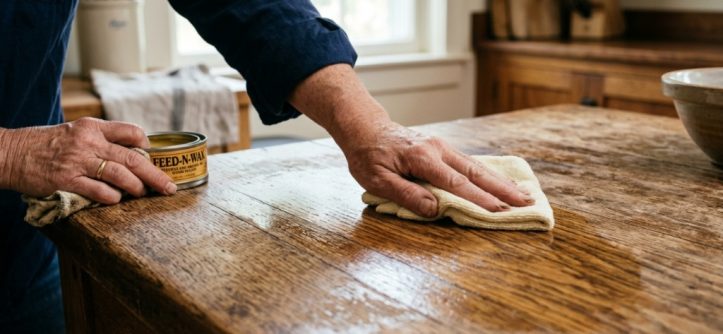
Selecting a safe cleaner is part of a broader maintenance strategy. Even the best wood cleaner cannot perform miracles if the finish is compromised. Every six months, inspect your cabinets for dull spots or areas where water does not bead up. This indicates the topcoat is wearing thin. In these cases, the safest “cleaner” is actually a fresh coat of protective wax. Waxing your cabinets twice a year seals the surface, making daily cleaning easier and safer, as the grime has fewer microscopic pores to lodge into. This proactive approach extends the lifespan of both the finish and the wood itself, reducing the need for aggressive chemicals down the road.
Frequently Asked Questions
Is vinegar a safe wood cleaner for kitchen cabinets?
Vinegar is safe for heavily sealed wood finishes like polyurethane, but it is not universally safe. Because vinegar is acidic, it can strip wax and dull the finish of older cabinets with lacquer or shellac. Always dilute it with water (1:1) and wipe it away immediately to prevent etching.
Can I use baby wipes to clean my kitchen cabinets?
While convenient, baby wipes are not recommended. They contain moisturizers and aloe that can leave a greasy film on the wood. This film attracts dust and can cause a sticky buildup that is harder to remove later. Stick to dedicated wood cleaners or a damp cloth.
How often should I clean my kitchen cabinets?
You should do a light wipe-down of the exteriors once a week to prevent oil buildup. A deeper cleaning with a dedicated wood-safe product should occur once a month. The interior of the cabinets generally only needs cleaning if there is a spill or grease residue from cooking.
Does “water-based” automatically mean safe for wood?
Not necessarily. Many water-based cleaners contain high levels of alkaline builders or cosolvents to boost cleaning power. While they are safe for the environment and your lungs, they can still be too harsh for delicate wood finishes. Check the label for a pH-neutral indication.
What should I do if my wood cleaner leaves a white residue?
White residue usually indicates a mineral buildup from hard water or a reacted chemical on the finish. Do not scrub it heavily. Instead, mix a tiny amount of white vinegar into warm water, wring out a cloth, and wipe the residue gently. Dry immediately with a clean cloth.
Conclusion
Choosing a safe wood cleaner for your California kitchen involves looking beyond the marketing claims. It is about balancing the effectiveness of the solvent against the protection of your specific finish, and the health of your household. There is no single “best” bottle for everyone; the safe choice depends on your wood’s topcoat, your local water hardness, and the type of grime you are facing. By prioritizing pH-neutral formulas, avoiding harsh solvents like ammonia and bleach, and implementing a disciplined application technique—spraying on cloth, not wood—you can maintain pristine cabinets without compromising their structural integrity or your indoor air quality. Remember, consistency in gentle maintenance beats occasional heavy-duty scrubbing every time.




Leave a Reply