
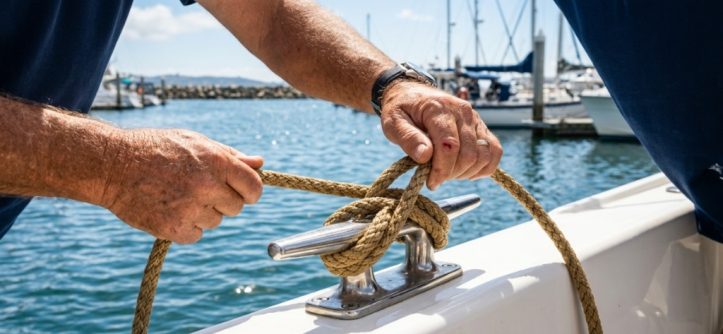
There’s nothing quite like the sinking feeling of watching your anchor line snap as the current pulls your boat toward a jetty. You had bought the cheapest cordage at the discount bin without thinking about holding power—and now you’re paying for it with a bent prop or worse. Sound familiar? Choosing the right budget marine rope for boat anchors isn’t about grabbing whatever is on sale; it’s about balancing cost, material, and construction to ensure you sleep soundly at anchor without wrecking your wallet. In this guide, you’ll learn exactly how to evaluate nylon, polyester, and polypropylene options, understand diameter-to-length ratios, and spot quality on a tight budget so you never have to worry about your ground tackle again.
What Makes a Rope Suitable for an Anchor Rode?
An anchor rode needs three specific things: elasticity to absorb shock, strength to hold the boat, and abrasion resistance to withstand the seabed. The material determines most of these properties, and getting this right is the difference between a secure night and a dragging disaster.
The Role of Stretch in Anchor Lines
All anchor lines stretch to some degree, but nylon is the champion. It can stretch up to 30% before breaking, which acts like a giant rubber band. When a swell lifts your boat, the nylon stretches; when the boat falls, the rope returns to its set length, keeping constant tension on the anchor. This prevents the anchor from being yanked out of the seabed. Polyester stretches much less, making it better for docking but worse for anchoring.
Breaking Strength vs. Working Load
You’ll see two numbers on every spool: breaking strength (the point where the rope fails) and safe working load (usually 10–15% of breaking strength). For anchoring, you want a rope whose breaking strength is at least 15 times the weight of your boat. If your boat weighs 5,000 lbs, a rope with a breaking strength of 75,000 lbs is overkill; a 50,000 lb breaking strength is more realistic and far cheaper.
Abrasion Resistance on Rocky Bottoms
Cheap ropes often skimp on abrasion resistance. If you anchor in sandy or muddy bottoms, standard twisted nylon will last years. If you anchor over rock or coral, you need a braided rope or one with a chafe guard at the bottom 10 feet. On a budget, the best trick is to buy cheaper nylon and add 15 feet of heavy chain at the anchor end—the chain takes the abrasion so your rope doesn’t have to.
Which Materials Offer the Best Value for Budget Buyers?
The cheapest rope might save you $20 now, but it will cost you triple in replacements if it degrades in UV light or lacks the strength to hold in a current. The smartest budget buyers know exactly which materials offer the sweet spot of price and performance.
Nylon: The Clear Winner for Most Boaters
Nylon is your best budget material because it combines strength, stretch, and UV resistance at a lower price than specialty blends. Three-strand twisted nylon is the classic choice—it’s cheap, easy to splice, and handles shock loads well. Double-braided nylon costs more but resists abrasion better and doesn’t kink as easily. For most cruisers under 40 feet, three-strand nylon is all you need.
Polyester: Worth Paying the Premium?
Polyester resists UV damage better than nylon and doesn’t absorb water, so it won’t freeze or get heavier when wet. However, it costs 20–30% more. For anchor rode, the lack of stretch makes it a poor performer—it transfers shock directly to the anchor, which can cause it to trip out of the bottom. Save polyester for mooring lines where stretch is not a requirement.
Polypropylene: When You Should Avoid It Entirely
Polyprop floats, making it tempting for stern anchors or temporary moorings. But here’s the deal: it is weaker, degrades quickly in sunlight, and has almost zero stretch. A three-strand polyprop rope with an equal diameter to nylon will hold only half the weight. It has a role in water skiing tow ropes or as a trip line on a stuck anchor, but do not use it as your main budget marine rope for boat anchors—it will let you down.
| Material | Stretch | UV Resistance | Relative Cost | Best For |
|---|---|---|---|---|
| Nylon (3-Strand) | High | Good | $ | Primary anchor rode |
| Nylon (Double-Braid) | High | Good | $$ | High-wear areas |
| Polyester | Low | Excellent | $$$ | Docking lines |
| Polypropylene | None | Poor | $ | Temporary/kid lines |
How Thick Should a Budget Anchor Rope Be?
Diameter is not about what fits your winch—it’s about what holds your boat in a storm. As a rule, follow the 1/8-inch rule: for every 9 feet of boat length, use 1/8 inch of diameter. A 24-foot boat needs a 3/8-inch minimum, while a 40-foot boat should step up to 1/2 inch.
Diameter Charts and Why They Matter
Most manufacturers publish a diameter-to-strength chart. A 1/2-inch nylon three-strand rope has a breaking strength of about 7,500 lbs. That’s enough for a 6,000–8,000 lb boat in moderate winds. If you use a thinner rope, you’ll either snap the line on a heavy gust or risk losing your anchor if the line rubs through on a rough bottom.
Compensating for Lower Quality Construction
If you find a bargain-basement rope, check if it’s USDA-certified or has a generic label. Generic rope often has fewer strands, lower-quality fibers, and less consistent diameter. It may be 20% weaker even if the label claims the same specs. When in doubt, go up one diameter size—a 1/2-inch generic rope will perform like a 7/16-inch quality rope, giving you the same safety margin at a lower price,Looking for gear for other outdoor vertical activities? Check out our guide to finding the Best Value Climbing Ropes.
How Much Rope Do You Need for Anchoring?
Anchor scope is the ratio of anchor line length to water depth, and the minimum is 5: 1. That means in 10 feet of water, you need 50 feet of rope plus the distance from the water surface to your bow chock (usually 3–5 feet). But don’t stop there—you must account for tide changes and wave action.
Calculating Your Total Rode Length
Add these three numbers: 1) the water depth at high tide, 2) the height from the waterline to your bow roller, and 3) the estimated wave height. Multiply the sum by 5 for calm conditions. For windy forecasts or overnight anchoring, use 7: 1. A boat in 15 feet of water with a 4-foot bow height at high tide and 2-foot waves needs a minimum of (15+4+2) × 5 = 105 feet for calm days and closer to 150 feet for windy nights. Most boaters carry at least 200 feet of rope to stay flexible.
When to Use Chain Instead of Pure Rope
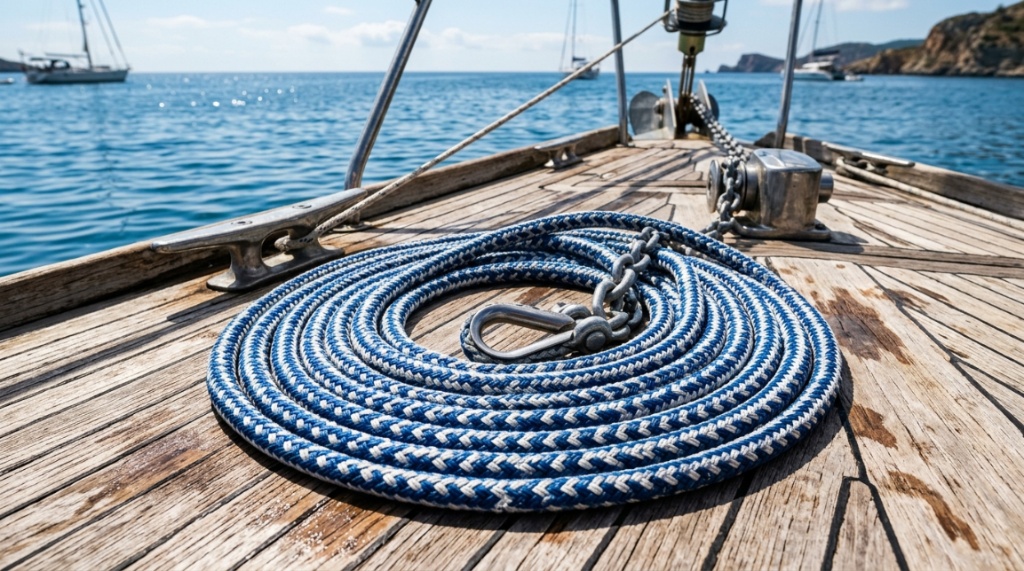
Chain is not a substitute for rope, but it’s a necessary ally at the bottom. The bottom 10–20 feet should be galvanized chain sized to match your rope diameter (1/4-inch chain for 3/8-inch rope). The chain adds weight to keep the pull angle horizontal, helps set the anchor in grass or mud, and protects the rope from chafing on rocks. It also stores easily—you don’t need to cut your rope to add a chain splice.
What Are the Best Budget Construction Types?
Construction impacts flexibility, handling, and chafe resistance. On a budget, you still have choices between twisted and braided rope, and the right pick depends on how you deploy your anchor.
Three-Strand Twisted Nylon: The Bargain Champion
Three-strand twisted nylon is the old-school choice and the most common budget marine rope for boat anchors. It’s soft, flexible, and splices easily, and each strand can rub against the rock without cutting through the entire line because the twist opens slightly under load. The downside? It tends to unravel if not whipped or spliced properly at the ends. But for most budget boaters, it’s the perfect trade-off.
Double-Braid: Paying for Chafe Resistance
Double-braid nylon consists of a braided core inside a braided cover. It’s stronger, resists abrasion better, and lies flat on the deck. However, it costs about 30% more per foot. If you anchor mostly in deep mud, double-braid is overkill. If you anchor in coral or rocky bays, the extra chafe resistance might actually save you money by preventing premature replacement.
How to Spot Inferior Braided Rope
Look at the ends of the rope—they should be evenly braided, without loose strands or fuzzy bits. The weave should be tight and uniform. Run your hand along the rope; if you feel flat spots or bumps, the manufacturing was inconsistent. A rope with cheap filler fibers (like olefin mixed in) will feel waxy and slippery compared to pure nylon. Always check the label for “100% Nylon Marine Grade.”
Where to Buy Without Going Over Budget
The store you choose influences both price and quality. Warehouse clubs and big-box retailers offer cheap rope, but it’s often industrial-grade or UV-stabilized poorly. Marine suppliers charge more but provide proper specifications and warranties. Online direct-to-consumer brands—especially specialty rope stores—offer the best value because they buy in bulk and ship anywhere.
Big-Box Retailers: Cheap but Risky
Bolts of rope at home improvement stores are not marine-grade. They may be intended for non-UV indoor use, and they often lack the ultraviolet inhibitors needed for boat life. They might hold up for a season, then become stiff, cracked, or faded. If you choose this route, add chafe protection and inspect the rope monthly, because it will degrade faster than marine-grade options.
Marine Supply Stores and Online Retailers
West Marine and other specialty suppliers mark up rope significantly. The best budget approach is to order online from a rope manufacturer or distributor that deals directly with the public. This way you get marine-grade materials, accurate specifications, and no showroom overhead. An even better option is to look for a specialty source for budget marine rope for boat anchors—these vendors often assemble kit packages that include rope, chain, and a thimble ready to install, saving you both time and money.
Why Should You Splice Instead of Tie Knots?
A knot reduces a rope’s strength by up to 50% because it creates sharp bends and concentrates stress. A splice, on the other hand, preserves 90–100% of the rope’s strength and is the proper, budget-friendly way to attach your rope to the anchor chain. Learn to eye-splice or back-splice your own rope—it takes 15 minutes of practice and saves you from buying snap shackles or hardware you can do without.
Step-by-Step Emergency Splice for Three-Strand Rope
If you’re new to splicing, here’s a simple emergency method for joining rope to chain: 1) Unravel the rope about 6 inches. 2) Split the strands into three groups. 3) Pass the middle strand through the chain link and tuck it back into the rope against the lay. 4) Repeat with the two outer strands, tucking them each under two rope strands. 5) Taper by cutting half of each strand and tuck again.
Pros and Cons of Splices vs. Shackles
Shackles are fast and simple, but they add hardware, create hard points that can chafe the rope, and corrode over time. They also require tools and can be lost overboard. A proper rope splice is permanent (if done right), lighter, and cleaner. On a budget, splicing costs zero extra and keeps your rod length accurate without hardware cost. A shackle costs $5–$10, but a galvanized one will eventually rust and need replacement—the splice never does.
What Regular Maintenance Extends Rope Life?
Rope doesn’t last forever, but a simple maintenance routine can double its lifespan. Budget boaters make the biggest mistake by leaving rope coiled on deck in the sun all season—UV radiation is the #1 killer of nylon. Store your anchor line in a dark locker or canvas bag after each outing.
Cleaning and Drying Your Anchor Rope
Salt crystals are abrasive and will wear down fibers over time, especially in the first 10–20 feet of the rope. Rinse the rope with fresh water every time you return to the dock. If the rope is muddy, wash it in freshwater with a mild soap (dish detergent works), then coil it loosely to dry. Storing wet rope invites mildew, and mildew emits acids that eat the nylon from the inside out.
When to Replace Your Budget Rope
Inspect your rope every few months. Look for flat spots, fuzziness, discoloration, or a rough texture. If the fibers feel crunchy or break when you bend the rope back and forth, it’s time to replace immediately. Also check the first 15 feet near the anchor shackle—that’s where chafe is worst. If you notice more than 10% of the fibers in any one section are broken, retire the rope to dock duty and buy new below-cost replacements.
Can You Mix Old and New Rope to Save Money?
Yes, but with caution. Attaching new rope to old rope is possible if you use a proper splice, but you must ensure the old portion is still in good condition and has enough strength. The splice joint becomes a weak point, and if the old rope fails, the entire anchor line is compromised. An easier budget method is to keep the chain and replace only the rope. The chain often outlasts three or four ropes anyway.
How to Extend Your Existing Rope
If you have a 100-foot rope and need 150 feet for a deep anchorage, don’t just tie two ropes together—a knot will drop strength by 40%. Instead, use a rope-to-rope splice if the diameters match. However, a better deal is to buy a single new 150-foot length; the cost per foot on longer reels is usually lower than buying two shorter ones separately.
Frequently Asked Questions
Is 3-strand nylon better than double-braid for anchoring?
Yes, for most budgets, three-strand nylon is better because it has more stretch (which helps in waves), is cheaper per foot, and is easier to splice. Double-braid resists chafe better but costs more and has less shock absorption.
What is the minimum safe diameter for a 30-foot boat anchor rope?
A 30-foot boat should use a minimum of 7/16-inch rope, but 1/2-inch is safer. The 1/2-inch line offers a breaking strength of approximately 7,500 lbs, which gives a good safety margin in moderate winds and currents.
Can I use a dock line for anchoring?
Dock lines are usually polyester or nylon and are suitable in a pinch, but they are typically not long enough and lack the chafe protection that anchor rodes have. Use them only for temporary anchors in calm, shallow waters. For overnight anchoring, invest in proper rope with a chain and thimble.
How often should I replace my anchor rope?
With proper rinsing and UV protection, three-strand nylon lasts 5–7 years in moderate sunlight. If you anchor frequently in rough, rocky beds or leave the rope exposed to the sun, replace it every 2–3 years. Regularly inspect for fuzziness, cracks, and broken fibers.
Does rope color affect performance?
Color is mostly cosmetic, but it aids in visibility and flipping the rod to inspect for damage. White or blue fades faster and shows dirt, making it easier to spot UV damage. Black absorbs heat and may degrade faster, but it hides surface wear. Choose a lighter color for easier inspection.
What is the best way to store anchor rope on a budget?
Use a canvas bag, a plastic tub, or even an old bucket with drainage holes. Coil the rope evenly and store in a dark, dry place. Never store rope in a plastic bag with no airflow, as trapped moisture will create mildew and rot the fibers. A milk crate with holes works perfectly.
Conclusion
Choosing a solid anchor line does not have to drain your savings. Focus on getting 100% nylon, three-strand, marine-grade rope in the correct diameter. Skip fancy low-stretch materials that don’t work for anchoring, and never settle for polypropylene. Pair your rope with 15–20 feet of chain, learn a basic splice, and keep the line out of the sun when not in use. All of this can be done for less than $60 for most boats under 35 feet. The security of knowing your anchor won’t drag—and your boat won’t end up on the rocks—is the best bargain you can buy for peace of mind on any budget.


Leave a Reply